
Indian prodigy builds ‘intelligent ship’ to suck plastic off ocean’s floor

Ocean pollution is an enormous challenge and the hazardous effects of plastic pollution in the oceans have spurred many individuals, organizations and companies to develop ingenious methods and create innovative devices to tackle the problem.
Among the few environmentalists and scientists, a 12- year old Indian boy Haaziq Kazi is hogging the limelight for designing a ship named ERVIS that could clean up the waste out of the ocean’s surface.
Genius design
Two years ago, Haaziq Kazi, studying in Pune’s Indus International School in Grade 5 was dismayed by the magnitude of the plastic pollution in the oceans and the devastating ill-effects on the marine life and decided to design a ship to collect the waste from the oceans and clean it.
Since last year, Haaziq has been highlighting the hazards of ocean plastic pollution and measures to prevent it. He has been working with different people, organisations and forums to create public awareness for the same.
Recently, Haaziq Kazi was one of the speakers at the TEDxGateway event in Mumbai where he received applause for his genius design as well as his take on the ocean’s plastic pollution. Speaking to Al Arabiya English, Haaziq Kazi shed light on his innovation ERVIS and the importance of overcoming plastic pollution in the ocean in a responsible manner.
In 2016, his interest to clean up the world’s ocean was sparked by watching documentaries on the National Geographic Channel about the ocean waste problem and its dangers to marine life. He was also impressed by Boyan Slat’s TED Talk and also wanted to make a difference on the ocean waste problem.
Explaining the concept of ERVIS’s emergence, Haaziq said that once while washing his hands he watched the water flow into the sinkhole. He thought he can use the same principle of centripetal force to suck waste from the ocean’s surface. This created his first rough model of ERVIS which was his vision for changing the future.
However, the current prototype design of ERVIS emerged much later, in mid 2017, following extensive research and consultations with few scientists, designers, inventors and environmentalists; all of whom helped him to refine his vision of ERVIS and make it more practical in design.
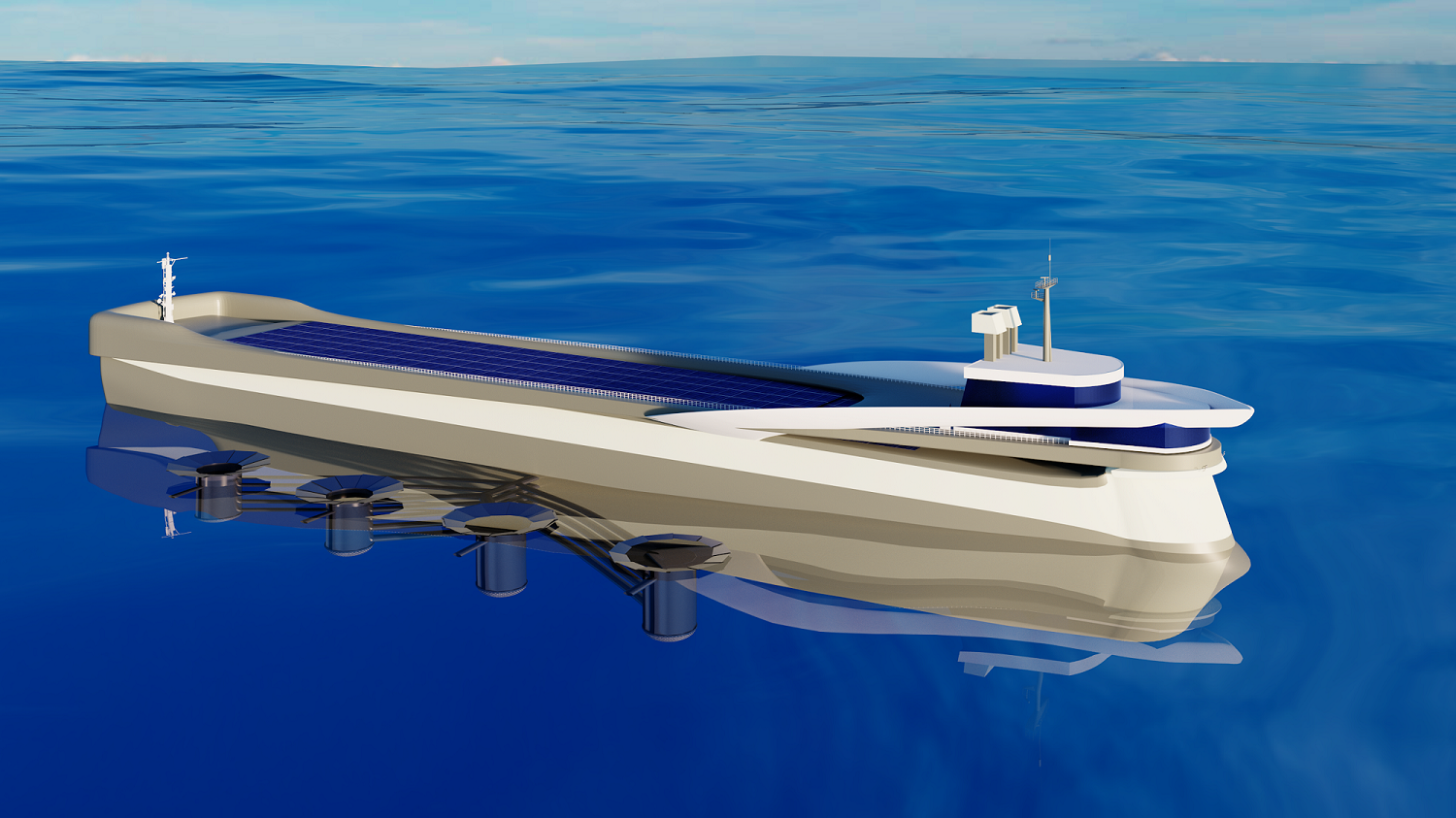
ERVIS is an intelligent ship which has multiple saucers and chambers surrounding it. (Supplied)
The Intelligent Ship
Talking about the functions and features of ERVIS, Haaziq says, ERVIS is an intelligent ship which has multiple saucers and chambers surrounding it. The saucers suck in the ocean’s waste and through connected pipes send it across five different chambers; within which the entered waste is analysed, segregated and compacted and the filtered water is pumped back into the oceans.
The first chamber is for waste oil and the other four chambers are for large, medium, small and micro waste respectively. Haaziq clarifies that although he is currently working on the prototype of ERVIS, “It is still in the initial phases.
It will have to go through multiple stages and trials along with substantial funding before a fully operational ERVIS comes out in the oceans.Yet, Haaziq is optimistic that ERVIS will be a reality and in the future, multiple ERVISes will man the oceans; cleaning and scavenging the waste off it”.
Haaziq wants to use sustainable energy to power ERVIS like solar energy or Renewable Natural Gas (RNG) or Liquefied BioGas (LBG); being inspired by newer radical designed ships, which are utilising sustainable energy. He also hopes to make ERVIS fully autonomous like TESLA.
Haaziq is very passionate about creating public awareness of the dangers of ocean plastic pollution as he believes that this will solve a multitude of problems. He states that the global consumption of plastic in the last decade alone has surpassed that of the last century’s plastic consumption and that a major part of it was ending up in the oceans.
‘No Planet B’
Haaziq quotes Mahatma Gandhi and says, “Be the change you want to see in the world.” He further emphasises, “We all have in some manner contributed and created this ocean waste problem and if we don’t make smart choices or change the way we consume plastic in a more responsible manner, this problem will not only persist, but it will aggravate.”
He further asserts that he wants people to be conscious of their choices as there is only one earth which will be bequeathed to future generations and that our actions now will determine our legacy. He reminds us that “There is no Plan B, as there is no Planet B”.
When asked about his future plans and innovation, he muses that there is so much more to be done and adds that the ocean plastic problem itself poses the bigger problem of micro plastics which are more in quantity and a greater threat than plastics on the ocean surface. He mentions that wastes on beaches are a challenge.
He further adds that through ERVIS he wants to create a platform for like-minded people to connect and collaborate and help alleviate the problems facing the oceans and marine life.
Haaziq sees himself solving problems of the world innovatively and by sustainable means. One such problem that this child prodigy wishes to resolve relates to urban transportation.
Courtesy: english.alarabiya.net
Let the Truth be known. If you read VB and like VB, please be a VB Supporter and Help us deliver the Truth to one and all.
Delhi court sentences CBI joint director to 3 months' imprisonment in IRS officer assault case

New Delhi (PTI): A Delhi court has sentenced two CBI officers to three months' imprisonment for assaulting and trespassing into the residence of an Indian Revenue Service (IRS) officer during a raid over two decades ago.
Judicial Magistrate Shashank Nandan Bhatt was hearing the arguments on the sentence against the convicted retired police officer V K Pandey and Ramneesh, who was serving as a superintendent of police when the raid was conducted in 2000.
Ramneesh is at present a joint director at the Central Bureau of Investigation (CBI).
The court also fined Rs 50,000 each to both the accused.
Both were accused under IPC sections 323 (voluntarily causing hurt), 427 (mischief) and 448 (criminal trespass) in a complaint filed by IRS officer Ashok Kumar Aggarwal.
The case pertained to an incident on October 19, 2000, when a CBI team carried out a search and arrest operation at Aggarwal's residence in Paschim Vihar.
Aggarwal alleged that the officials forcibly entered his house in the early hours, assaulted him and violated legal procedures during the arrest.
#WATCH | Delhi | Former IRS officer assault case. | Tis Hazari Court sentenced CBI joint director Ramneesh and Retired ACP Vivek Pandey to 3 months sentence in an assault case filed by former IRS officer Ashok Agarwal. The court has granted them bail to challenge the judgment.… https://t.co/RwAxjMrWDK pic.twitter.com/2FlkG4rDs0
— ANI (@ANI) April 28, 2026


