
Meitra Hospital with the Health Ministry to establish Kerala’s first Tele-ICU at Beach Hospital

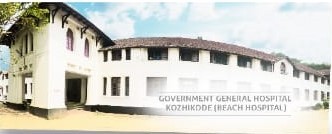
Kozhikode: Kerala has marked yet another pioneering innovation in the field of public healthcare. Health Ministry along with Meitra Hospital has successfully set up the state’s first Tele-ICU at Beach Hospital, Kozhikode. Meitra Hospital will be leading the deployment of the clinical & technological expertise, while Faizal & Shabana Foundation will financially support the recurring operations of this initiative. The official launch took place on the auspicious occasion of Kerala Piravi, in the presence of Honorable Health Minister Ms. K K Shailaja, MLA Pradeep Kumar, District Collector Mr. Sambasiva Rao IAS, Superintendent of Beach Hospital Mr. Ummer Farook, District Programme Manager - National Health Mission Dr. A Naveen, Meitra Hospital Chairman Mr. Faizal E Kottkollon, Meitra Hospital CEO Dr. P Mohanakrishnan.
Government General Hospital, also known as Beach Hospital becomes the first member of Meitra Hospital’s mission to upgrade and equip healthcare with technology & bridge an acute shortage of intensivists in the country. The initiative is not just expected to address the deficient number of specialists but will offer a range of critical care facilities ensuring better health outcomes, risk - reduction of medication errors, and infection control, through pro-active round-the-clock monitoring.
“The initiative is intended to turn the healthcare system into a giant ecosystem. There is a shortage of Intensivists and the current pandemic has laid open the gap and exposed the vulnerabilities at a global level. It is the right time to leverage technological innovations to solve healthcare challenges, by giving the doctors more digital solutions in their armamentarium. Meitra Hospital has always prided itself on being at the forefront of healthcare innovations. We are happy to be partnering with the Health Ministry to bring the latest technological advancements to the state to serve the people better,” said Faizal E Kottikollon, Chairman, Meitra Hospital & Founder Chairman, KEF Holdings.
“There are more than 3 lac ICU beds, but less than 5000 intensivists in the country. The gap is huge & cannot be left unaddressed especially when it comes to life-saving critical care treatments. Technology advancements have ensured that we can now democratize quality healthcare and bring it closer to people through wider access. Our Tele-ICU setup is a proud Made-in-India solution that is at par with global standards. Our team of intensivists will monitor the Tele-ICUs from our Command Center based at Meitra Hospital which will offer round-the-clock monitoring of critical care patients. We have also trained the staff at Beach Hospital so that they stay abreast of the new technology” informed Dr. P Mohanakrishnan, CEO, Meitra Hospital.
Meitra hospital stands committed to providing quality healthcare in the country. This step towards creating a network of Tele-ICUs in the region once again reiterates its commitment towards its people. The hospital will be extending this facility to a host of other hospitals in the region to bridge the doctor-gap and make their ICUs more robust, efficient, and better adept at handling diverse kinds of critical care patients, a release said.
Let the Truth be known. If you read VB and like VB, please be a VB Supporter and Help us deliver the Truth to one and all.
Man arrested with Rs 2.54-crore heroin in Mumbai

Mumbai (PTI): Police have arrested a man and seized over 500 grams of heroin worth Rs 2.54 crore in the illicit market from him in Mumbai, officials said on Friday.
The police's Anti-Narcotics Cell (ANC) made the drug seizure in Santacruz in the western suburbs. The operation was conducted by the Kandivali unit of the ANC on Thursday as part of a special crackdown against drug trafficking in the area, they said.
Acting on specific inputs, an ANC team conducted a raid in Santacruz (East) and intercepted a man. During a search, the team recovered 508 grams of high-grade heroin from his possession, an official said.
The seized contraband, a highly addictive, opioid drug derived from morphine, is estimated to be worth Rs 2.54 crore in the international market, he informed.
Following the seizure, a case was registered against the man under relevant sections of the Narcotic Drugs and Psychotropic Substances (NDPS) Act, 1985, and he was formally placed under arrest in the early hours of Friday.
The police are currently investigating the source of the drug and trying to identify the intended recipients of the consignment, he said.


