
"Community will be hugely benifited if Ulamas are involved in service activities"
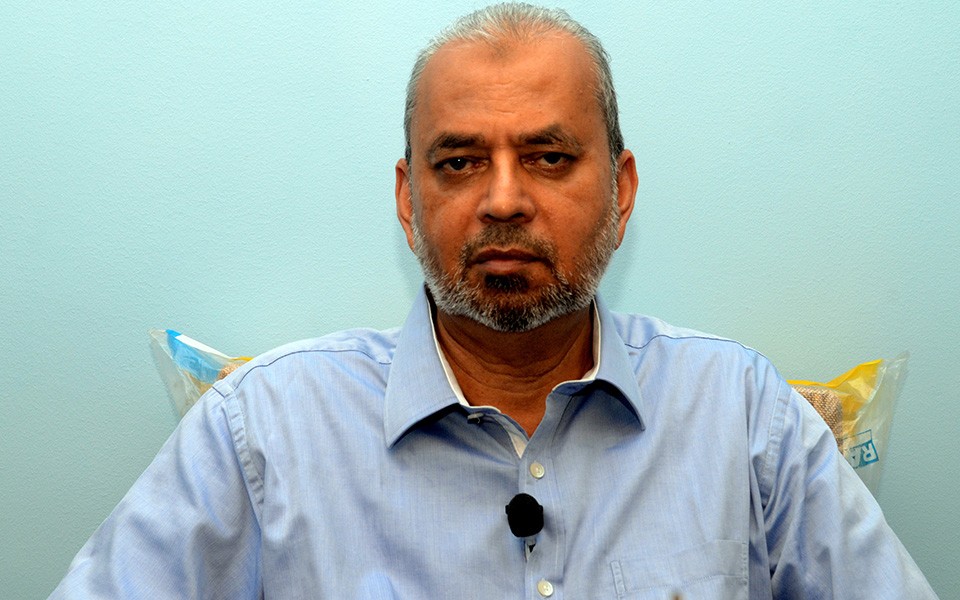
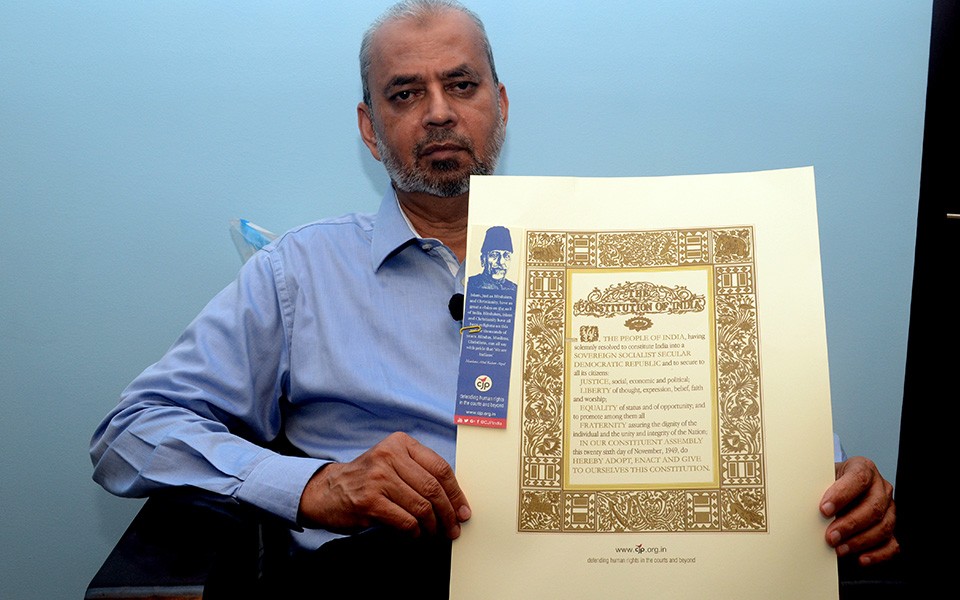
Says Muhammed Iqbal Yusuf, founder of Jamiyyatul Falah

The financial, social, intellectual, educational condition of Muslims in undivided Dakshina Kannada was not very good 30 years ago. Over all the community was lacking proper guidence in these fields. At this time Muhammed Iqbal Yusuf came as a ray of light. He is the son of Jalaluddin Yusuf and Zulekha Begam, residents of Permude near Bajpe. After completing his SSLC in St. Joseph higher primary school in Bajpe, Muhammed Iqbal went to Mumbai and later to Scotland for higher education. He has rendered his service in several countries. He stood behind the people of his native land after watching them struggling in Saudi Arabia. He also dreamed of developing the society. To accomplish his dream Iqbal Yusuf along with like minded friends founded Jamiyyatul Falah, a charity based organisation in undivided D.K district in 1988. He has worked as a technical advisor in Sudai Arabia civil aviation department and is now settled in Canada along with his wife and children.
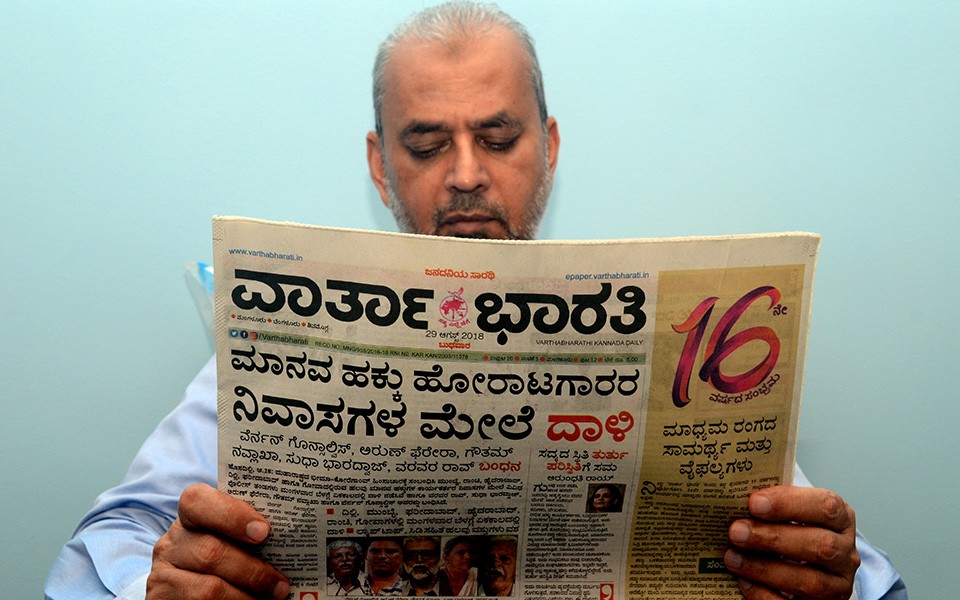
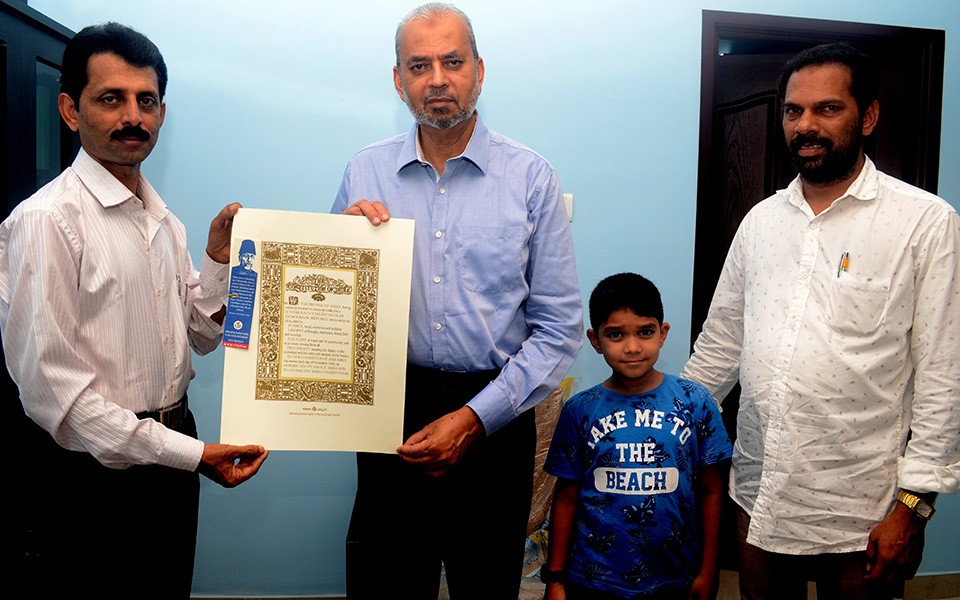
During his recent visit to hometown , Iqbal Yusuf spoke to Vartha Bharati and explained about the aim behind founding an organisation like Jamiyyatul Falah , its achievements etc. The extract of his interview is given below;
Can you please share with us memories of your childhood, life and professional life?
My grand father was Abdul Aziz. He was an expert not only in local languages but also Arabic, English and Persian languages. My father Jalaluddin Yusuf was a teacher. I had seen my grand father's interaction with people. My father was also very keen to help financially distressed people. People from all the communities. People from Hindu, Muslim and Christian community used to visit my father and seek help and ask his advise . I too wanted a cordial relationship with all and used to distribute chocolates during festivals. Preachings of prophet Muhammed ( PBUH) and my grand father and father are the main inspirations for me to dedicate myself to social service.
How you thought of starting an organisation like Jamiyyatul Falah? Please explain.
I was in Saudi Arabia then. Youth coming to Saudi from this part of India were facing many difficulties. I wanted to help then as much as I can. I had a dream to eradicate poverty from our soceity. Provide education, health awareness, social conscience, self employment to the people of all communities especially Muslims.
When I returned to Mangaluru I discussed the matter with the community leaders. This is how Jamiyyatul Falah was formed to help people lead a healthy and self reliant life.
What was the reaction of community leaders, people towards your idea? What was the challenges faced by the organisation in the initial stage?
I received overwhelming response from community leaders when I discussed the matter with them. Everyone opined that there is a need for such organisation. Initially, like minded people formed a ad hoc committee in Jeddah. Later when we called a meeting in Mangaluru to inform the people about our organisation about 150 like minded people took part. I had shared my dream with my friend Ahmed Kutti, a Keralite residing in Canada. He suggested me the name Jamiyyatul Falah. When I revealed the name, everyone in the meeting unanimously agreed to it. There were suggestions to form a trust rather than an organisation. But I was not in the favour of forming a trust that will have monopoly over an organisation that was formed to serve the society. I thought it would be helpful for the society if it is formed as an organisation. So I decided to continue it as an organisation. I started working without keeping any post in the committee for myself.
Some people criticized me. But I didnt pay heed to them and we continued our journey with a goal to serve the society. The seed we sow thirty years ago has now grown into a huge tree and I am very happy.
How would you assess the condition of Muslims of coastal Karnataka then and now? What are the major changes you observed?
I can see huge difference. I mean, thirty years ago people in rural areas were suffering to get even one time meal. Education remained a distant dream. Not only Muslim community, people of almost all the communities were deprived of education and were financially backward. Through Jamiyyatul Falah, we decided to help, not only the people from one community, but also every financially poor person in the society.
At that time we had a goal to provide education to all and we succeeded in that more than we expected. Today there is no lack of food. People are financially stable if not wealthy. Muslims are making exceptional achievements in educational field.
Today more and more Muslim women are getting education. Has this helped in their empowerment?
It is not wrong if I say the scholarship was first introduced by Jamiyyatul Falah in coastal region. Earlier, not only women, but Muslim men were also not serious about getting education. We created awareness about it in the community,. Scholarship scheme helped us to reach our goal. Today, it is true that Muslim girls are getting education. But the society is not getting the advantage of that education. Hence, Muslim women must start working.
Even after efforts by several social organisations Muslim community has remained backward in the field of education and health. What is your opinion?
Yes.there are many social organisations active today. They are trying to take government schemes to the people. People are also becoming self reliant. Even then we feel that our goal has not been accomplished. We need to progress in educational field. The importance we give to health field is minimal. Most of the people still lack knowledge about health safety. Awareness is needed in this aspect.
Even today Muslim youth look towards Gulf countries for jobs. How this situation can be changed?
Deffinately we can change that scenario. They must realise that Gulf jobs are not permanent. Jamiyyatul Falah is planning to buy six acre land in Belvai near Moodbidri and build a self employment training center. If youth are inspired and supported through these centers they will surely find their livelihood in the country.
There is a complaint that the Ulamas, mosques and madrasas which have greater infulence on the community are not properly utilised. How this can be reformed?
This is a good question. Mosques were used to be training centers during the time of prophet Muhammed( PBUH). As the time passed moques were limited only for namaaz and religious activities. To effectively use our masjids and madrasas, everyone from the community must come together and take a decision. Madrasas can be used as training centers after class hours. Community will be hugely benifted if the Ulamas become active.
There is still lack of awareness among Muslims about joining government jobs?
It is sad that even after so much guidence the young Muslim generation is lacking awareness about the government jobs. As the community is educationally progressing, its involvement in governmental works should also be increased. Not only government jobs, they should be guided and inspired to become top bureaucrats like IAS and IPS officers.
There is a lack of health, educational organisations in Muslim society that serves the poor. How these organisations can be formed?
30 years ago Jamiyyatul Falah was formed in the interest of the community and society as well. Poverty is a reality spread without caste and religion bias. The intension of service should not be restricted to one religion. Islam also teaches the same. Like minded people from every religion must sit and discuss to take a proper decision together.
Many Muslim social service organisations are operating now. What is your opinion about their working style?
Muslim organisation like Hidaya foundation and Talent research foundation are now active in social service activities. They are working for the betterment of the society. We must remember that the goal of all the organisations is service and everyone must shun the attitude of 'me and mine' and follow the motto of 'all, and for everyone'.
It is not wrong to say that Jamiyyatul Falah is the inspiration for all these organisations. When we started the organisation, techonology was not developed like today. There were obstacles due to illiteracy. There was no knowledge of organisation. But Jamiyyatul Falah introduced many new schemes in education, health, employment and in other fields. It served thousands of people through these schemes.
I remember, once we had conducted cataract inspection camp. More than thousand people took benefit of this camp and 300 people received free surgery thorugh our organisation. We had transformed a school in Moodabidre into a hospital for this purpose. The surgeries were done by expert doctors and spectacles were distributed. People who benifited from this camp had expressed their gratitude and it is worth remembering. Jamiyyatul Falah has planned and executed many such innovative projects and camps to help thousands of people.
NRI Muslims are returning to their hometown in coastal region and their number is increasing. Do you have any idea to provide rehabilitation and employment to them?
In Olden days while searching for groom for their daugher people used to look for youth working in Gulf. But today a job in Gulf country is not worth it. The policies of that land is snatching away employments of our youths. The responsibility of providing proper rehabilitation to them is on the goverment. Rulers must bring more and more industries to Mangaluru. An investment friendly atmosphere must be created. Local Airport should be developed. Airport and related basic infrastructure has the potential to create thousands of jobs. Millions of jobs are created in European Airports.
The passenger crowd in Mangaluru airport has already crossed its limit. Now the airport needs to be expanded. We have already brought this to people's representatives' notice. They have assured that the message will be conveyed to the Chief minister.
Jaliyatul Falah is also working to provide all possible help to the NRIs returning to their homeland. These people have played much bigger part in developing our organisation. Now we are trying to help them. We will help them to start a small or medium business or help them find suitable jobs.
Let the Truth be known. If you read VB and like VB, please be a VB Supporter and Help us deliver the Truth to one and all.
Rickelton's ton in vain as SRH beat MI by 6 wickets

Mumbai (PTI): Ryan Rickelton's whirlwind unbeaten ton was overshadowed by Heinrich Klaasen's unbeaten 65 as Sunrisers Hyderabad defeated Mumbai Indians by six wickets in an IPL match here on Wednesday.
Chasing an imposing 244-run target, Travis Head (76 off 30) and Abhishek Sharma (45 off 24) shared 129 runs for the opening wicket to set the platform for SRH.
Klaasen (65 not out off 30 balls) then displayed his all-round hitting abilities to guide SRH home with the help of Nitish Kumar Reddy (21) and Salil Arora (30 not out off 10) in 18.4 overs.
Earlier, Rickelton's knock powered MI to 243 for five.
MI rode on a 93-run stand between Rickelton (123 not out off 55 balls) and Will Jacks (46 off 22) in 7.1 overs for the opening stand to power the side.
MI skipper Hardik Pandya scored a valuable 31 off 15 balls before being dismissed.
Praful Hinge (2/54), Eshan Malinga (1/29), Sakib Hasan (1/39) and Nitish Kumar Reddy (1/31) were the wicket-takers for SRH.
Brief Scores:
Mumbai Indian: 243 for 5 in 20 overs (Ryan Rickelton 123 not out; Praful Hinge 2/54).
Sunrisers Hyderabad: 249 for 4 in 18.4 overs (Travis Head 76, Heinrich Klaasen 65 not out; AM Ghazanfar 2/51).


