
Qatar's senior most Kannadiga - Syed Abdul Hye
6 decades of bonding with Doha

On account of Qatar's National Day on December 18, a team of Qatar's radio station - Olive FM invited Syed Abdul Hye to share his life's journey and experiences on the radio station's premier show - Red Carpet.
The half-an-hour-long interview was laced with the deliberate words of Hye. It elicited a great appreciation from the listeners. Aniruddh, the interviewer, said, "this was the most wonderful interview I ever had in my life."
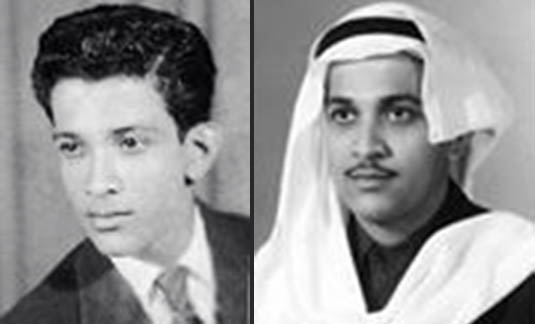
Young Syed Abdul Hye
While, Radio Olive Director Amir Ali said, "An elderly person like Syed Abdul Haye visiting our studio is a matter of great pride and prestige for us."
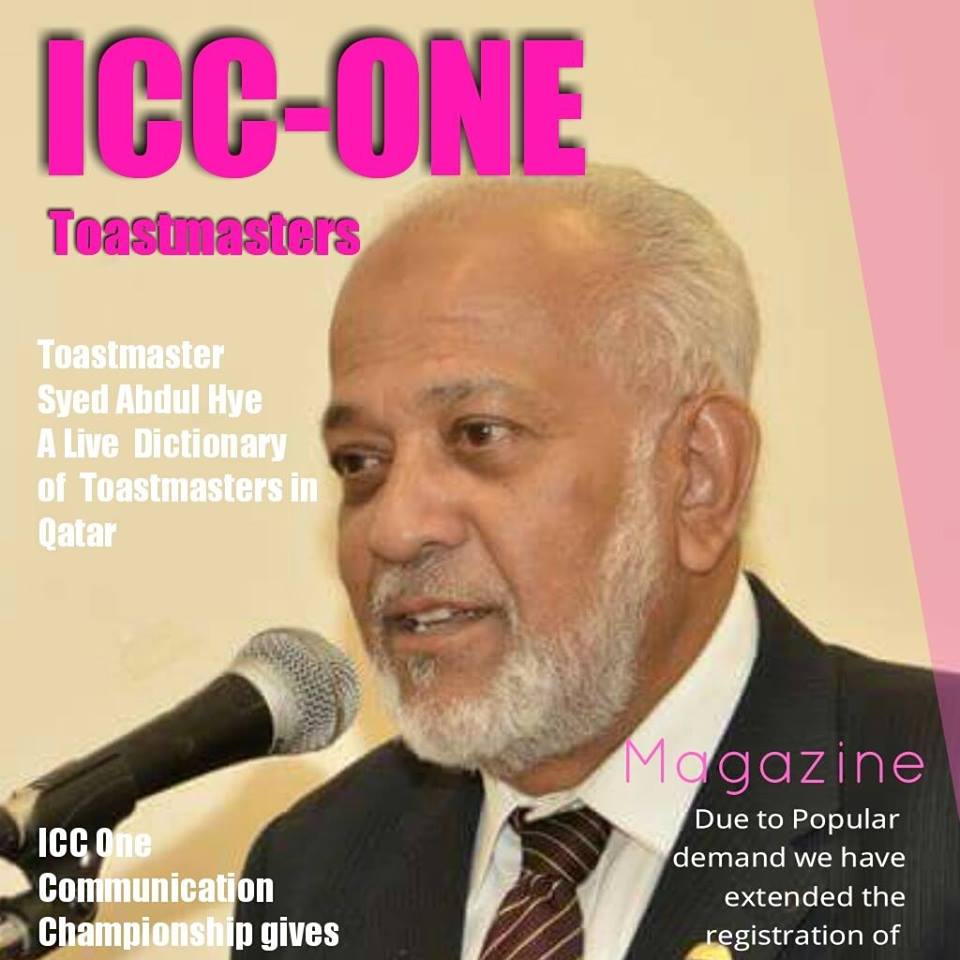
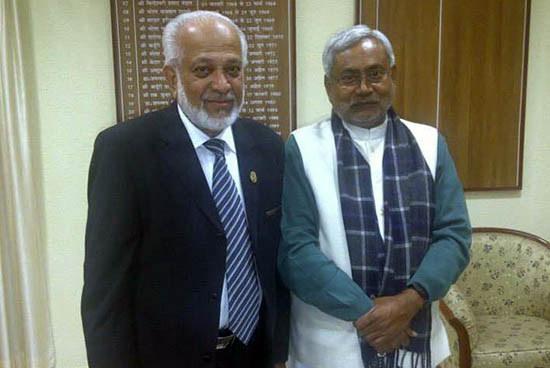
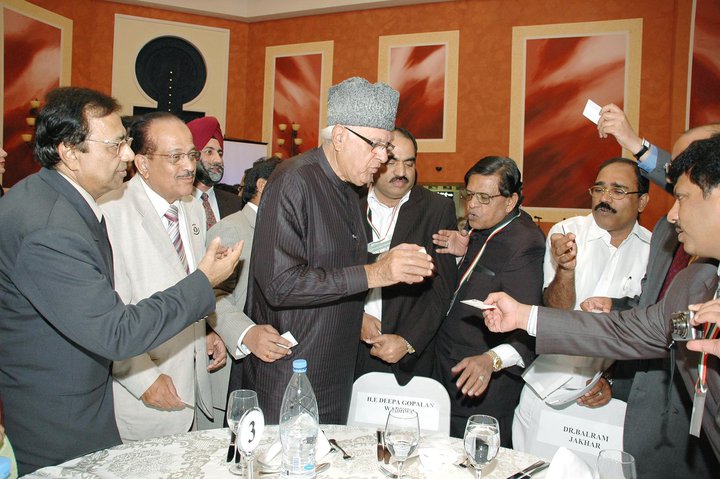
Syed Abdul Hye with Bihar Chief Minister Nitish Kumar
Syed Abdul Hye is basically from Mangaluru's Bikarnakatte. He is the eldest son of Maulana Syed Yunus Saheb a senior scholar and an expert of Persian Language. In 1959, when he was just 17, he left his home and started his journey towards Qatar in search of a job. He first went to Mumbai, and it took three days by ship to reach the City. There he had to spend three weeks for visa and other formalities. He traveled by the Vessel Dara and reached Doha after travelling for a week. Hye, initially worked as an employee for a few years in Qatar and gradually, launched his own business after a few years. He started Al-Maha Super Market and provided job opportunities to many Indians. His first salary in Qatar was a meager Rs. 350 per month. Three months later, he earned an increment of Rs. 50. Hye could save one hundred rupees from his salary and send it to his home in India. However, he had to pay three rupees for the post.
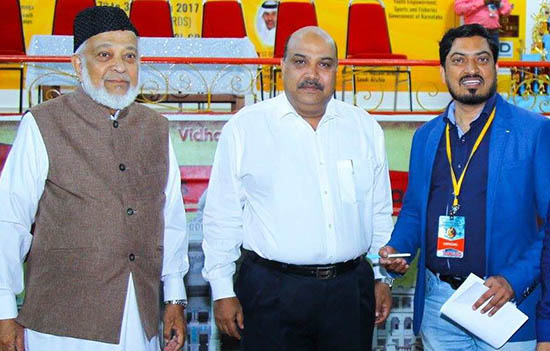
Kannadiga Abdul Hye is well-known to three generations of Indians, Pakistanis, and the locals in Qatar. Besides Kannada, Tulu, and Byari languages, Abdul Hye can communicate well in 17 other languages.
He speaks Arabic just as fluently as a native Arab does and speaks Malayalam like any Keralite. In addition, he has excellent command over Urdu and Persian languages. Some of his couplets, which he recited in Urdu Mushairas, are very popular among Urdu circles.
For example:
Milay Khushk Roti Jo Azad Rehkar,
Wo Khauf o zillat ke halwe se behtar
(The dry bread that is earned while being in freedom, is better than the 'Halwa' earned through fear and disgrace)
Ishq par kar doon fida mai apni sari neamaten,
Magar azadi pe mera ishq bhi qurban hai
(I would sacrifice everything with me for the sake of love, however, I would sacrifice my love for the sake of freedom)
Some of the statements of Syed Abdul Hye are remarkable:
"Life is a valuable opportunity. Use it exquisitely without wasting a single moment".
" If you have time, use it either to learn something or to teach others from what you know".
" Wealth, money, etc. have their own importance. But money is not everything. No wealth can bring the pleasure that comes to you by helping others".
Abdul Hye, who has been in Qatar for the past 60 years, has seen five great monarchs who ruled Qatar, in succession. He has recorded the memories of his days in Qatar, in the form of brief notes in his personal diary. Besides, he has with him an amazing collection of over 10,000 photos clicked by him during the past six decades. The collection can be treated as a record of different dimensions of Qatar over the past few
decades. He says that the Islamic Culture of Qatar and its tradition of looking everyone equally and providing every possible help to those in need deserves to be popularised.
According to Hye, the life of Haji Hamza, owner of the legendary Bismillah Hotel of Qatar, is an ideal for all.There was a time when Haji Hamza used to sell tea in the market, holding a pot of tea in one hand, and a stove to heat it, on the other. Later, he started a hotel of his own. One unique feature of his hotel was that anyone coming from India to Qatar seeking of a job, Bismillah Hotel used to provide him meals for free until he got a job. The beneficiary would pay his dues later in monthly installments after getting employed. This facility was a great boon to hundreds of unemployed Indians newcomers in Qatar.
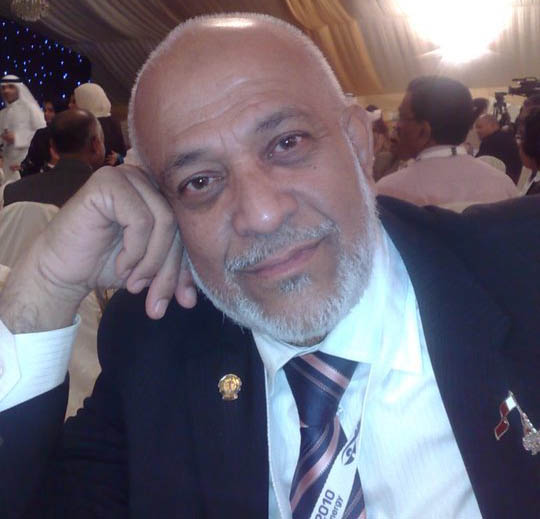
Speak to Abdul Hye Saheb and you will come to know hundreds of such inspiring stories. Speak to him on any subject under the sun, be it nature, religion,literature, culture or history, Abdul Hye will not only educate you but will enlighten you. That is the reason, those who know him refer to him as a walking encyclopedia.
Let the Truth be known. If you read VB and like VB, please be a VB Supporter and Help us deliver the Truth to one and all.
Online fraud: Hotel chef from Udupi cheated of over Rs 1 lakh by WhatsApp contact

Udupi: Udupi City Police have registered a case of online fraud after a 62-year-old hotel chef was allegedly cheated of Rs 1.13 lakh by a woman who befriended him on WhatsApp, claiming to be based in London.
The victim, identified as Pandu Kariappa Poojary, a resident of Kuthpadi in Udupi, was working at a hotel in Mangaluru.
He reportedly came into contact with a woman identifying herself as Emilda William on WhatsApp. During their interactions, she told Poojary that she planned to start a cosmetics and hotel business in India and would meet him during a visit to Mangaluru.
On April 7, Emilda sent Poojary a flight ticket from London to Delhi via WhatsApp. The following day, Poojary received a phone call from a woman who informed him that Emilda had arrived at Delhi airport carrying a demand draft worth Rs 5 crore along with other items. The caller allegedly asked him to pay Rs 70,000.
Subsequently, Poojary also received a call from Emilda, who was reportedly crying and spoke about the situation. Believing the claims, he transferred a total of Rs 1,13,300 in phases using a scanner. He later realised that he had been cheated.


