11 people acquitted from TADA charges 25 years after their arrest

Mumbai: Nashik’s Special TADA Court on Wednesday acquitted 11 people off charges of several sections of TADA and IPC, 25 years after they were arrested and charged under it.
Nashik’s Special TADA Court Judge S C Khati, cited lack of evidence and violation of TADA guidelines during investigations while acquitting 11 from the charges. “Advocates of prominent legal aid organasition ‘Jamiatul Ulama’ from last three years and were confident of acquitting all these 11 innocents from the case” a press release from Jamiat Ulama informed.
Jameel Ahmed Abdullah Khan, Mohammed Yunus Mohammed Ishaq, Farooque Nazir Khan, Yusuf Gulab Khan, Ayyub Ismail Khan, Waseemuddin Shamsudin, Shaikha Shafi Shaikh Azeez, Ashfaq Syed Murtuza Meer, Mumtaz Syed Murtuza Meer, haroon Mohammed Bafati and Moulana Abdul Qader Habibi were arrested on 28 May 1994 from Maharashtra and other parts of the country.
They were charged under section 120 (B) and 153 of Indian Penal Code and Section 3 (3) (4) (5) and Section 4 (1) (4) of TADA act for allegedly planning avenge of Babri Masjid demolition and for attending terrorist’s training camps in Kashmir in this regard.
They were also charged for trying to recruits youngsters from Nashik and Bhusawal for their alleged terror group Bhusawal Al Jihad.
Gulzar Azmi, who leads the team of advocates of Jamiat Ulama, after the verdict said, thought Justice has been delayed for these 11, but the tag of terrorists has been erased. He also congratulated the team of advocates which looked after the case. The team included Advocate Sharif Shaikh, Mateen Shaikh, Ansar Tanboli, Raziq Shaikh, Shahid Nadeem, Mohammed Arshad and other.
He added “More than half of the witnesses of prosecution turned hostile in the court. This proves that the case itself was built on false facts”.
“Even the review committee had twenty year back from today, recommended the government to discharge cases from these people, but the lower courts refused to accept the proposal and these 11 people had to pay the price for something they did not do and had to make rounds of the court and judiciary for 25 long years” Azmi further added.

Let the Truth be known. If you read VB and like VB, please be a VB Supporter and Help us deliver the Truth to one and all.
4 workers die after being buried under coal slurry in Jharkhand's Dhanbad
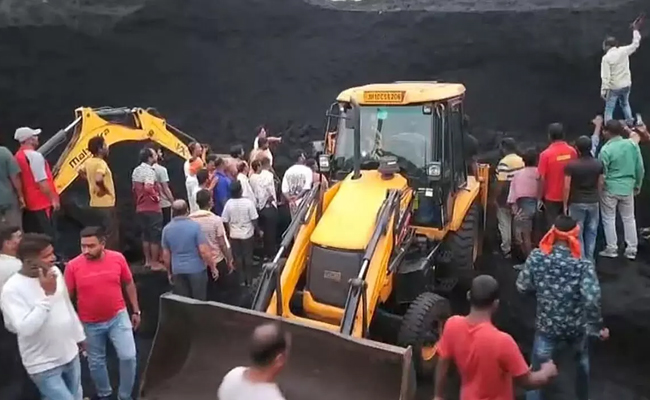
Dhanbad (Jharkhand) (PTI): At least four workers died after being buried under coal slurry in Jharkhand's Dhanbad district on Saturday, a police official said.
The incident took place at Moonidih coal washery in the command area of Bharat Coking Coal Limited (BCCL).
"Bodies of all four workers were dug out of debris during a rescue operation," Putki police station in-charge Waqar Hussain told PTI.
The incident took place when coal slurry was being loaded into trucks by workers, during which a large chunk of slurry fell and trapped several workers underneath, officials said.
The deceased have been identified as Manik Bauri, Dinesh Bauri, Deepak Bauri, and Hemlal Gope.
Meanwhile, the family members of the deceased and local villagers placed the bodies in front of the washery gate and began a protest.
They demanded compensation, jobs for dependents and action against those responsible for the incident.
Police and administration officials are trying to pacify the protesters, an official said.