13 killed as bus falls into Himachal gorge
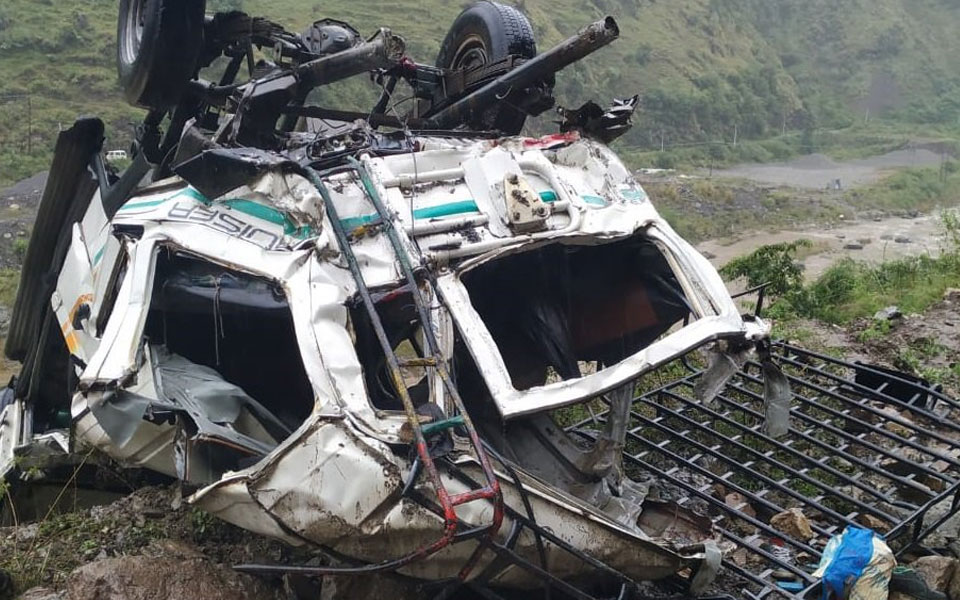
Shimla, Sep 22 : Thirteen people were killed on Saturday when an overcrowded bus skidded off the road and fell into a 100-metre deep gorge in Himachal Pradesh, police said.
The vehicle was going to Tiuni in Uttarakhand from Hakoti in Shimla district when it fell into the gorge near Snail, some 65 km from the state capital.
Ten of the victims died on the spot, a police official told IANS. Among the dead was a seven-year-old child.
Witnesses said the administration had a tough time extricating the victims from the badly-mangled bus. The accident spot was seeing rainfall.
Rescue workers said the road where the accident occurred was badly damaged and there was no parapet to prevent the vehicle from rolling down.
Chief Minister Jai Ram Thakur and Governor Acharya Devvrat expressed grief over the accident.
Let the Truth be known. If you read VB and like VB, please be a VB Supporter and Help us deliver the Truth to one and all.
CEC orders immediate arrest of those involved in post-poll violence in Bengal: Official
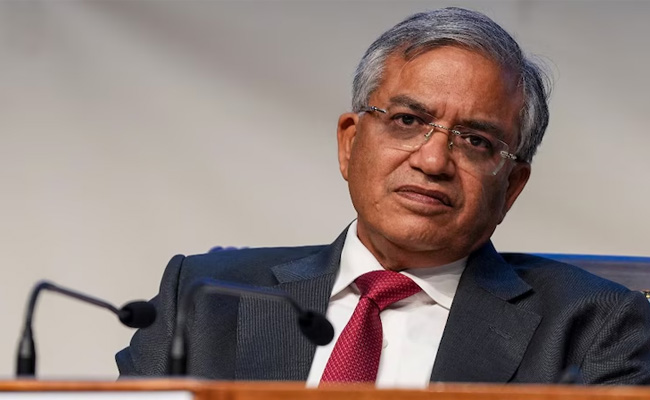
Kolkata (PTI): Chief Election Commissioner Gyanesh Kumar directed the authorities concerned to immediately arrest those involved in post-poll violence and vandalism in West Bengal, an official said on Wednesday.
The Election Commission's directive came after two persons were killed in alleged incidents of post-poll violence in the state on Tuesday, besides scores of party offices being ransacked.
The CEC issued instructions to the West Bengal chief secretary, director general of police, Kolkata police commissioner and directors general of central armed police forces, along with all district magistrates, superintendents of police and other officials, to maintain continuous patrolling in sensitive areas, he said.
"Those responsible for inciting violence and carrying out acts of vandalism must be arrested immediately," the official said, quoting the CEC's instruction.
The chief election commissioner also stressed the need for swift and firm enforcement of the law, he added.
This directive came amid concerns over law and order in parts of the state, with the Election Commission closely monitoring the situation, he added.
"We have been asked to remain on high alert and ensure that any attempt to disturb peace is dealt with firmly," a senior police officer said.
The state authorities have intensified vigil across districts, with coordinated efforts between the police and central forces to prevent any untoward incident, he added.
The assembly elections were held in West Bengal in two phases - April 23 and 29. The counting of votes took place on May 4.
The BJP sealed a landslide victory with 207 seats in the 294-member assembly, ending the TMC's uninterrupted 15-year rule in the state.