1/3 of Union Council of ministers are first-timers
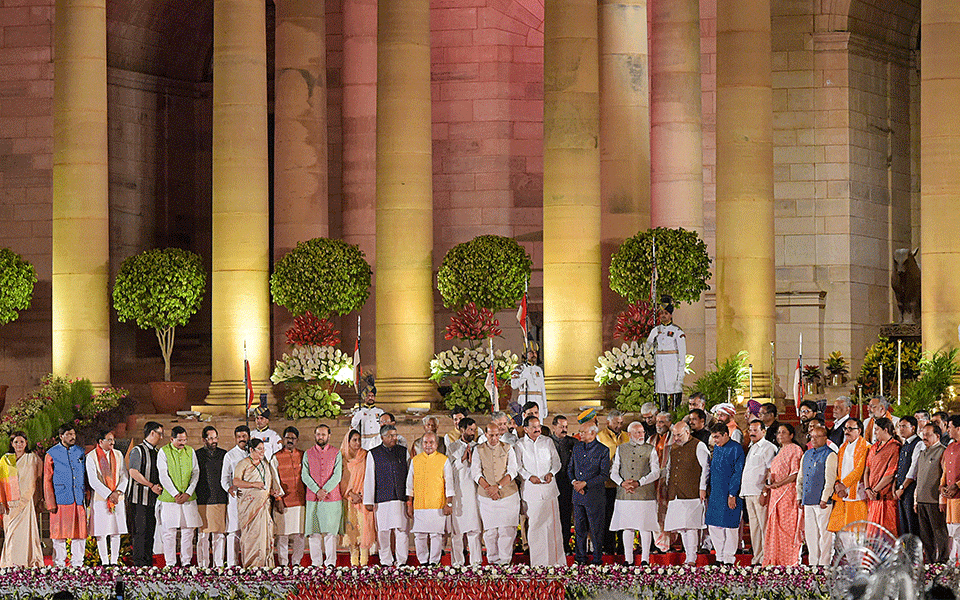
New Delhi: One-third of the total ministers in the Modi's 2.0 Cabinet are the first-timers, which includes BJP president Amit Shah and former foreign secretary S Jaishankar.
Two former chief ministers -- Ramesh Pokhriyal (Uttarakhand) and Arjun Munda (Jharkhand) -- have taken oath as Union ministers for the first time.
This will be the first innings as Union ministers for six Cabinet ministers and 13 Ministers of State in the Modi government. Most prominent among them are Shah and Jaishankar, who are likely to get high profile ministries.
While Shah won Lok Sabha polls from Gandhinagar with a massive margin, Jaishankar is expected to reach Parliament through the Rajya Sabha route.
BJP's Pralhad Joshi and Shiv Sena's Arvind Sawant will also become Union ministers for the the first time.
Anurag Singh Thakur, Bihar BJP chief Nityanand Rai, former Kerala unit chief V Muraleedharan are also among those who have become part of the Union Council of ministers for the first time.
Other BJP MPs who have become ministers for the first time include Suresh Angadi (Karnataka), Rattan Lal Kataria (Haryana), Renuka Singh Saruta (Chhattisgarh), Som Prakash (Punjab), Rameswar Teli (Assam), Pratap Chandra Sarangi (Odisha), Kailash Choudhary (Rajasthan) and Debasree Chaudhuri (West Bengal).
Besides Prime Minister Narendra Modi, there are 57 ministers in the newly sworn-in Union Council of ministers.
Let the Truth be known. If you read VB and like VB, please be a VB Supporter and Help us deliver the Truth to one and all.
Trump says EU has until July 4 to approve last year's trade deal or it will face higher tariffs
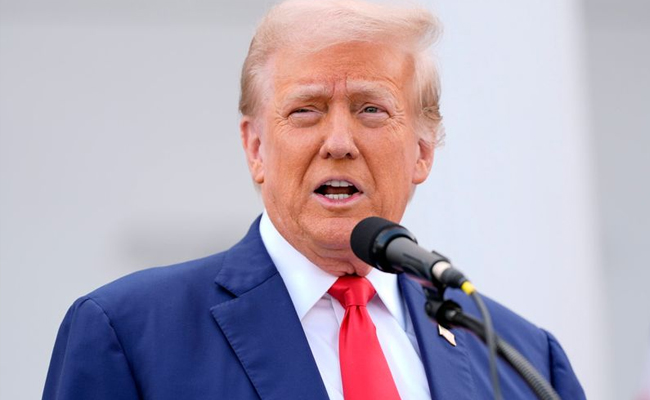
Washington (AP): President Donald Trump has said in a social media post that goods from the European Union would face higher tariff rates if the 27-member bloc fails to approve last year's trade framework by July 4.
The announcement on Thursday appeared to be a deadline extension after the president said last Friday that EU autos would face a higher 25 per cent tariff starting this week. Trump made the updated announcement after what he described as a "great call" with European Commission President Ursula von der Leyen.
Still, the US president was displeased that the European Parliament had yet to finalize the trade arrangement reached last year, which was further complicated in February by the US Supreme Court ruling that Trump lacked the legal authority to declare an economic emergency to impose the initial tariffs used to pressure the EU into talks.
"A promise was made that the EU would deliver their side of the Deal and, as per Agreement, cut their Tariffs to ZERO!" Trump posted. "I agreed to give her until our Country's 250th Birthday or, unfortunately, their Tariffs would immediately jump to much higher levels."
It was unclear from the post whether Trump was implying that the tariff rates would jump on all EU goods or the increase would only apply to autos.
His latest statement indicates he might be backing away from his earlier threat on EU autos by giving the European Parliament several more weeks to approve the agreement.
Under the original terms of the framework, the US would charge a 15 per cent tax on most goods imported from the EU.
But since the Supreme Court ruling, the administration has levied a 10 per cent tariff while investigating trade imbalances and national security issues, aiming to put in new tariffs to make up for lost revenues.