15% drop in Indians studying abroad: Canada down 41%, Russia sees 34% rise
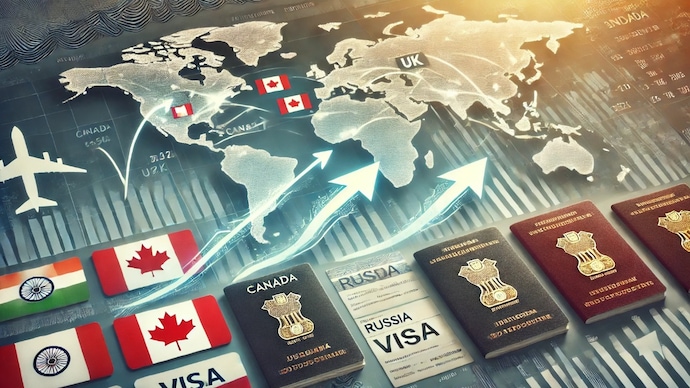
New Delhi: The number of Indian students going abroad for higher education dropped by nearly 15 percent in 2024 compared to the previous year, according to government data presented in Parliament.
In 2024, 7,59,064 Indian students pursued education abroad, down from 8,92,989 in 2023, and 7,50,365 in 2022, said Union Minister of State for Education Sukanta Majumdar while responding to a question by Lok Sabha member and Indian Union Muslim League (IUML) leader E. T. Mohammed Basheer.
Canada saw the largest drop, with the number of Indian students falling by 41 percent. The count dropped from 2,33,532 in 2023 to 1,37,608 in 2024. Canada’s decision to tighten student visa regulations last year has had a massive impact on Indian students, leading to increased visa rejection rates, stricter application scrutiny, and the potential cancellation of study permits.
Other popular study destinations also saw a decrease in Indian student numbers. The United States (US) saw a nearly 13 percent drop, from 2,34,473 in 2023 to 2,04,058 in 2024. The UK saw a nearly 28 percent fall, from 1,36,921 to 98,890 while Australia experienced a 12 percent decrease, from 78,093 to 68,572 students.
On the other hand, Russia experienced a 34 percent increase in Indian students, with more students choosing it as a destination for their studies. France, Germany, and New Zealand also saw an uptick in Indian student numbers.
Meanwhile, Basheer also asked the government if it was aware of agencies misleading Indian students with false promises of education and part-time jobs abroad, and inquired about welfare schemes and support for students overseas.
In its response, the Ministry of Education stated that studies abroad are a matter of individual will and choice, noting that the Indian Community Welfare Fund (ICWF) has been set up by Government of India in all Indian Missions and Posts abroad to meet the contingency expenditure incurred by Indian citizens including Indian students studying abroad.
Let the Truth be known. If you read VB and like VB, please be a VB Supporter and Help us deliver the Truth to one and all.
Sujit Nair raises concerns over speculation of DMK-AIADMK understanding to block TVK
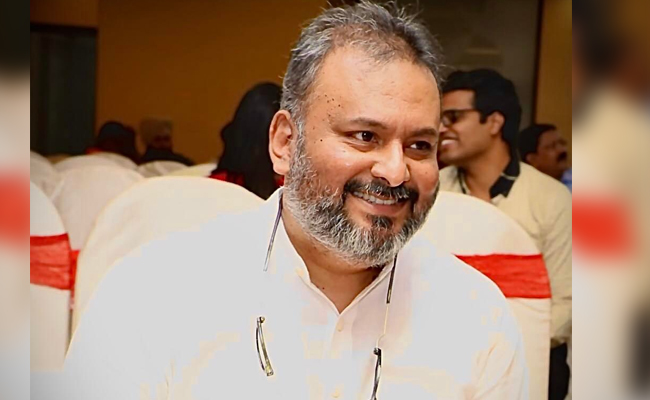
Chennai: Journalist and political commentator Sujit Nair has expressed concern over speculation that the Dravida Munnetra Kazhagam and the All India Anna Dravida Munnetra Kazhagam could explore a post-poll understanding to prevent Vijay-led Tamilaga Vettri Kazhagam from forming the government in Tamil Nadu.
In a social media post, Sujit Nair said the election verdict in Tamil Nadu reflected a clear public demand for political change and argued that the mandate should be respected irrespective of political preferences.
Referring to reports and political discussions surrounding a possible understanding between the DMK and AIADMK, he said he hoped such developments remained only speculative conversations and did not turn into reality.
Nair stated that if such an alliance were to take shape, it would raise serious questions about ideological politics in the country. He said TVK had emerged through a democratic electoral process and that the legitimacy to govern in a parliamentary democracy comes from the people’s verdict.
According to him, attempts to prevent an electoral winner from forming the government through unexpected political arrangements may be constitutionally valid, but many people could view them as politically opportunistic.
He further said that such a move could particularly affect the political image of the DMK, which has historically projected itself around ideology, social justice and opposition politics. Nair said that in ideological terms, the DMK appeared closer to TVK than to the AIADMK, and joining hands with its long-time political rival only to remain in power could weaken its broader political narrative.
He added that the same questions would apply to the AIADMK as well, as the party had spent decades positioning itself against the DMK and such an arrangement could create discomfort among its cadre and supporters.
Drawing a comparison with Maharashtra politics in 2019, Nair said he had expressed similar views when the Shiv Sena formed an alliance with the Indian National Congress and the Nationalist Congress Party after the Assembly elections.
He said post-poll alliances between long-standing political rivals often create a public perception that ideology and electoral mandates become secondary when political power equations come into play.
Nair also said such developments increase public cynicism towards politics and reinforce the belief among voters that ideology is often sidelined after elections.
He maintained that the Tamil Nadu verdict was emphatic and said respecting both the spirit and substance of the mandate was important for the credibility of democratic politics.