175 constables dismissed from service in Bihar over violence by policemen
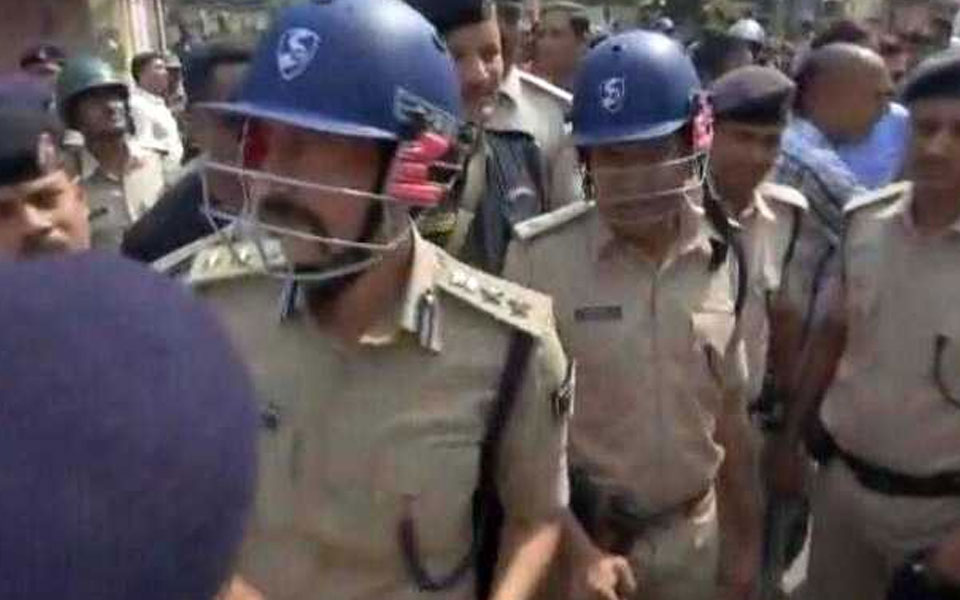
Patna, Nov 5 : As many as 175 police constables, many of them women, have been dismissed from service for indulging in large-scale vandalism and violence here Friday, following the death of a female colleague, a top police official said.
Inspector General of Police (IGP), Patna Zone, Naiyar Hasnain Khan said Sunday the dismissed constables included 167 trainees.
Khan, who had been entrusted with the investigation and taking departmental action against those indulging in the indiscipline, said 23 others posted at the police line here were also suspended.
"Nearly half of the dismissed trainee constables are women. The suspended personnel include a head constable and two others who had the responsibility of assigning duties to trainees," the IGP said.
The police personnel were dismissed and suspended after getting Khan's approval, Patna Senior Superintendent of Police (SSP) Manu Maharaj said.
Policewoman Savita Pathak (22) died at a private hospital here Friday morning, a day after she had to be taken off duty due to a serious stomach pain.
Blaming the seniors for putting Pathak on duty despite ill health, trainee constables went on a rampage, vandalising the entire police line and overturning vehicles of officials on the streets on Friday.
It had taken hours to bring the situation under control with top officials supervising the operations in full riot gear.
The police authorities had said the death appeared to have been caused by dengue. However, the hospital later clarified that the dengue test had not been conducted on her, but she was suffering from some form of viral infection.
Khan said, "During investigation, we found that Pathak was indeed ill and she had been on medical leave in October for three days. In such a situation, she should not have been asked to report to duty."
The IGP added that he had also recommended action against the medical officer of the Police Hospital for his failure to take proper stock of the deceased constable's health and give appropriate advice and treatment, which might have saved her life.
"I also found that more than 90 personnel were posted at the police line for more than four years. This is unacceptable and they will be transferred out of the Patna zone," he said.
Khan said the departmental action was in addition to the FIRs lodged against those who had indulged in the indiscipline. Four FIRs have been lodged in connection with the incident.
"One of the FIRs was lodged by Mohammad Masaluddin, the Deputy Superintendent of Police in-charge of the police line, who was assaulted and chased to his residence by a mob that ransacked his house and misbehaved with his family members," Khan said.
He denied the allegations levelled by the agitators that the deputy SP was responsible for Pathak's death.
"We suspect that the agitators were instigated by some disgruntled personnel, against whom the officer might have taken action in the past," the IGP said.
Chief Minister Nitish Kumar had sought a detailed report on the incident from Director General of Police (DGP) K S Dwivedi.
Let the Truth be known. If you read VB and like VB, please be a VB Supporter and Help us deliver the Truth to one and all.
CM Siddaramaiah alleges ‘criminal conspiracy’ in Sringeri recount, vows legal action
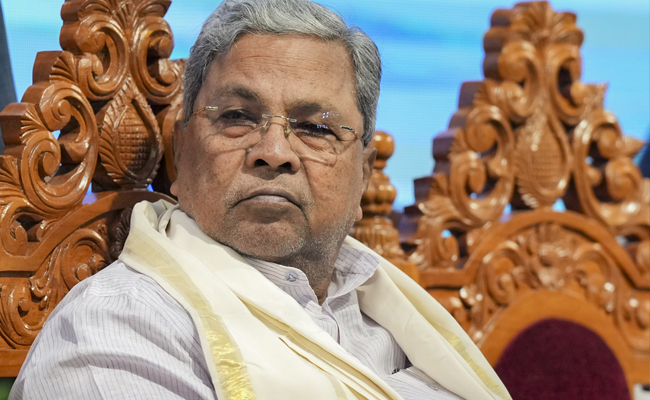
Bengaluru (PTI): Alleging a “criminal conspiracy” by BJP candidate D N Jeevaraj in the Sringeri Assembly poll recounting, Karnataka CM Siddaramaiah on Tuesday said the outcome was manipulated after valid postal ballot votes in favour of Congress leader T D Raje Gowda were tampered with during the recounting process.
Following a Karnataka High Court order on an election petition filed by Jeevaraj, challenging Raje Gowda’s election, the reverification and recounting were conducted on Saturday.
After the reverification and recount of postal ballots for the Sringeri Assembly constituency, votes polled in favour of Raje Gowda were reduced by 255, the returning officer said.
A report on the matter has been submitted to the Election Commission of India for further action, the officer added.
Congress leader Raje Gowda had won the 2023 Assembly polls from Sringeri by 201 votes, defeating his nearest rival Jeevaraj.
Addressing a press conference in Bengaluru, Siddaramaiah said the High Court had directed the recounting of postal ballots and that irregularities were noticed during the exercise conducted on May 2.
“This is a clear case of criminal conspiracy,” Siddaramaiah said, alleging that valid votes cast in favour of Raje Gowda were altered after being accepted by counting agents of all parties, including Congress, BJP, and JD(S).
He claimed that during the recounting of postal ballots, 255 votes were initially accepted as valid by all agents but were later tampered with by subordinate officials.
“There is a second mark on the votes polled in favour of Raje Gowda. They had accepted these as valid votes. Subsequently, another mark was made by officials. This is a clear case of criminal conspiracy,” he said.
When asked who was behind the alleged conspiracy, the CM replied, “It was hatched by Jeevaraj and others. It is planned.”
Siddaramaiah further alleged that the returning officer acted improperly by declaring the result despite the presence of an Election Commission observer during the recounting.
“Immediately after the counting, the returning officer announced the result. He should not have done so; this is against the law,” he said.
He pointed out that Raje Gowda had originally won by 201 votes, but after the recounting, the BJP candidate was declared the winner by 52 votes.
“The BJP has committed a criminal act of conspiracy. This is not vote chori but vote dacoity,” he alleged.
The CM said a police complaint had already been filed by Raje Gowda’s election agent, Sudhir Kumar, and emphasised the need for electoral integrity.
“We want transparency and free and fair elections. That is what our Constitution mandates,” he added.
Stating that the government would pursue legal remedies, Siddaramaiah said, “We are preparing an appeal challenging the returning officer’s announcement in a court of law.”
Responding to a separate query on elections in other states, the CM said there appeared to be an anti-incumbency factor in West Bengal, while results in Tamil Nadu were “surprising,” adding that Vijay’s party was emerging as the largest there.
Following the victory of party candidates in Bagalkote and Davanagere South, Siddaramaiah expressed confidence about future electoral prospects in Karnataka.
“Even in 2028, we will win the Assembly elections. We will come back,” the CM said.
Siddaramaiah added that he would order a forensic examination into the alleged tampering of postal ballots.