19 more telephone exchanges restored in Kashmir Valley
Srinagar, Sep 4: Authorities in Kashmir have restored 19 more telephone exchanges, a month after telephone services were snapped following abrogation of provisions of Article 370, officials said on Thursday.
Landline telephone connections started working in commercial hub of Lal Chowk and press colony in the early hours of Thursday, the officials said.
They said 19 telephone exchanges have been restored. There are around 100 telephone exchanges in Kashmir Valley.
The officials said no decision has been yet taken on restoration of mobile telephone and Internet services on all platforms.
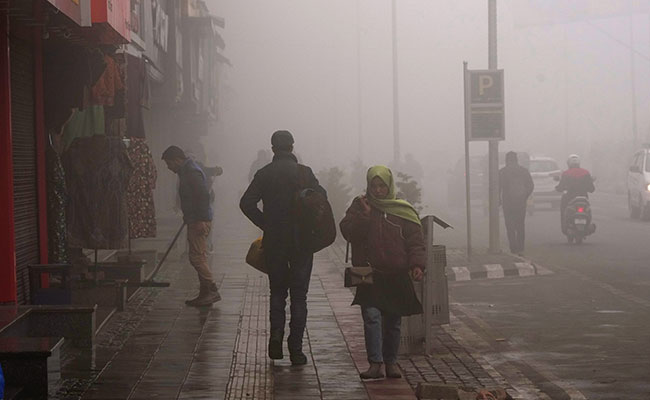
Meanwhile, there was more movement of private vehicles on city roads but the shutdown in the valley continued for the 32nd day on Thursday.
Markets and other business establishments remained closed while public transport was off the roads across the valley today, officials said.
A large number of private vehicles could be seen plying in many parts of the city while some vendors also plied their trade.
The efforts of the state government to open schools have not borne any fruit as parents continued to keep children at home due to apprehensions about their safety.
Government offices are open but attendance in many offices was thin due to lack of public transport, the officials said adding offices at district headquarters registered normal attendance.
Restrictions under section 144 CrPC, which were imposed last month, have been eased in most parts of Kashmir but there were no signs of end to the deadlock.
Restrictions continued in old city areas where security personnel have been deployed in strength to maintain law and order in view of a youth succumbing to injuries at a hospital here on Wednesday.
The youth was injured during clashes between protestors and security personnel on 6 August and succumbed after battling for life for one month.
Officials said the youth had sustained critical injuries after being hit by a stone hurled by protestors.
Most of the top level and second rung separatist politicians have been taken into preventive custody while mainstream leaders including three former chief ministers Farooq Abdullah, Omar Abdullah and Mehbooba Mufti have also been either detained or placed under house arrest.
Let the Truth be known. If you read VB and like VB, please be a VB Supporter and Help us deliver the Truth to one and all.
AIITA welcomes Karnataka’s ban on obscene songs in school events
Bhatkal: The Karnataka unit of the All India Ideal Teachers Association (AIITA) has welcomed the Karnataka government’s decision to strictly ban school children from dancing to obscene songs during educational and cultural programmes in government, aided, and private schools across the state.
AIITA Karnataka State President M. R. Manvi congratulated the government for taking what he termed an important step to preserve the sanctity of education.
“Such decisions to safeguard the dignity of school children and uphold the values of education are the need of the hour. This rule should not be limited to government schools alone but must be strictly implemented in all private educational institutions as well,” he said.
He further urged the government to address other concerns within school programmes.
“The government should not only prohibit obscene dances in the name of school anniversaries, but also ensure that plays and dialogues that incite religious hatred are avoided. Schools should be centres of harmony, not platforms for spreading hatred,” he added.
According to a recent circular issued by the Department of School Education and Literacy, obscene dances are adversely affecting the mental health and moral values of students.
In this regard, schools have been advised to use songs that promote nationalism, positive thinking, the greatness of Kannada culture, and value-based traditions instead of inappropriate content during programmes.
The circular also emphasises that students should be dressed in decent attire.
AIITA also backed the department’s warning that disciplinary action would be taken against head teachers if such guidelines are violated. The association has further demanded that district Deputy Directors of Public Instruction strictly monitor the implementation of these rules.