1993 blasts death row convict, Tahir Merchant dead
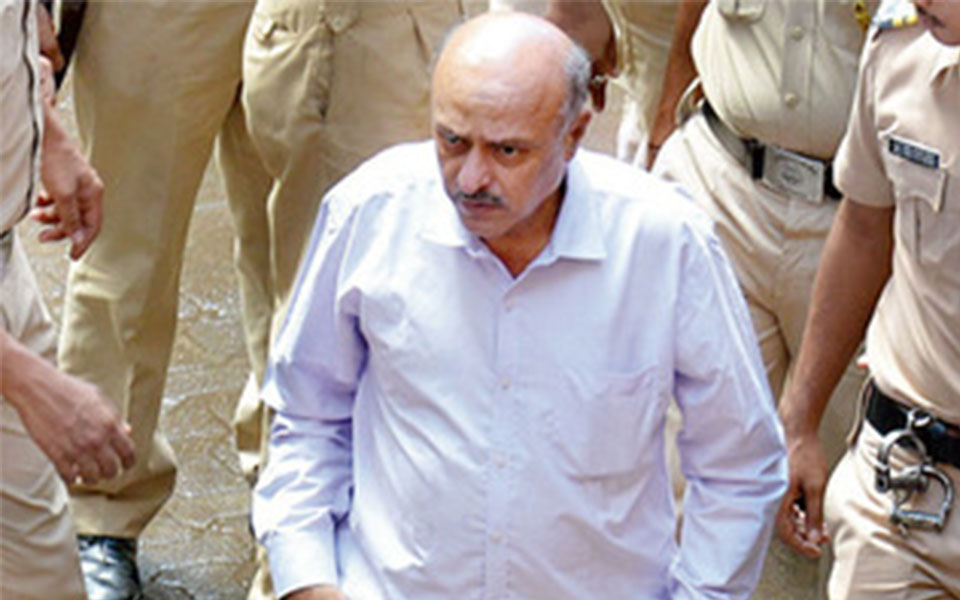
Pune, April 18: M. Tahir Merchant alias Tahir Takla, one of the convicts in the March 1993 Mumbai serial blasts who was sentenced to death, died of a heart attack here on Wednesday, a police officer said.
Merchant, who was lodged in the Yerawada Central Jail, suffered a heart attack in the prison around 3 a.m. and was rushed to the Sassoon Hospital.
However, he failed to respond to the treatment and breathed his last around 3.45 a.m., said Additional Director General of Police (Prisons) B.K. Upadhyay.
On September 7, 2017, Merchant, 55, was sentenced to death by a Special TADA Court here for conspiring, facilitating and knowingly commissioning acts of terror leading to the March 1993 serial bomb explosions which rocked Mumbai.
But in December 2017, the Supreme Court stayed the sentence.
Despite his unassuming appearance, Merchant was a part of the 'inner circle' of confidantes of absconder mafia don Dawood Ibrahim Kaskar and Tiger Memon, the two prime accused in the serial bomb blasts.
Like the Memons family and other accused, he too fled the country shortly after the blasts but was caught in Abu Dhabi in 2010.
Soon after the blasts, a Mumbai court issued a non-bailable arrest warrant against him.
Merchant had taken part in the blast conspiracy, hatched at Dawood's homes in Dubai, along with Tiger Memon.
Besides, Merchant was found guilty of sending some of the accused to Pakistan to acquire training in handling weapons and explosives, according to the investigators.
On March 12, 1993, the country's commercial capital was rocked by a series of 13 blasts in quick succession at various locations in the city and suburbs, creating the worst unprecedented mayhem in the country, killing 257 and injuring 700 others.
The prime targets included the Air India Building, Bombay Stock Exchange and Zaveri Bazar among others, leading to damage or destruction of public and private properties worth Rs 27 crore.
Let the Truth be known. If you read VB and like VB, please be a VB Supporter and Help us deliver the Truth to one and all.
Telugu actress death: SC upholds jail for paramour, directs him to surrender
New Delhi (PTI): Ruling out strangulation and rape, the Supreme Court on Tuesday upheld the two-year jail term of a man challenging his conviction for abetting the suicide of Telugu actress Pratyusha in 2002, and directed him to surrender within four weeks.
Pratyusha died in Hyderabad on February 24, 2002.
The gist of the case against Gudipalli Siddhartha Reddy, according to the remand report, is that he and Pratyusha were in love for six years.
While the relation was acceptable to Pratyusha's mother, Reddy's mother did not agree to the alliance on account of which both of them decided to commit suicide.
On February 23, 2002, both of them went in a car, purchased a pesticide bottle, mixed it in coke and consumed it. However, wisdom prevailed over them and they decided that they should not die.
They drove to Care Hospital in Hyderabad. In spite of the medical care, Pratyusha died while Reddy survived.
A bench comprising justices Rajesh Bindal and Manmohan also dismissed the plea filed by P Sarojini Devi, Pratyusha's mother, who alleged foul play in the death.
"This court holds that the accused's conduct in entering into and acting upon the suicide pact falls squarely within all the three situations envisaged in Section 107 (Abetment) of the IPC. His participation directly facilitated the deceased's suicide. "Notably, it is not his defence that the deceased was the dominant personality who pressured him into the pact. His culpability therefore stands established," the bench said.
The top court said the allegation of homicidal death by manual strangulation is wholly unsustainable.
"A wealth of ocular and medical evidence points to poisoning. The materials on record, when examined holistically, leave no room for doubt that the deceased died due to consumption of organophosphate poison, specifically Nuvacron...
"Consequently, the convergence of multiple independent expert opinions lends overwhelming credibility to the conclusion that the deceased died of poisoning," the bench said.
The top court also slammed Dr Muni Swamy, who conducted post-mortem of the actress, and said even though there was a doctor on duty on February 25, 2002, he came to the mortuary on his own and did the autopsy.
The bench said it was surprising as Dr Swamy was neither on duty at the mortuary nor on call duty as professor.
"The premature and erroneous opinion of Dr. Muni Swamy unleashed a wave of public controversy. Media reports amplified his conclusions, leading to widespread suspicion of investigators and calls for immediate action against alleged perpetrators.
"This demonstrates how a single erroneous report, when publicised prematurely, can distort public perception and derail the course of justice," the bench said.
In 2011, the Andhra Pradesh High Court reduced the jail sentence of Reddy, who was convicted for her death, to two years from the five years earlier awarded.
The trial court had on February 23, 2004, sentenced Reddy to five years' imprisonment and slapped a fine of Rs 5,000 on charges of abetment of suicide. It had also awarded him one more year of imprisonment and a fine of Rs 1,000 for attempting suicide.