2 days' WFH for govt offices, Metro use by ministers: Delhi CM's call for fuel conservation
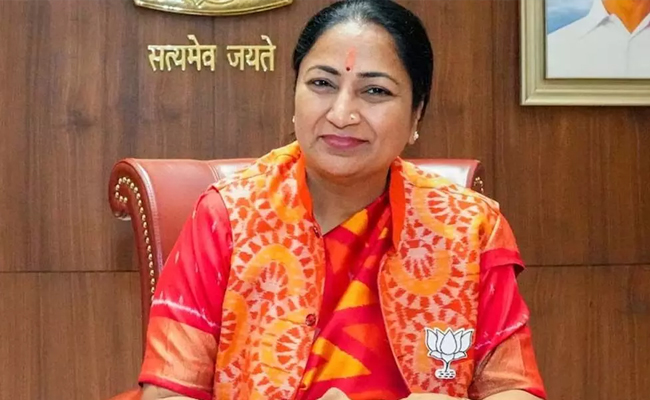
New Delhi (PTI): Delhi Chief Minister Rekha Gupta on Thursday announced a slew of measures including two days of 'work from home' (WFH) for government offices, use of Metro trains on Mondays by ministers and officers, and a voluntary 'no-vehicle day' every week.
Gupta said in a press conference attended by her Cabinet colleagues that the government has drawn an extensive plan under "Mera Bharat, Mera Yogdan" to implement the appeal of Prime Minister Narendra Modi for saving fuel and wise expenditure.
She said all Delhi government offices will follow WFH two days a week. The private sector will also be requested to follow it, she said.
Gupta said all ministers, officers and she herself will use Metro for commuting on Mondays while people will be requested to observe 'no-vehicle day' every week.
The government has also decided to cancel all official foreign visits by ministers for one year while no big events will be hosted by it for the next three months, she said.
The chief minister said petrol and diesel quotas of the Delhi government officers have also been slashed by 20 per cent.
Earlier, Gupta headed a meeting with all her Cabinet ministers and senior officers of the government to discuss ways to save fuel and other resources amid global uncertainty over crude oil and gas supplies.
The chief minister has also cut down on her carcade by 60 per cent, following Prime Minister Narendra Modi's appeal to people to spend wisely and save fuel in view of the war in West Asia.
The chief minister's convoy now has only four vehicles, including two EVs.
Let the Truth be known. If you read VB and like VB, please be a VB Supporter and Help us deliver the Truth to one and all.
Bengaluru (PTI): Karnataka Minister Priyank Kharge met a high-level delegation from Chile, led by Chilean Foreign Minister Francisco Pérez Mackenna, at Vidhana Soudha on Thursday to discuss collaboration in emerging technologies, clean energy, and startup ecosystems, officials said.
The delegation’s visit to Bengaluru, as part of its India engagements, underscores Karnataka’s growing prominence as a preferred partner for global collaborations in technology, innovation, and startup ecosystems, officials added.
The discussions reflected strong alignment between Chile’s evolving technology-focused growth strategy and Karnataka’s established leadership in innovation and deep-tech ecosystems, according to a statement.
Both sides explored opportunities to build partnerships that move beyond traditional sectors and focus on innovation-led growth, talent exchange, and market access.
The meeting focused on opportunities in renewable energy, including green hydrogen and sustainable industrial innovation.
Other potential areas of collaboration included marine biotechnology, aquaculture technologies, and AI applications across traditional industries.
According to the state IT minister, Karnataka is now a global hub for deep-tech, AI, biotech, aerospace, and advanced research, backed by one of the world’s strongest talent pipelines.
“As partners under the global innovation alliance, we must move beyond agreements on paper to actionable collaboration,” Kharge said.
“We are keen to work with Chile on startup exchanges, market access programmes, and building joint innovation corridors, including R&D centres, incubators, and accelerators. Chile’s position as a gateway to Latin America presents a significant opportunity for our startups to scale globally,” he added.
Officials said the engagement builds on the Letter of Intent signed between the Government of Karnataka and the Government of Chile during the Bengaluru Tech Summit, which established a framework for collaboration in startups, emerging technologies, research, and skill development under the Global Innovation Alliance.
Mackenna, Chile’s Minister of Foreign Affairs, said the country is actively advancing its transition toward a knowledge- and technology-driven economy.
“Our engagement with Karnataka reflects our interest in building strong innovation partnerships that enable technology exchange, talent collaboration, and access to dynamic startup ecosystems,” he added.
“We see significant potential to work together in sectors such as clean energy, digital technologies, and emerging industries, while also strengthening Chile’s role as a bridge between India and Latin America,” he said.