Two held for hoarding 398 LPG cylinders; officials say no need to panic-buy fuel
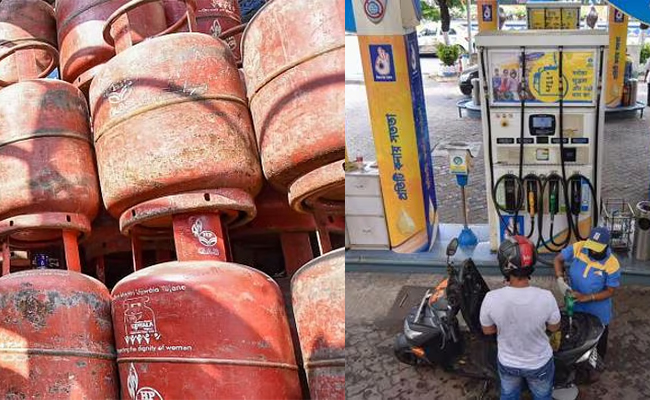
Madurai/Tenkasi/Chennai (PTI): Two persons were arrested and detained under the Goondas Act in Madurai for allegedly hoarding 398 LPG cylinders for black marketing, marking the first time such stringent action has been taken in Tamil Nadu for cylinder hoarding, police said on Friday.
Meanwhile, Tamil Nadu Petroleum Dealers' Association urged people not to panic-buy petrol or diesel, stating that 14 terminals in Tamil Nadu have enough stock to replenish 7,000-plus retail outlets as per their demand.
The arrests in Madurai followed a tip-off received by the Civil Supplies Criminal Investigation Department (CS-CID) regarding the illegal diversion of subsidised domestic gas cylinders for commercial use.
Acting on the information, a special team conducted a raid at an open plot near the residence of Palani in the Kovilpappakudi area, where they seized 100 subsidised domestic cylinders and 109 commercial cylinders.
In a subsequent raid at the house of Madan Kumar, 27, in Anandam Nagar, officials recovered another 189 cylinders, including 63 domestic and 126 commercial units.
A senior official stated that both accused have been booked under the Essential Commodities Act and were subsequently detained under the Prevention of Black Marketing and Maintenance of Supplies of Essential Commodities Act, commonly known as the Goondas Act, by Madurai District Collector Praveen Kumar.
The CS-CID Madurai zone has issued a stern warning that illegal hoarding of essential commodities will be met with severe legal consequences.
The crackdown comes amid rising concerns over a perceived fuel and gas shortage in the region.
K P Murali, President of the Tamil Nadu Petroleum Dealers' Association, urged the public not to panic or indulge in panic buying.
He clarified that the state currently holds sufficient stocks of petrol and diesel to last for at least three weeks.
"There is no need for the public to fear a shortage. All dealers have adequate stock and are continuously receiving supplies from oil companies. Panic buying will only create an artificial shortage that benefits no one," Murali told PTI.
According to him, Tamil Nadu has 14 terminals, including three in Chennai, that stock fuel and supply retail outlets.
"Dealers usually have three days' stock with them. And they buy from these terminals as and when they need. This is happening as usual. So, there is no need to panic," Murali added.
However, he agreed that the rumour might have started from some small outlets supplied by private companies like Shell running dry.
"More than 7,000 dealers are associated with our organisation and they all have access to terminals to replenish their stock as per demand," Murali said.
Meanwhile, addressing a traders' association meeting in Tenkasi on March 12, A M Vikkrama Raja, President of the Tamil Nadu Vanigar Sangankalin Peramaipu, expressed concern over the impact of the shortage on the hospitality sector.
"The Union government must take action on a war footing to ensure that traders are not affected as they were during the Covid-19 period. Due to the cylinder shortage, items like 'dosa', 'poori', and 'parotta' are becoming unavailable in hotels. While we are doing our best to feed the people, some agencies are hoarding cylinders and selling them for as high as Rs 4,000. Authorities must conduct inspections and take strict action against such elements," Raja told reporters.
Raja further warned of state-wide protests if fuel prices are hiked under the pretext of shortage. He also announced a major traders' conference in Tiruvarur on May 5 to demand a special protection law for small-scale traders against the encroachment of multinational companies.
Let the Truth be known. If you read VB and like VB, please be a VB Supporter and Help us deliver the Truth to one and all.
Correspondents' dinner firing: World leaders say political violence has no place in democracy
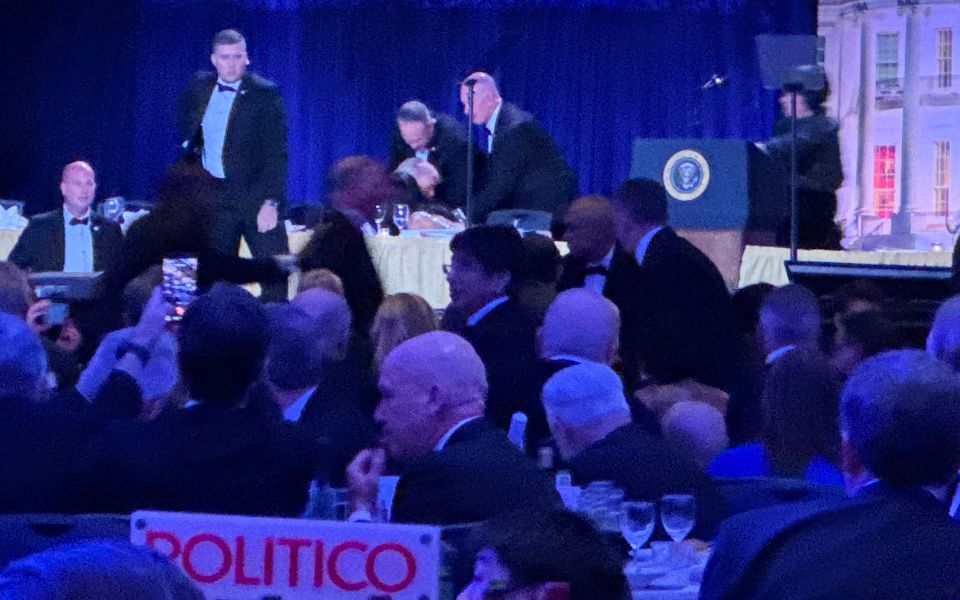
Washington (PTI): World leaders expressed relief that US President Donald Trump, First Lady Melania and other guests were unharmed after a shooting incident at the White House Correspondents' dinner here on Saturday night and asserted that political violence has no place in a democracy.
Reacting to the incident, Prime Minister Narendra Modi said he was relieved that President Trump, First Lady Melania and Vice President J D Vance were safe and unharmed after a security incident at the White House Correspondents' dinner in Washington.
Modi said violence has no place in democracy and must be unequivocally condemned.
"Relieved to learn that President Trump, the First Lady and Vice President are safe and unharmed following the recent security incident at a Washington DC hotel. I extend my best wishes for their continued safety and well-being. Violence has no place in a democracy and must be unequivocally condemned," Modi said in a post on X.
Canadian Prime Minister Mark Carney, who has had frequent run-ins with Trump, described the shooting incident at the Washington Hilton hotel as a “disturbing event”.
“I am relieved that the President, the First Lady, and all guests are safe following reports of gunfire at the White House correspondents’ dinner in Washington tonight. Political violence has no place in any democracy, and my thoughts are with all those who have been shaken by this disturbing event,” Carney said in a post on X.
President of the Republic of Korea, Lee Jae Myung asserted that political violence “can never be justified under any circumstances.”
“The Government of the Republic of Korea firmly opposes all forms of violence and extremism that erode the values of democracy and the rule of law,” he said in a social media post.
Prime Minister of Japan Sanae Takaichi said, “Violence must never be tolerated anywhere in the world”
“I am relieved to hear that President Trump is safe following the terrifying gunfire. Violence must never be tolerated anywhere in the world,” she posted on social media.
Israeli President Benjamin Netanyahu called the incident “an attack on all the democracies.”
"This wasn't just an attack on Donald Trump. This was an attack on a candidate for the presidency of the United States. This was an attack on America. It was an attack on democracy, it was an attack on all the democracies,” he posted on social media.
Mexican President Claudia Sheinbaum said it was “good that President Trump and his wife are safe following the recent events”.
“We send them our respect. Violence must never be the way,” she said.
Australian Prime Minister Anthony Albanese said he was pleased to hear all attendees were safe. “We applaud the work of the Secret Service and law enforcement agencies for their swift action,” he said in a statement.
Delcy Rodriguez, the acting President of Venezuela following the capture of Nicolas Maduro by US forces, condemned the attack against Trump.
"We extend our best wishes to them and to all attendees of the Correspondent’s dinner. Violence is never an option for those who uphold the values of peace," she wrote on X.
Pakistani Prime Minister Shehbaz Sharif also took to social media to condemn the incident, stating he was "deeply shocked" to hear the news.
"Relieved to know that President Trump, the First Lady, and other attendees are safe," Sharif said.
Trump has survived two assassination attempts over the past two years – first at a presidential election campaign rally in Butler, Pennsylvania, on July 13, 2024, and later in Palm Beach, Florida, on September 15, 2024.