2 held in Dabholkar murder case sent to CBI custody till Jun 1
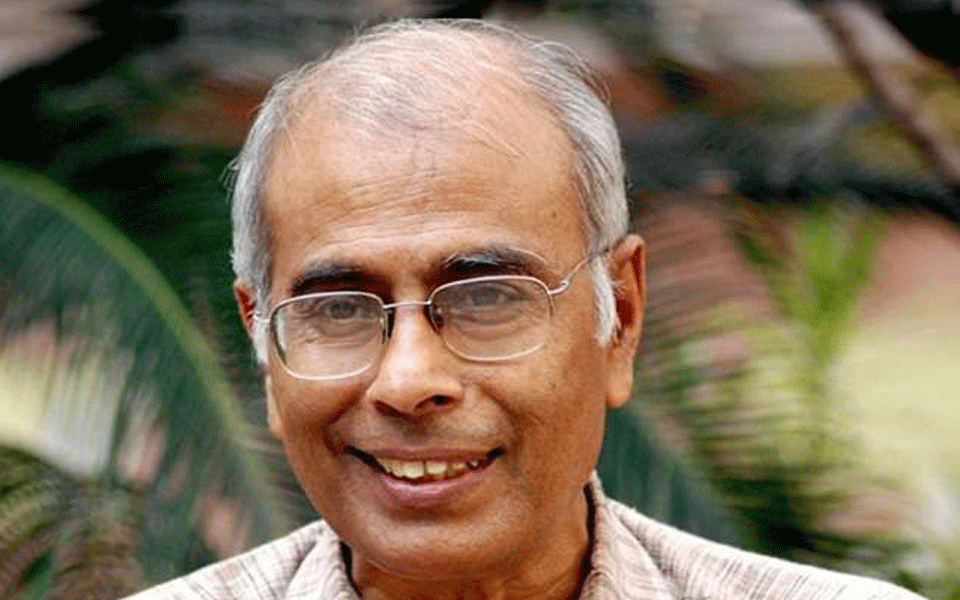
Pune: A lawyer and a right-wing activist arrested for allegedly helping in destruction of evidence in the Narendra Dabholkar murder case were sent to CBI custody till June 1 by a Pune court on Sunday.
The Central Bureau of Investigation (CBI) arrested lawyer Sanjeev Punalekar and Vikram Bhave, a member of the Sanatan Sanstha, in Mumbai on Saturday.
They were produced before the Pune-based court of Additional Sessions Judge S N Sonawane, who remanded them to the agency's custody till June 1 after hearing the arguments of the prosecution and the defence.
Dabholkar, an anti-superstition activist, was shot dead while he was out on morning walk in Pune on August 20, 2013.
A preliminary probe has revealed that Punalekar and Bhave had links with the two alleged killers of Dabholkar and had also helped in destruction of evidence, apart from providing other assistance.
The CBI told the court on Sunday that Punalekar had allegedly asked Sharad Kalaskar, one of the shooters arrested in the case, to destroy the weapons used in the killing of Dabholkar and journalist Gauri Lankesh.
It also said Bhave had allegedly assisted the shooters and conducted a reconnaissance of the spot, where Dabholkar was shot at.
Bhave, a convict in the 2008 Gadkari Rangayatan blast case, was out on bail.
After his release on bail, he had penned a book in Marathi, titled "Malegaon Sphotamagil Adrushya Haat" (The invisible hand behind the Malegaon blast).
It is suspected that it was Bhave who had identified Dabholkar to the shooters, a CBI official said on Saturday.
So far, six people, including Sanatan Sanstha member and ENT surgeon Virendrasinh Tawde, Sachin Andure and Kalaskar, have been arrested by the CBI in the case.
The central agency had earlier claimed that Tawde was the "mastermind" of the conspiracy to kill Dabholkar and veteran Communist Party of India (CPI) leader and rationalist Govind Pansare.
Pansare was killed in Kolhapur, Maharashtra in February, 2015.
The CBI had claimed that Andure and Kalaskar had shot Dabholkar dead.
The agency has also arrested Rajesh Bangera, Amol Kale and Amit Digvekar in connection with the alleged conspiracy.
Bangera and Kale are also accused in the Gauri Lankesh murder case.
Lankesh was shot dead in Bengaluru on September 5, 2017.
Let the Truth be known. If you read VB and like VB, please be a VB Supporter and Help us deliver the Truth to one and all.
Bihar: Over 150 children fall ill after consuming 'mid-day meal' in Saharsa
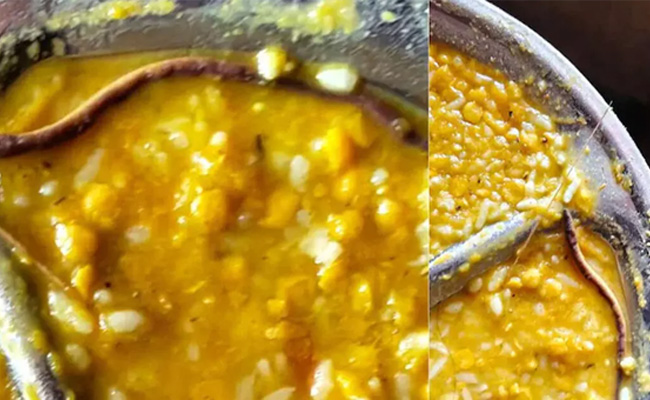
Saharsa (PTI): More than 150 children were taken ill after allegedly consuming food that was part of the mid-day meal in a school in Bihar’s Saharsa district, a senior official said on Thursday.
The incident occurred at a middle school in Baluaha village of the district.
The official said that 115 children were undergoing treatment at the Sadar Hospital, while around 50 students were admitted to Mahishi Public Health Centre.
“We received information that several children fell ill after consuming the mid-day meal in Baluaha. The children were initially treated at the primary health centre, but later, many were referred to the Sadar Hospital,” Saharsa District Magistrate Deepesh Kumar told reporters.
“According to doctors, the health condition of the children has improved, but they will be kept under observation for some time. There is no need to panic. Some kids are having mild fever. They are being treated accordingly,” Kumar said.
Meanwhile, family members of some children claimed that a snake was found in the container in which cooked pulses was stored at the school.
Of the 545 students present in the school, 200 had already eaten their meals by the time the snake was spotted, and later complained of stomach ache and vomiting, they said.
Regarding the claims, the DM said food samples have been collected from the school.
“We will be able to comment on this only after the results of the tested samples arrive,” he said.