2008 Ahmedabad serial blasts case: Gujarat court convicts 49 accused, acquits 28 others

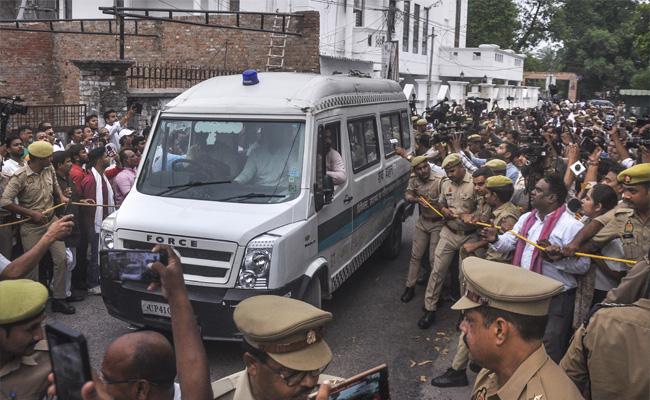
Ahmedabad(PTI): A special court here on Tuesday convicted 49 accused in the case of Ahmedabad serial blasts in 2008 in which 56 people were killed and over 200 suffered injuries.
Judge A R Patel also acquitted 28 other accused, giving them the benefit of doubt, in the case pertaining to 21 synchronised blasts that had rocked the city in Gujarat.
The hearing to decide the quantum of sentence for the convicted persons will start from Wednesday, the court said.
Those convicted by the court include Safdar Nagori, Javed Ahmed, Atikur Rehman.
The court, which gave the verdict in the terror incident after 13 years, had concluded the trial against the 77 accused in September 2021.
The 49 accused were convicted under Section 16 of the Unlawful Activities (Prevention) Act, which deals with terrorism, and other provisions of the stringent act, as well as Indian Penal Code Sections 302 (murder) and 120-B (criminal conspiracy), special public prosecutor Amit Patel said.
He said the prosecution had cited the incident as an act of terrorism, and as many as 547 charge sheets were filed and 1,163 witnesses examined during the course of trial.
"The court acquitted 28 accused, giving them the benefit of doubt. Further details will be clear from the judgement, which we have not yet gone through," he said.
Among those acquitted are Mohammad Irfan, Nasir Ahmad and Shakeel Ahmed.
All the accused attended the court proceedings on Tuesday through video conferencing from different jails. They will also remain present virtually during the hearing on the quantum of sentence, Patel said.
The court had concluded the trial against the 77 accused in September last year.
The trial began in December 2009 against 78 people connected to the banned terror outfit Indian Mujahideen (IM). The number of accused later came down to 77, after one of them turned approver.
Four more accused were arrested later, but their trial has not yet commenced, a senior government lawyer said.
Fifty six people were killed and over 200 injured in 21 blasts that hit the city within a span of 70 minutes on July 26, 2008.
The police had claimed that people associated with the IM, a faction of radicals of the banned Students Islamic Movement of India (SIMI), were involved in the blasts.
It was alleged that the IM terrorists had planned these blasts as a revenge for the 2002 post-Godhra riots, in which several persons from the minority community had died.
Days after the serial blasts in Ahmedabad, the police recovered bombs from different parts of Surat, following which 20 FIRs were registered in Ahmedabad and 15 in Surat.
The trial was conducted after the court merged all the 35 FIRs.
Let the Truth be known. If you read VB and like VB, please be a VB Supporter and Help us deliver the Truth to one and all.
Congress using hijab issue to pacify minority anger, alleges Karnataka LoP R Ashoka
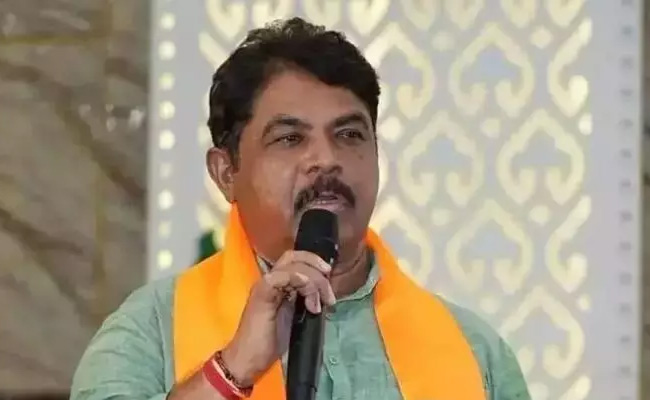
Bengaluru: Leader of Opposition in the Assembly R. Ashoka has accused the Congress government of using the hijab issue to placate what he described as discontent among minority voters after the Davanagere by-election.
In a post on X on Wednesday, Ashoka alleged that the state government, instead of addressing issues such as price rise, corruption, farmers’ distress and law and order, was attempting to retain its minority vote base by reviving the hijab issue.
Referring to the 2022 dress code introduced by the BJP government, which prohibited hijab in schools and colleges, Ashoka said the Karnataka High Court had upheld the policy and emphasised the importance of discipline in educational institutions.
He questioned the Congress government’s move to revisit the issue and asked whether setting aside the court-backed policy to benefit one community could be described as secularism.
Ashoka further alleged that while the government was willing to permit hijab, it continued to prohibit saffron shawls.
He accused the government of dividing students on religious lines rather than treating schools and colleges as spaces of equality.
Drawing a comparison with Mamata Banerjee’s government in West Bengal, Ashoka claimed that excessive appeasement politics had harmed the state and warned that the Congress in Karnataka could face a similar political response.
He said voters in Karnataka would teach the Congress a lesson for what he termed “vote-bank politics” and for compromising constitutional and judicial principles.