2020 riots: SC defers to Oct 31 hearing on bail pleas of Umar Khalid, Sharjeel Imam
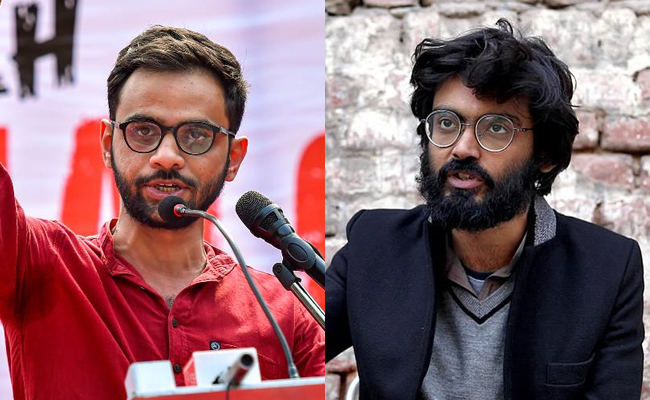
New Delhi (PTI): The Supreme Court on Monday deferred to October 31 hearing on bail pleas of activists Umar Khalid, Sharjeel Imam, Gulfisha Fatima and Meeran Haider in the UAPA case related to the alleged conspiracy behind the February 2020 riots in Delhi.
A bench of Justices Aravind Kumar and N V Anjaria adjourned the matter after Additional Solicitor General S V Raju sought time.
Raju sought two weeks time to file reply in the case but the top court said it would hear the matter on Friday.
"Frankly speaking, in bail matters there is no question of filing counter," the bench said.
The top court on September 22 had issued notice to the Delhi Police and sought its response.
The activists have moved the apex court challenging the Delhi High Court order passed on September 2.
The high court denied bail to nine people, including Khalid and Imam, saying "conspiratorial" violence under the garb of demonstrations or protests by citizens could not be allowed.
Besides Khalid and Imam, those who faced bail rejection are Fatima, Haider, Mohd Saleem Khan, Shifa Ur Rehman, Athar Khan, Abdul Khalid Saifi and Shadab Ahmed.
The bail plea of another accused, Tasleem Ahmed, was rejected by a different high court bench on September 2.
The high court said the Constitution affords citizens the right to protest and carry out demonstrations or agitations, provided they are orderly, peaceful and without arms, and such actions must be within the bounds of law.
While the high court said the right to participate in peaceful protests and to make speeches in public meetings was said to have been protected under Article 19(1)(a), and couldn't be blatantly curtailed, it observed the right was "not absolute" and "subject to reasonable restrictions".
"If the exercise of an unfettered right to protest were permitted, it would damage the constitutional framework and impinge upon the law and order situation in the country," the bail rejection order said.
Khalid, Imam and the rest of the accused persons were booked under the Unlawful Activities (Prevention) Act (UAPA) and provisions of the erstwhile IPC for allegedly being the "masterminds" of the February 2020 riots, which left 53 people dead and over 700 injured.
The violence erupted during the protests against the Citizenship (Amendment) Act and the National Register of Citizens.
The accused, who have denied all the allegations against them, have been in jail since 2020 and had moved the high court after a trial court rejected their bail pleas.
Let the Truth be known. If you read VB and like VB, please be a VB Supporter and Help us deliver the Truth to one and all.
Man booked for duping 7 persons of Rs 91 lakh on promise of awarding govt works

Mumbai (PTI): The Mumbai police have registered a case against a man for allegedly duping seven persons of Rs 91 lakhs on the promise of awarding them works of different government departments, an official said on Tuesday.
The accused was identified as Satish Kadam, a resident of Nanded in Marathwada region, an official said.
A complaint was filed by Hanumant Vadje, who alleged that the accused cheated him and six others of around Rs 91 lakh by promising to give them various works of Urban Development and Social Justice Department, he said.
The fraud occurred between 2024 and 2026, with Kadam collecting money in cash and into his accounts, police said, adding he had returned some amount to them partially.
Multiple cheques issued by the accused bounced, prompting the victim to lodge a complaint at the Marine Drive police station. Based on the complaint, a case of cheating and criminal breach of trust was registered against him.
The case is under further investigation, the official said.