New Delhi (PTI): Over one-fifth of 5,204 MPs, MLAs and MLCs analysed have dynastic backgrounds, with their representation highest in Lok Sabha at 31%, according to poll rights body ADR.

Among national parties, 20% of sitting representatives have dynastic backgrounds. The Congress has the highest share at 32%, followed by the BJP at 18%. The CPI(M) has the lowest, with just 8% of its members from political families.
 
"Among the national parties, 3,214 sitting MPs, MLAs and MLCs have been analysed, and 657 (20%) having dynastic backgrounds. Congress has 32% of the sitting MPs, MLAs and MLCs from dynastic backgrounds followed by BJP with 1%, while smaller parties such as the CPI(M) show minimal dynastic influence, with only 8% of their sitting MPs, MLAs and MLCs from dynastic backgrounds," the report said.
 
The Association for Democratic Reforms (ADR) and National Election Watch's (NEW) report found that 1,107 (21%) of all sitting MPs, MLAs and MLCs have dynastic backgrounds. While State Assemblies have the lowest share at 20%, Lok Sabha, Rajya Sabha and state legislative councils report 31%, 21% and 22% dynastic representation respectively.
 
Among States, Uttar Pradesh tops in absolute numbers with 141 dynasts, followed by Maharashtra (129), Bihar (96) and Karnataka (94). "Among the states, Uttar Pradesh ranks highest in absolute numbers with 141 (23%) out of 604 MPs, MLAs and MLCs analysed having dynastic political backgrounds. Maharashtra follows with 129 (32%) out of 403 sitting MPs, MLAs and MLCs from dynastic backgrounds.
 
"In Bihar, 96 (27%) out of 360 sitting MPs, MLAs and MLCs are from dynastic backgrounds, while Karnataka has 94 (29%) out of 326 sitting MPs, MLAs and MLCs from dynastic backgrounds," the report said.
 
In terms of proportion, Andhra Pradesh leads with 34% of its sitting MPs, MLAs and MLCs belonging to political families, followed by Maharashtra (32%) and Karnataka (29%).
 
"When we look at larger states in terms of proportion, Andhra Pradesh has the highest share of dynastic representation, with 86 (34%) out of 255 sitting MPs, MLAs and MLCs coming from political families.
 
"This is followed by Maharashtra, where 129 (32%) out of 403 MPs, MLAs and MLCs have dynastic background and Karnataka, 94 (29%) out of 326 MPs, MLAs and MLCs having dynastic backgrounds. These figures highlight the continued and widespread prevalence of dynastic politics, particularly in politically significant States," the report said.
 
The report highlights regional patterns, with dynastic politics deeply entrenched in southern States such as Andhra Pradesh and Karnataka, while eastern and northeastern states show more variation. For instance, Bihar reports 27% dynastic representation, but Assam only 9%.
 
State parties display even higher levels with the NCP (Sharadchandra Pawar) and JKNC each recording 42% dynastic representation, followed by YSRCP (38%) and TDP (36%). On the other hand, the Trinamool Congress (10%) and AIADMK (4%) show relatively low levels of dynasticism.
 
Unrecognised parties and independents also show significant dynastic influence, with nearly a quarter of their representatives from political families. Some smaller outfits are entirely family-run.
 
The report said that while only 18% of male MPs, MLAs and MLCs come from political families, the share jumps to 47% for women.
 
"Out of 4,665 sitting male MPs, MLAs and MLCs analysed, 856 (18%) have dynastic backgrounds. Among 539 sitting female MPs, MLAs and MLCs, 251 (47%) are from political families. Dynastic representation is more than twice as high among women compared to men," it said.
 
The report said dynastic rates for females exceed males in nearly all states with female representation (e.g., Maharashtra: 69% vs. 28% male; Andhra Pradesh: 69% female vs. 29% male; Bihar: 57% female vs. 22% male; Telangana: 64% female vs. 21% male).
 
The States/UTs with 100% female dynastic rates include Goa (3 out of 3), Puducherry (1 out of 1) and Dadra Nagar Haveli and Daman Diu (1 out of 1).
 
The highest dynastic females are in Uttar Pradesh, where 29 (42%) are dynastic out of 69; Maharashtra, 27 (69%) out of 39; Bihar, 25 (57%) out of 44; Andhra Pradesh, 20 (69%) out of 29.
 
While the lowest dynastic rates are in West Bengal (28% female, 5% male), reflecting possibly less family-centric politics. The report said 23 (24%) out of 94 sitting independent MPs, MLAs and MLCs analysed have dynastic political backgrounds.
 
The report said dynastic politics in India is not merely about inheritance of seats but a structural feature of the system. Factors such as the dominance of "winnability" in candidate selection, high election costs, and lack of internal party democracy strengthen the hold of political families. Parties routinely prefer dynastic contenders due to their inherited networks of money, muscle, and patronage.
 
The report observed that large states with strong party organizations (like Tamil Nadu, 15% and West Bengal, 9%) show lower dynasticism compared to smaller or mid-sized States (e.g., Jharkhand, 28% Himachal Pradesh, 27%).
 
This suggests that cadre-based or ideological parties (DMK, AIADMK, Left, TMC) may dilute dynastic entry more effectively than regional family-run outfits.
In States like Jharkhand (73% of women dynastic) and Maharashtra (69%), nearly all women in politics rely on family networks. This shows that while dynasticism opens doors for women, it simultaneously limits space for first-generation non-dynastic female politicians, the report said.
 
The report said left-wing and newer reformist parties (CPI(M), AAP) have lowest dynasticism, aligning with their ideological positioning against elitism. By contrast, "social justice" or caste-based regional parties (SP, RJD, JD(U)) exhibit 30'40% dynasticism.

Let the Truth be known. If you read VB and like VB, please be a VB Supporter and Help us deliver the Truth to one and all.


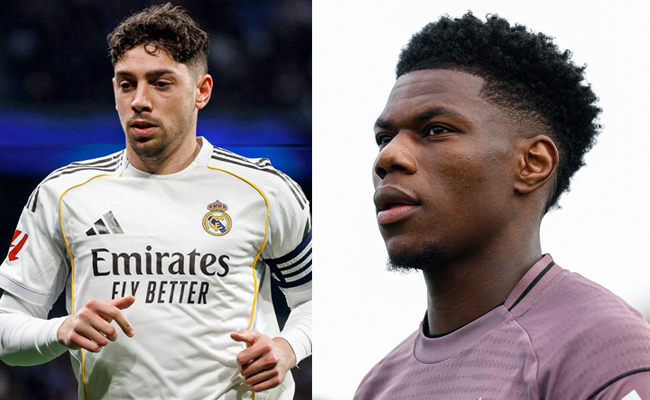
Barcelona (AP): Real Madrid slapped players Federico Valverde and Aurélien Tchouaméni with half-a-million-euro ($588,000) fines on Friday for their altercation during practice.

The massive fines came a day after the midfielders tussled when the team trained. Valverde said in a post on social media on Thursday that no punches were thrown. But Valverde knocked his head on a table and he suffered a small cut that required a brief hospital visit.

On social media, Valverde initially called it a “meaningless fight” with a teammate and said “everything has been blown out of proportion."

His employers, however, considered it a significant enough breach of team discipline to nail both Valverde and Tchouaméni with fines that bite even the bank account of a top soccer player. The half-a-million euro penalties reflect the reputational damage the club was enduring in a chaotic end to a disappointing season.

In a statement, the 15-time European champion said its disciplinary action was concluded after both players expressed to the club “their complete remorse for what happened and apologized to one another.”

Madrid added they also apologized to their teammates, the coaching staff and club supporters, as well as showing their willingness to accept whatever disciplinary action the club deemed “opportune.”

Tchouaméni was back training with Madrid on Friday, two days before they play at Barcelona in a clasico. Madrid has to win otherwise Barcelona will be crowned La Liga champion.

After being notified of the fine, he posted a public apology to the club and its fans on social media.

“What happened this week in training is unacceptable,” Tchouaméni wrote. "I say this while thinking about the example we are expected to set for young people, whether in football or at school.

“Above all, I am sorry for the image we projected of the club.”

Valverde was not at practice due to the head knock.

Both players are set to play in the World Cup next month, with Tchouaméni playing for France and Valverde for Uruguay. 

Chaotic end to a poor season

===================

The run-in between the players, who for seasons have played side by side in Madrid's midfield, came after they argued this week in previous training sessions. But tempers boiled over on Thursday. Spanish media was rife with reports that the players previously disagreed over the club's decision to let coach Xabi Alonso go after just months on the job.

It was not the only altercation involving Madrid players during training this week. Álvaro Carreras confirmed he was in a “minor” incident with a teammate. Spanish media said he and fellow defender Antonio Rüdiger got into a scuffle.

Álvaro Arbeloa, the coach who was promoted from Madrid's reserve team when Alonso was fired in January, will face tough questions on what went wrong inside the changing room when he gives a press conference on Saturday ahead of the clasico at Camp Nou.

Madrid is facing a second consecutive campaign without a major trophy amid rumors in the Spanish media that club president Florentino Pérez is considering bringing back Jose Mourinho to straighten out his underperforming team.