23 Yamuna sites fail water quality test, river can barely sustain life in Delhi: Parliamentary panel
_vb_98.jpeg)
New Delhi (PTI): A parliamentary panel has said the Yamuna river's capacity to sustain life have been found to be almost non-existent in the Delhi stretch, noting that 23 out of the 33 monitored sites, including six in the national capital, failed to meet primary water quality standards.
The Yamuna flows through a 40 km stretch in Delhi, entering at Palla from Haryana and exiting at Asgarpur into Uttar Pradesh.
The dissolved oxygen (DO) levels, which reflect the river's capacity to sustain life, were found to be almost non-existent in the Delhi stretch, the parliamentary standing committee on water resources said in its report tabled in Parliament on Tuesday.
In its report on the Upper Yamuna River Cleaning Project and river bed management in Delhi, the panel warned that despite the construction and upgrade of sewage treatment plants (STPs) in Delhi and Uttar Pradesh, pollution levels remain alarmingly high.
The Committee called for a coordinated response from all stakeholders to tackle pollution and restore the river's health.
It added that out of the 33 monitored sites, only four in Uttarakhand and four in Himachal Pradesh met the primary water quality criteria.
The Central Pollution Control Board (CPCB) assessed water quality at 33 locations between January 2021 and May 2023, with state pollution control boards. The assessment covered four key parameters of Dissolved Oxygen (DO), pH, Biochemical Oxygen Demand (BOD), and Fecal Coliform (FC).
The analysis showed that all four monitored sites in Uttarakhand and Himachal Pradesh met the required standards, while all six sites in Haryana failed. In Delhi, none of the seven sites complied with the standards in 2021, although the Palla site showed improvement in 2022 and 2023.
The panel raised particular concerns over encroachment along the Yamuna floodplains. While Delhi and Haryana provided information on encroachments, Uttar Pradesh and Uttarakhand are yet to furnish complete details.
The floodplain zone of the Yamuna in Uttar Pradesh remains undemarcated, despite its ecological importance in flood management.
The Committee highlighted that the Delhi Development Authority (DDA) retrieved approximately 477.79 hectares from encroachments along the floodplains. However, some parts of the floodplains remain occupied due to ongoing litigation.
The panel urged the Department of Water Resources, River Development, and Ganga Rejuvenation to work with the DDA and the state governments to expedite the removal of encroachments and ensure the restoration of the floodplain ecosystem.
Legacy sludge in the Yamuna riverbed remains a major concern.
A study conducted by the Delhi Irrigation and Flood Control Department in collaboration with CSIR-NEERI found high levels of heavy metals such as chromium, copper, lead, nickel, and zinc in sludge samples collected from key sites like the Old Iron Bridge, Geeta Colony, and the upstream of the DND Bridge during the pre-monsoon period.
The panel recommended controlled dredging to remove this toxic sludge, warning that it poses a serious health hazard and contributes to the river's deteriorating quality.
However, the National Mission for Clean Ganga (NMCG) raised concerns that large-scale dredging could destabilise the riverbed and cause further environmental degradation.
The panel also flagged the failure to maintain environmental flow (E-flow) in the Yamuna. According to the 1994 MoU among Yamuna basin states, Haryana is required to release 10 cumecs of water from the Hathnikund Barrage to maintain ecological balance.
However, the Committee noted that this flow is insufficient, as much of it evaporates or percolates before reaching Delhi.
The panel urged the Department of Water Resources to resolve these differences and increase the E-flow to sustain the river's ecosystem.
The report also criticised the lack of data on unauthorised industries operating in Delhi.
The Delhi State Industrial and Infrastructure Development Corporation (DSIIDC) informed the panel that it only monitors 28 approved industrial areas, 17 of which are connected to 13 Common Effluent Treatment Plants (CETPs). The remaining 11 are not classified as water-polluting industrial areas.
However, the panel noted that no data is available on unauthorized industrial units that might be discharging untreated effluents into the Yamuna.
It recommended that the Delhi government conduct a comprehensive study to identify such units and strengthen pollution control measures.
The panel also pointed to the failure to treat domestic sewage. According to the report, nearly 22 major drains discharge untreated sewage directly into the Yamuna. Despite significant investments under the Namami Gange Programme, the sewage treatment gap remains at approximately 1,500 million litres per day (MLD).
The panel highlighted the impact of pollution on the Yamuna's ecosystem, noting that the absence of dissolved oxygen has severely affected aquatic life.Incidents of dead fish being washed ashore have been reported in Agra and Mathura.
The Committee recommended that the Ministry of Environment, Forest and Climate Change conduct a study to assess the ecological damage.
Moreover, the panel pointed out that bio-monitoring data from the CPCB shows that the biological water quality of the Yamuna is classified as "moderate" or "poor" in most parts of Delhi and Uttar Pradesh.
Pollution from cremation activities along the riverbanks was another key concern.
The panel noted that only one electric crematorium at Nigam Bodh Ghat in Delhi is operational, while most cremations are conducted using wood, contributing to river pollution.
The Committee recommended financial support for state governments to set up more electric and CNG-based crematoriums and to relocate existing cremation sites away from the immediate periphery of riverbanks to prevent contamination.
Let the Truth be known. If you read VB and like VB, please be a VB Supporter and Help us deliver the Truth to one and all.
Sujit Nair raises concerns over speculation of DMK-AIADMK understanding to block TVK
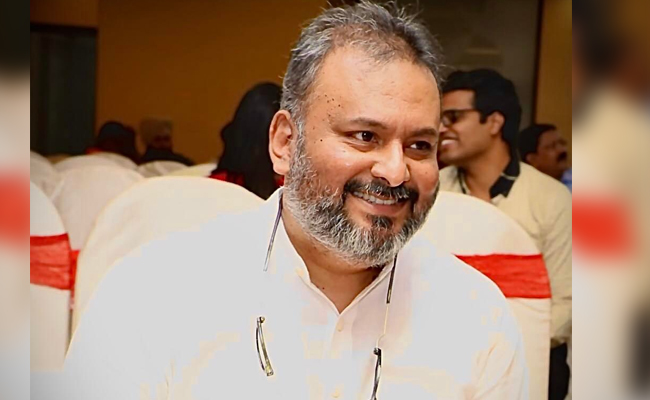
Chennai: Journalist and political commentator Sujit Nair has expressed concern over speculation that the Dravida Munnetra Kazhagam and the All India Anna Dravida Munnetra Kazhagam could explore a post-poll understanding to prevent Vijay-led Tamilaga Vettri Kazhagam from forming the government in Tamil Nadu.
In a social media post, Sujit Nair said the election verdict in Tamil Nadu reflected a clear public demand for political change and argued that the mandate should be respected irrespective of political preferences.
Referring to reports and political discussions surrounding a possible understanding between the DMK and AIADMK, he said he hoped such developments remained only speculative conversations and did not turn into reality.
Nair stated that if such an alliance were to take shape, it would raise serious questions about ideological politics in the country. He said TVK had emerged through a democratic electoral process and that the legitimacy to govern in a parliamentary democracy comes from the people’s verdict.
According to him, attempts to prevent an electoral winner from forming the government through unexpected political arrangements may be constitutionally valid, but many people could view them as politically opportunistic.
He further said that such a move could particularly affect the political image of the DMK, which has historically projected itself around ideology, social justice and opposition politics. Nair said that in ideological terms, the DMK appeared closer to TVK than to the AIADMK, and joining hands with its long-time political rival only to remain in power could weaken its broader political narrative.
He added that the same questions would apply to the AIADMK as well, as the party had spent decades positioning itself against the DMK and such an arrangement could create discomfort among its cadre and supporters.
Drawing a comparison with Maharashtra politics in 2019, Nair said he had expressed similar views when the Shiv Sena formed an alliance with the Indian National Congress and the Nationalist Congress Party after the Assembly elections.
He said post-poll alliances between long-standing political rivals often create a public perception that ideology and electoral mandates become secondary when political power equations come into play.
Nair also said such developments increase public cynicism towards politics and reinforce the belief among voters that ideology is often sidelined after elections.
He maintained that the Tamil Nadu verdict was emphatic and said respecting both the spirit and substance of the mandate was important for the credibility of democratic politics.