230 flights cancelled due to closure of Mumbai airport runways
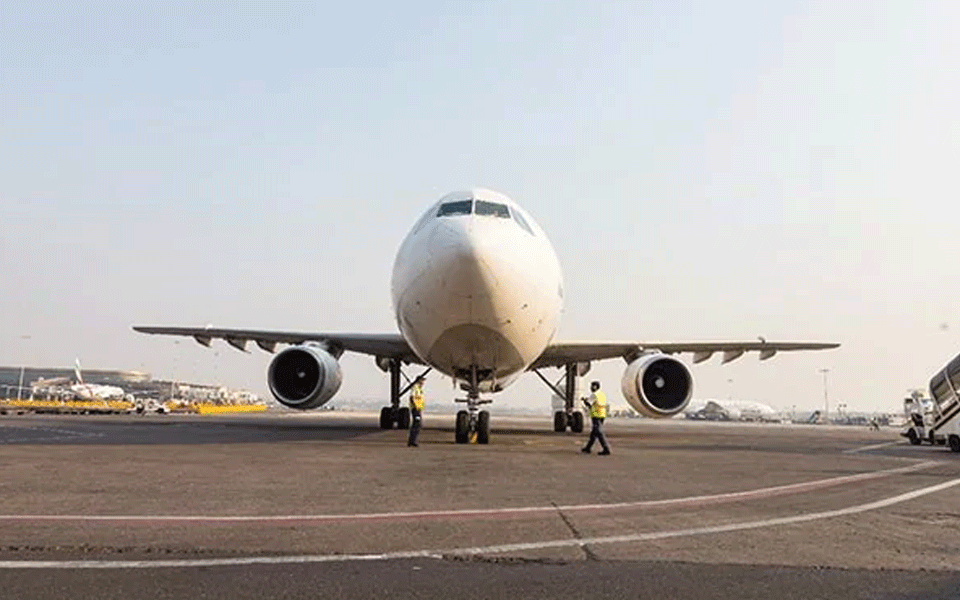
Mumbai, Feb 7: As many as 230 flights were cancelled on Thursday from the airport here due to closure of two runways for maintenance and repair work, according to a source.
Travel portal ixigo said average airfares have increased 23 per cent on key routes to and from Mumbai for the next few days.
Both runways of the airport are being closed from 11 am to 5 pm for three days every week between February 7 and March 30. During this period, the runways would be shut for maintenance and repair work on Tuesdays, Thursdays and Saturdays.
The primary runway at the Chhatrapati Shivaji International Airport can handle up to 50 arrivals and departures an hour. The secondary runway can handle 35 flight movements per hour.
The source at the airport said that 230 flights were cancelled Thursday due to the closure of runways.
ixigo's co-founder and CEO Aloke Bajpai Wednesday said that airfares have seen an average spike of 23 per cent on key routes to and from Mumbai.
"Ahmedabad-Mumbai has seen a substantial hike in airfares of over 80 per cent as compared to last week. Last minute non-stop flights and stop over flights have been impacted the most, recording a growth of over 200 per cent in some cases.
"Around 33 per cent of all flights from Mumbai airport were delayed today and we expect a further increase in cancellations and delays over the next few days," he said in a statement.
On an average, the airport handles around 1,000 flights a day.
Let the Truth be known. If you read VB and like VB, please be a VB Supporter and Help us deliver the Truth to one and all.
Bridge portion collapses on Jammu outskirts; 3-4 labourers feared trapped, 1 rescued
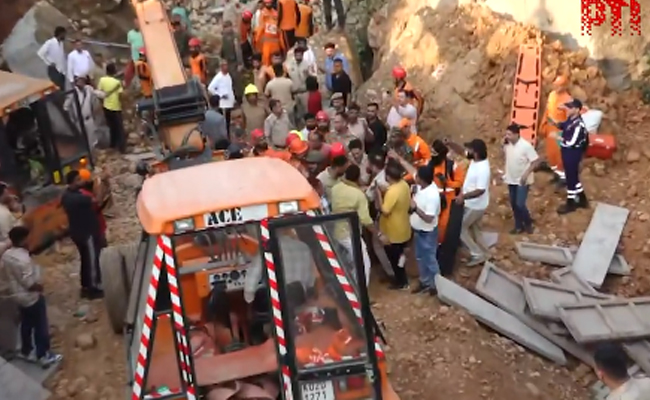
Jammu (PTI): A portion of a small bridge collapsed in the Bantalab area on the outskirts of Jammu city on Friday, trapping at least three to four labourers under the debris, while one injured worker was rescued, official sources said.
Authorities have closed the road link following the collapse of the portion of the bridge.
The incident occurred when labourers were carrying out repair work on a retaining wall near the bridge that was damaged in last year's flash floods, the sources said.
According to the sources, a section of the bridge suddenly gave way, burying workers engaged at the site under the rubble.
Police, Army and State Disaster Response Force (SDRF) teams launched rescue operations to extricate those buried under the debris. They pulled out one injured labourer and shifted him to a hospital, the sources said.
Family members of the labourers present at the site said around six workers engaged at the site at the time of the incident came under the debris when the structure collapsed. The family members said while two of the labourers managed to escape, four got trapped.
The sources said those trapped included the husband of a woman labourer, a mason, an unmarried labourer and a relative of the contractor.
There was no official confirmation on the exact number of persons trapped under the debris till the filing of this report.
The rescue operations are ongoing.