245 incidents of violence against Christians in India between January-April: United Christian Forum

New Delhi: In a troubling development, the United Christian Forum (UCF) has reported a steep rise in incidents of violence against Christians across India. According to the organisation, 245 cases were registered between January and April 2025, based on data collected through the forum’s helpline service.
The UCF, which has been collecting data via its helpline number (1-800-208-4545), stated that Christians continue to face an alarming frequency of violence, averaging two incidents per day. The report highlighted a sharp escalation in such incidents since 2014, reflecting a worrying trend in the treatment of religious minorities in the country.
The data revealed by UCF paints a grim picture of the situation. Christian tribals and women have emerged as particularly vulnerable groups, facing violence disproportionately compared to men. The organisation pointed out that the scale of violence has steadily increased over the years, with 601 incidents reported in 2022, 734 in 2023, and a staggering 834 incidents in 2024.
“In 2025, from January to April, 245 incidents of violence against Christians were reported from 19 states of India, with 55 incidents in January, 65 in February, 76 in March, and 49 in April. Uttar Pradesh continues to be at the top with 50 incidents, followed by 46 in Chhattisgarh,” the UCF said in a statement.
Other states witnessing violence against Christians include Andhra Pradesh (14 incidents), Bihar (16), Delhi (1), Gujarat (8), Haryana (12), Himachal Pradesh (3), Jharkhand (17), Karnataka (22), Madhya Pradesh (14), Maharashtra (6), Odisha (2), Punjab (6), Rajasthan (18), Tamil Nadu (1), Telangana (1), Uttarakhand (2), and West Bengal (11).
The types of violence reported by UCF include physical assaults, murders, sexual violence, threats, social boycotts, and attacks on religious properties. In several instances, Christian places of worship have been desecrated or prayer services disrupted, underscoring the growing climate of intolerance.
Let the Truth be known. If you read VB and like VB, please be a VB Supporter and Help us deliver the Truth to one and all.
No proposal to hike bus fares in Karnataka, says Ramalinga Reddy
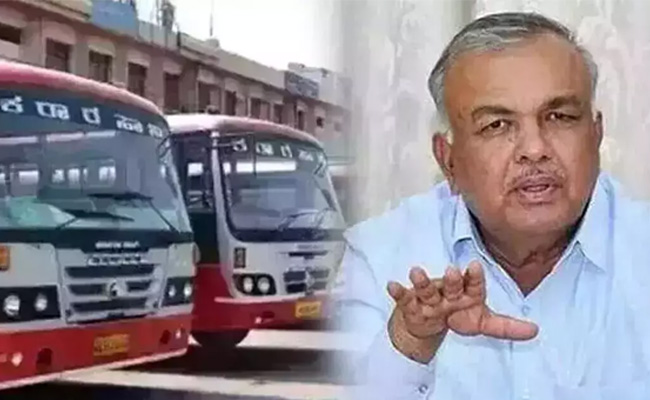
Bengaluru: Karnataka Transport Minister Ramalinga Reddy has said there is no proposal at present to increase bus fares in the state, even if diesel prices go up.
Speaking to reporters in Bengaluru on Wednesday, Reddy said he was not aware of any decision to raise diesel prices and added that it would be welcome if no such hike takes place.
He said that although an increase in diesel prices would add to the financial burden of state-run transport corporations such as Karnataka State Road Transport Corporation and Bangalore Metropolitan Transport Corporation, no discussion has been held so far regarding a revision in passenger fares.
Commenting on the recent salary revision for transport corporation employees, the minister said the government had already conveyed its decision and declined to comment on reports that some employees were dissatisfied with the announcement.
On the delay in holding elections to the Greater Bengaluru Authority, Reddy said it was natural for aspirants to feel disappointed and acknowledged that the postponement was also increasing pressure on party leaders.
He said Bengaluru’s infrastructure development since 1947 had seen substantial progress during Congress governments, but added that questions regarding the reasons for postponing the elections should be addressed to Deputy Chief Minister D. K. Shivakumar.
Reddy also said he had no information regarding any power-sharing arrangement within the government, but was aware of discussions on a cabinet reshuffle.
He noted that he had travelled to New Delhi only three times in the past three years and said it would be good if the cabinet expansion takes place soon.
According to him, there had been indications that the expansion would occur after two and a half years in office, but it has already been delayed by six months.