28 per cent GST tax slab should go, says Sisodia
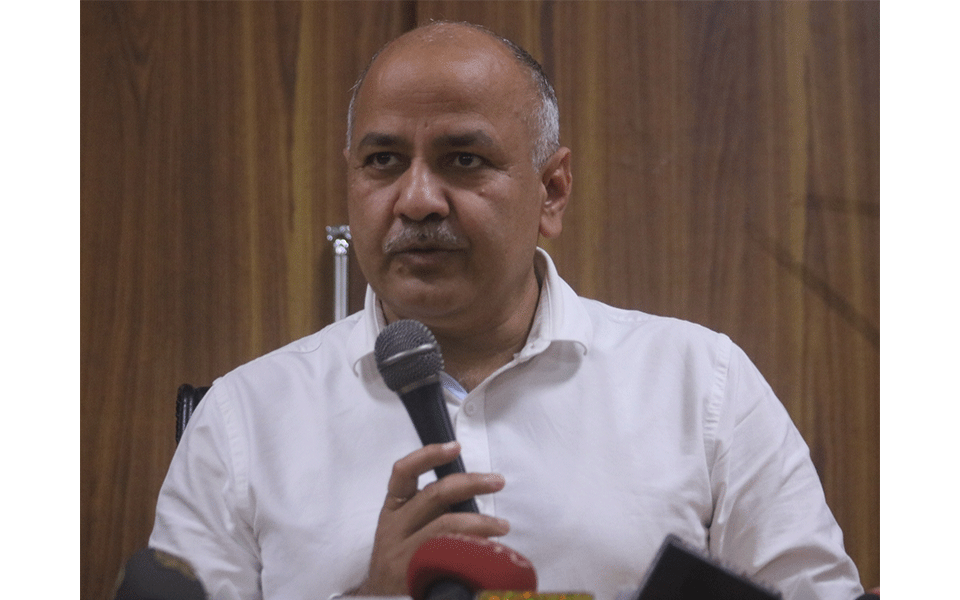
New Delhi, July 21 : Delhi Deputy Chief Minister Manish Sisodia on Friday said that the government should either completely abolish the 28 per cent tax bracket or reserve it only for "sin goods."
Speaking to reporters on the sidelines of the 28th Goods and Services Tax (GST) Council meeting, he said: "I believe 28 per cent tax should be only for sin goods, in fact, the government should completely abolish the 28 per cent tax bracket."
Sisodia, who holds the Finance portfolio, said that the Delhi government has also "adopted the returns model by Infosys Chairman Nandan Nilekani", which will require taxpayers to file a single GST return, replacing three returns - GSTR 1, 2, 3 and the summarised return GSTR 3B.
Under the earlier system, returns filed under forms GSTR-1 (sales) and GSTR-2 (purchase) were automatically matched with GSTR-3 to ensure that the claims made by the taxpayer were correct. Currently, taxpayers are filing GSTR 3B and GSTR 1 and claiming input tax credit.
But, according to the Nilekani model, input tax credit will be available only after uploading invoices.
Sisodia said that after the amendments, "the taxpayers with a turnover up to Rs 5 crores will only have to file quarterly returns now."
He further accused the central government of allegedly taking Rs 3 crores of funds originally assigned for Delhi.
"This issue was also taken up by Pondicherry in the meeting. The central government cheated Delhi by keeping Rs 3 crores of GST funds originally assigned for the national capital," he said.
Let the Truth be known. If you read VB and like VB, please be a VB Supporter and Help us deliver the Truth to one and all.
4 workers die after being buried under coal slurry in Jharkhand's Dhanbad
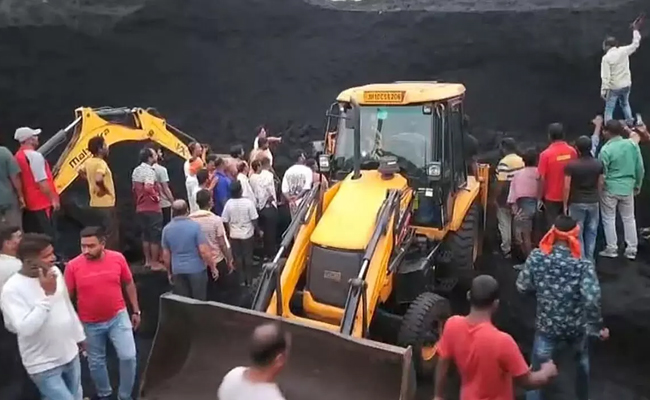
Dhanbad (Jharkhand) (PTI): At least four workers died after being buried under coal slurry in Jharkhand's Dhanbad district on Saturday, a police official said.
The incident took place at Moonidih coal washery in the command area of Bharat Coking Coal Limited (BCCL).
"Bodies of all four workers were dug out of debris during a rescue operation," Putki police station in-charge Waqar Hussain told PTI.
The incident took place when coal slurry was being loaded into trucks by workers, during which a large chunk of slurry fell and trapped several workers underneath, officials said.
The deceased have been identified as Manik Bauri, Dinesh Bauri, Deepak Bauri, and Hemlal Gope.
Meanwhile, the family members of the deceased and local villagers placed the bodies in front of the washery gate and began a protest.
They demanded compensation, jobs for dependents and action against those responsible for the incident.
Police and administration officials are trying to pacify the protesters, an official said.