30 ex-Maoists turn new leaf, join women commando team in Chhattisgarh
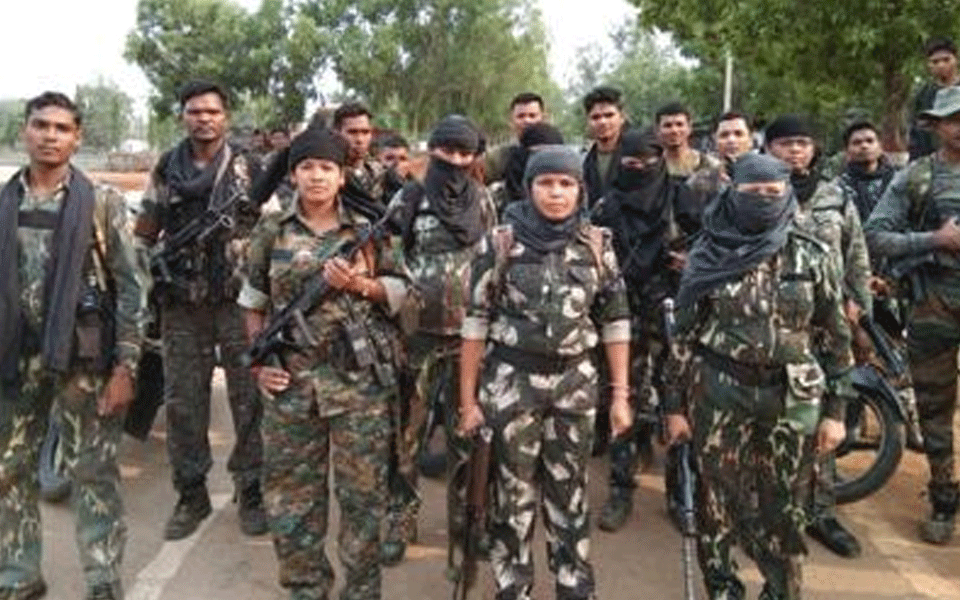
Raipur, May 7: The Chhattisgarh police for the first time has inducted women commandos in the District Reserve Guard, its frontline anti-Naxal force.
A senior official said these women commandos were part of the security forces' "short action teams" that eliminated three Naxal "commanders" in the past one month.
The specially-raised squad, christened 'Danteshwari Ladake', or fighters of Goddess Danteshwari, was inducted in the state's Naxal-hit Dantewada district, around 400 kilometres from here.
Comprising 30 women led by Deputy Superintendent of Police (DSP) Dineshwari Nand, officials said they have received extensive training in jungle combat.
"A first-of-its-kind platoon of women DRG commandos has been raised. Of the 30 recruits, 10 are surrendered women Naxals, while 10 others are assistant constables who were part of the erstwhile Salwa Judum (anti-Naxal militia) movement," Dantewada Superintendent of Police Abhishek Pallava told PTI.
With the induction of the women commando contingent, the number of platoons of the DRG in Dantewada now stands at six, he said.
Personnel of the DRG are recruited from local youth and it also has surrendered Naxals in its ranks and has of late gained a fearsome reputation for taking the fight into the enemy camp and conducting successful strikes in Maoist strongholds, officials said.
"Although the state police and paramilitary forces in Bastar have deployed women personnel but they have limited work. It is for the first time that an exclusive team of women commandos has been set up to carry out counter insurgency operations shoulder to shoulder with male DRG members in the area," said Pallava, who is credited with introducing this platoon.
"These women commandos have been given three-months advanced in-house training in jungle warfare tactics. They are trained for motorcycle patrolling in the dense forests, map reading, understanding Naxal profiles and counter ambush strategy," he said.
"The important factor is all of them are local residents, including surrendered Naxals, and therefore are well acquainted with the forested terrain and the local language. All these are key elements in the fight against Naxals," he said.
The SP added that being able to melt into the local crowd wearing civil attire like sarees and still move around with concealed weapons gave the women commandos the "surprise element" to get the better of the Maoist ultras.
"In the past one month, this women platoon was part of the security forces' short action teams that gunned down three Naxal commanders," he said.
He said the women commandos could motivate others to join the forces and also curb chances of fake allegations of human rights violations.
A member of the platoon, Gange, a surrendered "deputy commander" with the outlawed CPI (Maoist), said, "We are feeling relieved after quitting the Naxal movement. We wanted to marry which was not allowed in the Naxal outfit. We are now living a life with dignity and purpose as police personnel.
"We want to take part in anti-Naxal operations and free Bastar of the Maoist menace," she added.
The DRG was first set up in Kanker (north Bastar) and Narayanpur (comprising Abhujmad) districts of the state in 2008 to fight the menace of Left Wing Extremism and after a gap of five years, the force was raised in Bijapur and Bastar districts in 2013.
Subsequently, it was expanded in Sukma and Kondagaon districts in 2014, while it started operations in Dantewada in 2015.
Dantewada has witnessed major Naxal attacks in the recent past.
Dantewada BJP MLA Bhima Mandavi and four police personnel were killed Kuakonda area of the district on April 9 ahead of the first phase of Lok Sabha election.
In October last year during assembly poll, three policemen and a Doordarshan cameraman were killed in a Maoist attack in Nilawaya area of Dantewada.
Let the Truth be known. If you read VB and like VB, please be a VB Supporter and Help us deliver the Truth to one and all.
Sujit Nair raises concerns over speculation of DMK-AIADMK understanding to block TVK
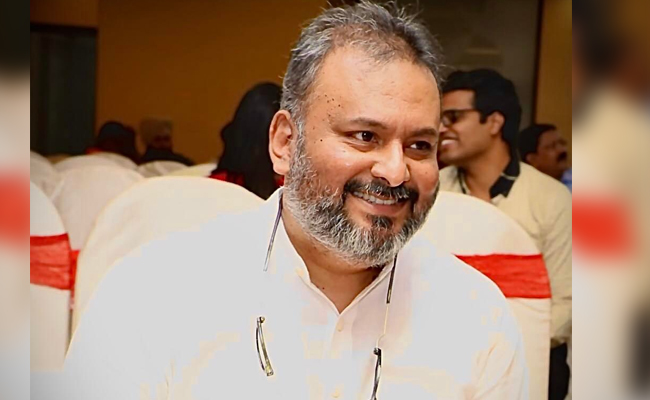
Chennai: Journalist and political commentator Sujit Nair has expressed concern over speculation that the Dravida Munnetra Kazhagam and the All India Anna Dravida Munnetra Kazhagam could explore a post-poll understanding to prevent Vijay-led Tamilaga Vettri Kazhagam from forming the government in Tamil Nadu.
In a social media post, Sujit Nair said the election verdict in Tamil Nadu reflected a clear public demand for political change and argued that the mandate should be respected irrespective of political preferences.
Referring to reports and political discussions surrounding a possible understanding between the DMK and AIADMK, he said he hoped such developments remained only speculative conversations and did not turn into reality.
Nair stated that if such an alliance were to take shape, it would raise serious questions about ideological politics in the country. He said TVK had emerged through a democratic electoral process and that the legitimacy to govern in a parliamentary democracy comes from the people’s verdict.
According to him, attempts to prevent an electoral winner from forming the government through unexpected political arrangements may be constitutionally valid, but many people could view them as politically opportunistic.
He further said that such a move could particularly affect the political image of the DMK, which has historically projected itself around ideology, social justice and opposition politics. Nair said that in ideological terms, the DMK appeared closer to TVK than to the AIADMK, and joining hands with its long-time political rival only to remain in power could weaken its broader political narrative.
He added that the same questions would apply to the AIADMK as well, as the party had spent decades positioning itself against the DMK and such an arrangement could create discomfort among its cadre and supporters.
Drawing a comparison with Maharashtra politics in 2019, Nair said he had expressed similar views when the Shiv Sena formed an alliance with the Indian National Congress and the Nationalist Congress Party after the Assembly elections.
He said post-poll alliances between long-standing political rivals often create a public perception that ideology and electoral mandates become secondary when political power equations come into play.
Nair also said such developments increase public cynicism towards politics and reinforce the belief among voters that ideology is often sidelined after elections.
He maintained that the Tamil Nadu verdict was emphatic and said respecting both the spirit and substance of the mandate was important for the credibility of democratic politics.