30 of 36 disputed villages along Meghalaya-Assam border to remain in Meghalaya: CM Sangma
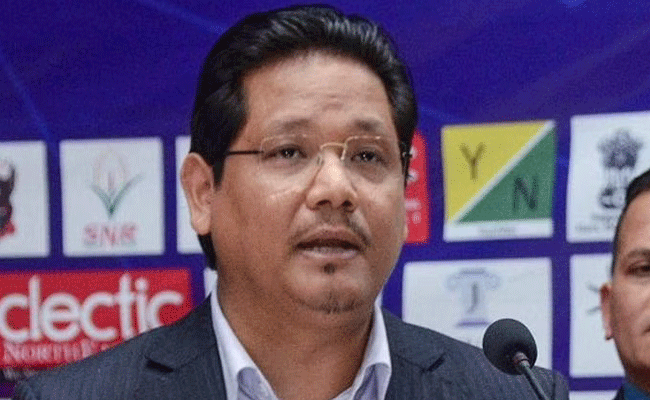
Shillong(PTI): Thirty of the 36 disputed villages along the Meghalaya-Assam border will remain in Meghalaya as recommended by regional committees of the two states, Chief Minister Conrad K Sangma informed the assembly on Monday.
The 36 villages cover a 36.9 sq km area, while the 30 villages are spread over an 18 sq km area, he said.
The chief minister, addressing the House on the progress of the talks with the Assam government to resolve the inter-state boundary dispute, said that both the states have agreed that no new areas of differences shall be added to the already identified 12 areas.
"Of the 36 villages claimed by Meghalaya in 2011, a total of 30 will remain in Meghalaya as recommended by regional committees of the two states. Ownership of land, however, will not be affected after demarcation of the boundary," he said.
"All eight villages claimed by Meghalaya in Tarabari area will remain in the state. In Gizang of West Khasi Hills district, two of three claimed villages will remain under our administrative control," Sangma said.
The chief minister said that Meghalaya will get 11 of 12 claimed villages in Hahim area.
In Ri-Bhoi district, Boklapara will remain in Meghalaya while Jumrigaon will go to Assam.
In Khanapara-Pilangata area, parts of Pilangata, Maikoli and Barapathar will be in Meghalaya, while Assamese-inhabited areas of Khanapara and Dreamland Resort will go to Assam. The remaining areas including the entire Brahmaputra Realtors will be in Meghalaya, he said.
In Patharkuchi, areas inhabited by Meghalayans will remain in the state. In Maikuli area, Mawmari Beel will remain in Assam, and the graveyard will be in Meghalaya.
In East Jaintia Hills district, Malidor, Ratacherra and Umpyrdet will remain in Meghalaya while two villages will go to Assam.
Sangma said that discussions, visits and surveys were conducted by regional committees of the two states headed by cabinet ministers, and special technologies were used in the exercise. The areas will be more accurately determined by the Survey of India in the presence of representatives of both states.
The chief minister said that both the states have signed an MoU in January end on the resolution and conclusion of dialogue in six areas of difference and it was forwarded to Prime Minister Narendra Modi and Union Home Minister Amit Shah.
Let the Truth be known. If you read VB and like VB, please be a VB Supporter and Help us deliver the Truth to one and all.
Congress using hijab issue to pacify minority anger, alleges Karnataka LoP R Ashoka
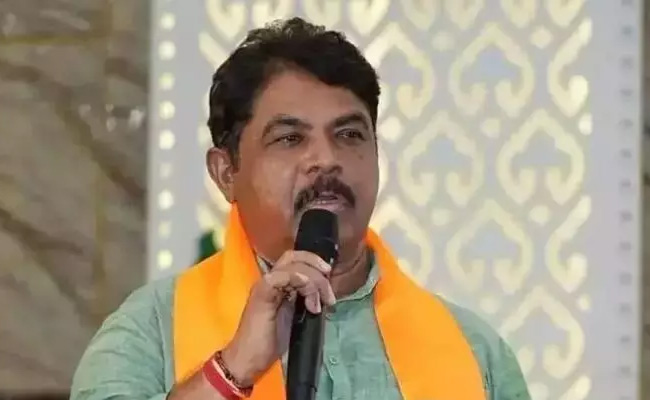
Bengaluru: Leader of Opposition in the Assembly R. Ashoka has accused the Congress government of using the hijab issue to placate what he described as discontent among minority voters after the Davanagere by-election.
In a post on X on Wednesday, Ashoka alleged that the state government, instead of addressing issues such as price rise, corruption, farmers’ distress and law and order, was attempting to retain its minority vote base by reviving the hijab issue.
Referring to the 2022 dress code introduced by the BJP government, which prohibited hijab in schools and colleges, Ashoka said the Karnataka High Court had upheld the policy and emphasised the importance of discipline in educational institutions.
He questioned the Congress government’s move to revisit the issue and asked whether setting aside the court-backed policy to benefit one community could be described as secularism.
Ashoka further alleged that while the government was willing to permit hijab, it continued to prohibit saffron shawls.
He accused the government of dividing students on religious lines rather than treating schools and colleges as spaces of equality.
Drawing a comparison with Mamata Banerjee’s government in West Bengal, Ashoka claimed that excessive appeasement politics had harmed the state and warned that the Congress in Karnataka could face a similar political response.
He said voters in Karnataka would teach the Congress a lesson for what he termed “vote-bank politics” and for compromising constitutional and judicial principles.