At least five Kanwariyas killed, 23 injured in bus-truck collision in Jharkhand
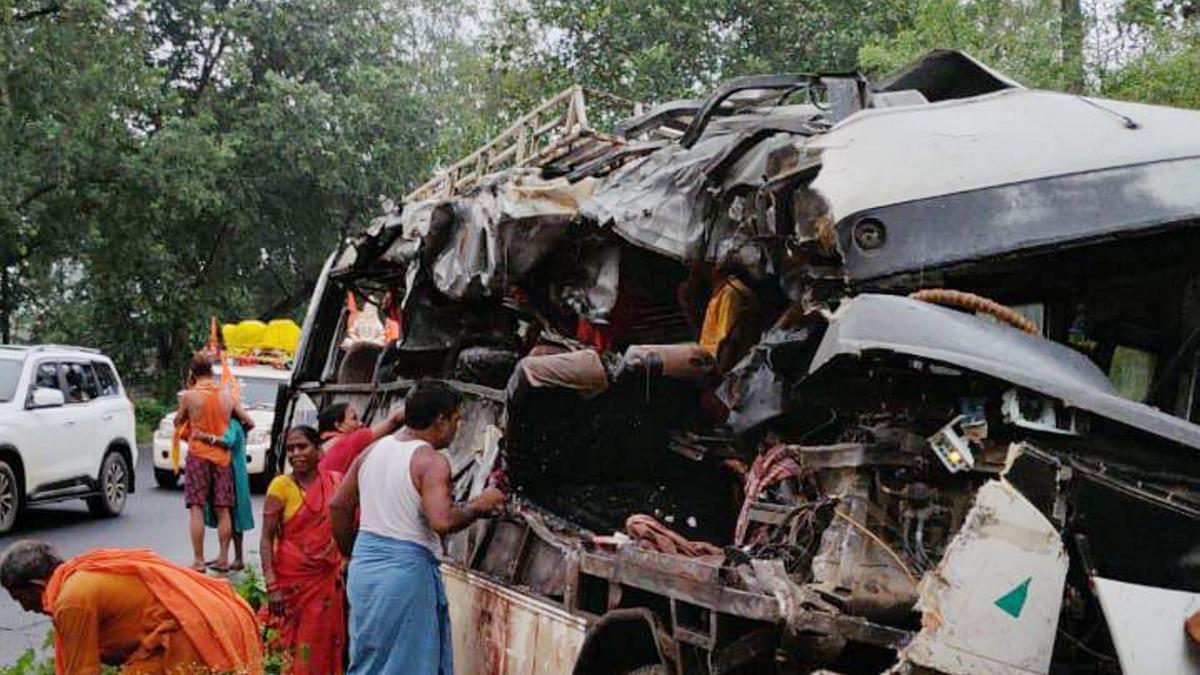
Ranchi/Deoghar/Dumka (PTI): At least five Kanwariyas were killed and 23 others injured on Tuesday after a collision took place between a bus with passengers on board and a truck, loaded with cooking gas cylinders, in Jharkhand's Deoghar district, police said.
The accident occurred near the Jamuniya forest under the Mohanpur Police Station limits around 4.30 am when the bus collided with the vehicle, an officer said.
"At least five people were killed and many injured when a 32-seater bus with Kanwariyas on board collided with a truck, transporting gas cylinders, near the Jamuniya forest in Deoghar's Mohanpur," Inspector General (Dumka Zone) Shailendra Kumar Sinha told PTI.
Kanwariyas are devotees of Lord Shiva.
At least 23 Kanwariyas were injured in the accident and taken to various hospitals and nearby primary health centres, including the the Saraiyahat PHC in Dumka, another official said.
Casualties may increase as the condition of several injured is serious, he added.
The district administration has been alerted after the accident, he said.
Deoghar Sub Divisional Officer Ravi Kumar said the Kanwariyas were on their way to the Basukinath temple.
Traffic Deputy SP Laxman Prasad, however, said at least nine people have lost their lives in the accident, and the injured were being sent to hospitals.
Let the Truth be known. If you read VB and like VB, please be a VB Supporter and Help us deliver the Truth to one and all.
AIITA welcomes Karnataka’s ban on obscene songs in school events
Bhatkal: The Karnataka unit of the All India Ideal Teachers Association (AIITA) has welcomed the Karnataka government’s decision to strictly ban school children from dancing to obscene songs during educational and cultural programmes in government, aided, and private schools across the state.
AIITA Karnataka State President M. R. Manvi congratulated the government for taking what he termed an important step to preserve the sanctity of education.
“Such decisions to safeguard the dignity of school children and uphold the values of education are the need of the hour. This rule should not be limited to government schools alone but must be strictly implemented in all private educational institutions as well,” he said.
He further urged the government to address other concerns within school programmes.
“The government should not only prohibit obscene dances in the name of school anniversaries, but also ensure that plays and dialogues that incite religious hatred are avoided. Schools should be centres of harmony, not platforms for spreading hatred,” he added.
According to a recent circular issued by the Department of School Education and Literacy, obscene dances are adversely affecting the mental health and moral values of students.
In this regard, schools have been advised to use songs that promote nationalism, positive thinking, the greatness of Kannada culture, and value-based traditions instead of inappropriate content during programmes.
The circular also emphasises that students should be dressed in decent attire.
AIITA also backed the department’s warning that disciplinary action would be taken against head teachers if such guidelines are violated. The association has further demanded that district Deputy Directors of Public Instruction strictly monitor the implementation of these rules.