513 ceasefire violations by Pak post Balakot strike: Army
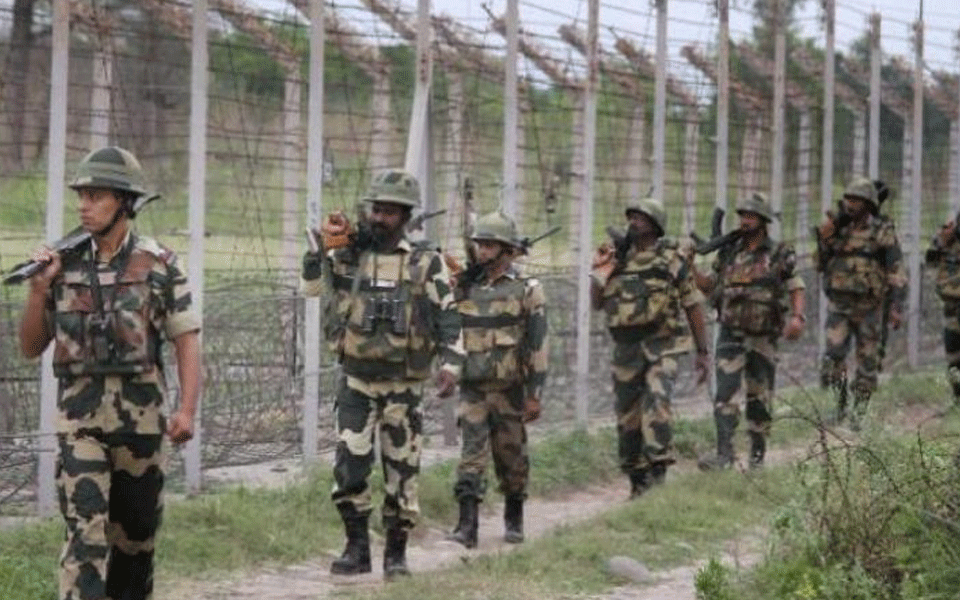
Jammu: As many as 513 ceasefire violations by Pakistan have taken place along the LoC in Jammu and Kashmir in the past one-and-a-half month and the Pakistan Army has suffered five to six times more casualties than the Indian Army in the retaliatory action, a senior officer said Saturday.
The Pakistan Army also used heavy weaponry like mortars and artillery guns in over 100 times during these violations and targeted civilian areas but was given a befitting response by the Indian Army, General Officer Commanding (GOC) of White Knight Corps Lt Gen Paramjit Singh told reporters in Rajouri.
"Almost 513 ceasefire violations happened in the past one-and-a-half month and over 100 times during these violations, the Pakistan Army used heavy weapons like mortars and artillery guns and targeted civilian areas. Only yesterday (Friday), four civilians, including two girls, were injured in Poonch," the GOC said.
However, he said the Pakistan Army is being given a befitting response by the Indian Army.
Responding to a question about the casualties suffered by Pakistan in the retaliatory action, he said unlike the Indian Army, Pakistan does not announce the number of its casualties.
"However, as per our sources, the Pakistan Army suffered five to six times more casualties than the casualties on our side," Lt Gen Singh said.
Ten people, including four security personnel, have been killed and nearly 45 others, mostly civilians, injured in the twin districts since India's preemptive air strike on a Jaish-e-Mohammad terror camp in Pakistan's Balakot on February 26 in response to the February 14 Pulwama terror attack in which 40 CRPF personnel were killed.
On the sniping incidents from across the border, Lt Gen Singh said such incidents had come to a naught over the past several months, especially after the Balakot strike.
"Some incidents of sniping took place earlier and accordingly we have taken some measures to strengthen our defence. As per the data this year, only three incidents of sniping by the Pakistan Army were reported from January to February 26 in which one of the fatalities include a civilian porter," he said.
"There was no sniping incident from February 27 till date, which means the steps taken by us have been successful," the officer said.
He said the morale of the troops is very high and as long as they are deployed on the borders, the people of the country need not worry.
"They have every kind of weaponry and explosives with them and their resolve is rock solid and always prepared for any challenge. As long as they are on the border, you are safe," he said.
Responding to a question, the officer said, "Our message to Pakistan is given every day whenever some nefarious activity happens on the border."
When asked for a comment on politics being played in the name of soldiers during the ongoing Lok Sabha elections, he said the Army does not want to get into the debate.
Let the Truth be known. If you read VB and like VB, please be a VB Supporter and Help us deliver the Truth to one and all.
CM Siddaramaiah alleges ‘criminal conspiracy’ in Sringeri recount, vows legal action
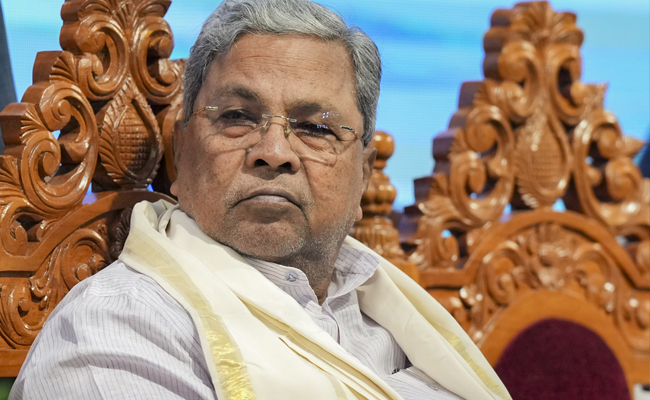
Bengaluru (PTI): Alleging a “criminal conspiracy” by BJP candidate D N Jeevaraj in the Sringeri Assembly poll recounting, Karnataka CM Siddaramaiah on Tuesday said the outcome was manipulated after valid postal ballot votes in favour of Congress leader T D Raje Gowda were tampered with during the recounting process.
Following a Karnataka High Court order on an election petition filed by Jeevaraj, challenging Raje Gowda’s election, the reverification and recounting were conducted on Saturday.
After the reverification and recount of postal ballots for the Sringeri Assembly constituency, votes polled in favour of Raje Gowda were reduced by 255, the returning officer said.
A report on the matter has been submitted to the Election Commission of India for further action, the officer added.
Congress leader Raje Gowda had won the 2023 Assembly polls from Sringeri by 201 votes, defeating his nearest rival Jeevaraj.
Addressing a press conference in Bengaluru, Siddaramaiah said the High Court had directed the recounting of postal ballots and that irregularities were noticed during the exercise conducted on May 2.
“This is a clear case of criminal conspiracy,” Siddaramaiah said, alleging that valid votes cast in favour of Raje Gowda were altered after being accepted by counting agents of all parties, including Congress, BJP, and JD(S).
He claimed that during the recounting of postal ballots, 255 votes were initially accepted as valid by all agents but were later tampered with by subordinate officials.
“There is a second mark on the votes polled in favour of Raje Gowda. They had accepted these as valid votes. Subsequently, another mark was made by officials. This is a clear case of criminal conspiracy,” he said.
When asked who was behind the alleged conspiracy, the CM replied, “It was hatched by Jeevaraj and others. It is planned.”
Siddaramaiah further alleged that the returning officer acted improperly by declaring the result despite the presence of an Election Commission observer during the recounting.
“Immediately after the counting, the returning officer announced the result. He should not have done so; this is against the law,” he said.
He pointed out that Raje Gowda had originally won by 201 votes, but after the recounting, the BJP candidate was declared the winner by 52 votes.
“The BJP has committed a criminal act of conspiracy. This is not vote chori but vote dacoity,” he alleged.
The CM said a police complaint had already been filed by Raje Gowda’s election agent, Sudhir Kumar, and emphasised the need for electoral integrity.
“We want transparency and free and fair elections. That is what our Constitution mandates,” he added.
Stating that the government would pursue legal remedies, Siddaramaiah said, “We are preparing an appeal challenging the returning officer’s announcement in a court of law.”
Responding to a separate query on elections in other states, the CM said there appeared to be an anti-incumbency factor in West Bengal, while results in Tamil Nadu were “surprising,” adding that Vijay’s party was emerging as the largest there.
Following the victory of party candidates in Bagalkote and Davanagere South, Siddaramaiah expressed confidence about future electoral prospects in Karnataka.
“Even in 2028, we will win the Assembly elections. We will come back,” the CM said.
Siddaramaiah added that he would order a forensic examination into the alleged tampering of postal ballots.