6 passengers killed by approaching train at railway station in UP's Mirzapur
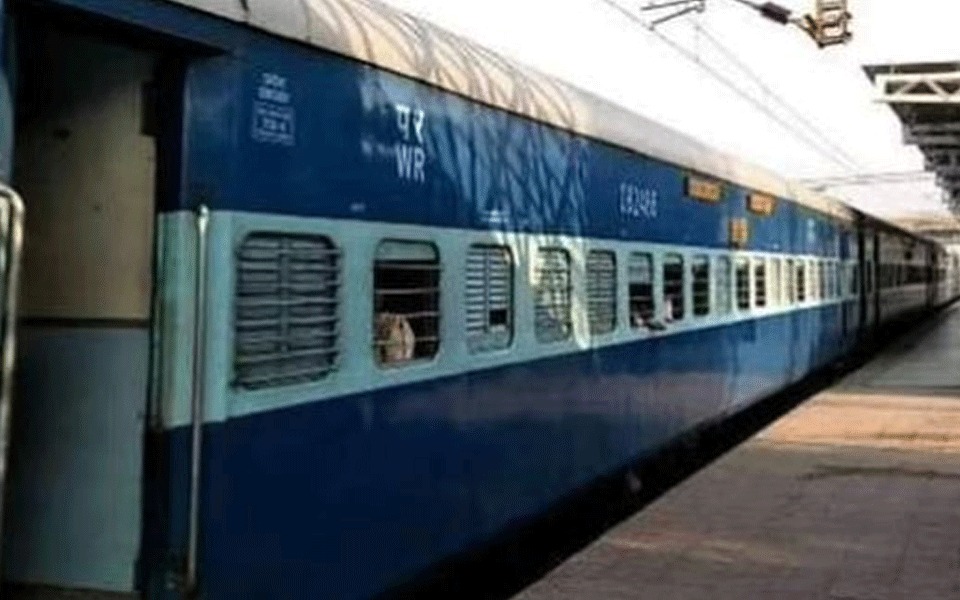
Mirzapur (UP)(PTI): Six women were run over by an incoming train on Wednesday while they were alighting from the wrong side at Chunar Railway Station, a railway official said.
The incident took place at about 9.30 am when the passengers got off the Chopan Express on the track and were hit by the approaching Netaji Express train from Howrah to Kalkaji, Amit Singh, Public Relations Officer, NCR Prayagraj Division, told PTI.
The deceased had come here for Kartik Purnima Snan.
The Chopan Express had halted at platform four of the station, and the passengers chose to get down on the track, though there is a footover bridge, the railways said.
"These passengers had come to Mirzapur for Kartik Purnima Snan (bath). Despite the availability of a footover bridge, they were crossing the platform from the tracks due to which the incident happened," Railways said in a statement.
Government Railway Police Inspector Raghvendra Singh confirmed there were six deaths.
The deceased were identified as Savita, 28, Sadhna, 16, Shiv Kumari, 12, Anju Devi, 20, Sushila Devi, 60, and Kalawati, 50.
Chief Minister Yogi Adityanath offered his condolences to the kin of the victims and directed officials to reach the spot immediately and expedite relief and rescue operations.
National and state disaster response forces were ordered to rush to the accident site.
Union Minister and local MP Anupriya Patel expressed her grief in a message on X.
"Deeply pained by the heart-wrenching incident that occurred today at Chunar Railway Station in Mirzapur parliamentary constituency. District officials have been directed to immediately reach the spot, expedite relief operations, and ensure proper treatment for the injured," she said.
"In this hour of grief, my heartfelt condolences are with the bereaved families, and I pray for the speedy recovery of the injured. May the Almighty grant peace to the departed souls," the lawmaker added.
Let the Truth be known. If you read VB and like VB, please be a VB Supporter and Help us deliver the Truth to one and all.
Protesters clash with police during torch rally in Manipur
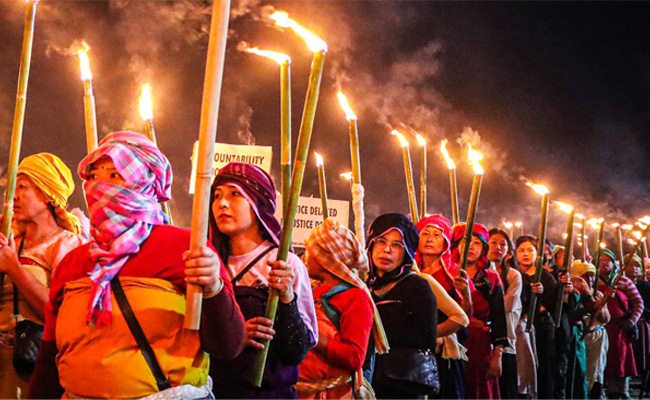
Imphal (PTI): People protesting the death of two children in a recent bomb blast in Manipur clashed with security forces during a torch rally in the state capital Imphal, police said.
Two children died in a bomb blast at Tronglaobi in Bishnupur on April 7. The Imphal Valley districts have been witnessing daily protests over the incident.
A seven-km-long torch rally was brought out from Mayai Lambi to Keishamthong in Imphal West district on Monday night, but the participants turned violent and clashed with the security forces, a police officer said.
Security forces fired several rounds of tear gas shells in Keishamthong area after hundreds of protesters defying curfew demanded they be allowed to proceed for another 200 metres towards Keisampat area, which is close to the Lok Bhavan and the BJP state office, he said.
ALSO READ: 5.2-magnitude quake jolts Manipur
Orders prohibiting the movement of any individuals outside their respective homes are in force in all the five valley districts from 5 pm to 5 am.
"Protesters pelted the security forces with stones and iron pellets from catapults, endangering the lives of the heavily outnumbered security forces," the officer said.
Manipur Police have, meanwhile, arrested 19 people for violating curfew and committing offences, including blocking roads and damaging public property, in the Greater Imphal area. They were nabbed from different parts of Imphal West district on Sunday, a police statement said.
In the Ukhrul district headquarters, a candlelight vigil was held on Monday night to honour the two Tangkhul Naga civilians who were killed in an ambush in TM Kasom area in the district on April 18.
Various civil society organisations from both the valley and hill areas strongly condemned the brutal killings, alleging that the victims were shot by Kuki militants using sniper rifles.