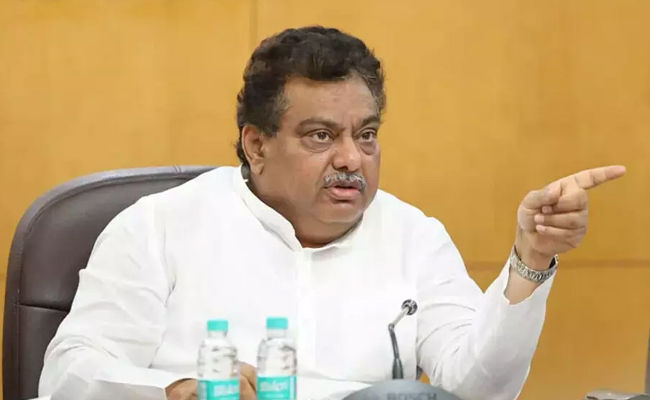
619 militants killed in four years in J&K: Rajnath Singh
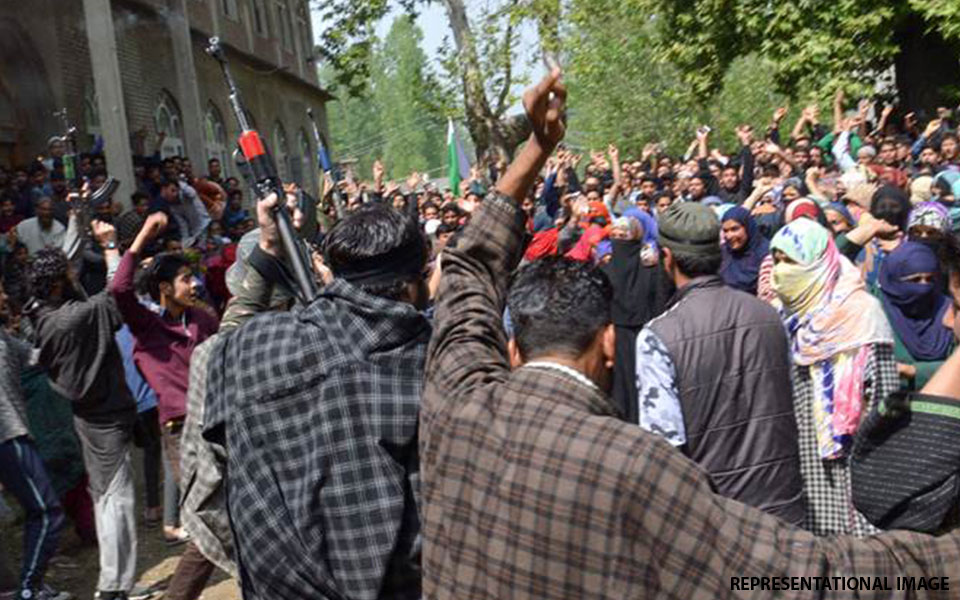
Lucknow, May 29: Union Home Minister Rajnath Singh on Tuesday said a total of 619 terrorists in Jammu and Kashmir had been killed in gun battles with security forces as he highlighted the all-round improvement in internal and external security under the Narendra Modi government.
He also clarified that the operations against militants had not been stopped during the holy month of Ramadan but had just been suspended. "It is not ceasefire but a temporary suspension of operations," he said, adding that the army is free to respond to any terrorist attack.
Addressing media persons here, the senior BJP leader said the number of terrorists killed in the previous UPA-II government was 471.
"There has been no compromise on the unity and integrity of the nation and we are proactively pursuing operations against the terrorist groups and subversive elements," Singh added, but did not respond to a query on how many security personnel were killed in this period.
He however said that respecting the supreme sacrifice of the security personnel in the line of duty for the nation, the Union Government had scaled uo the ex-gratia sum from Rs 50 lakh to Rs one crore for their families.
Rajnath Singh also said that incursions had also decreased during the four years of the Modi government and it had come down by 85 per cent in the northeast.
Compared to a high of 2,418 Maoist incidents under the UPA regime, only 1,481 incidents have taken place in the NDA rule, he said. "In 2013, Maoists were active in 76 districts but there area of influence and operations has shrunk to 58 districts in the last four years," he added.
He also said that to secure the country's boundaries, a new border security system was being started under which LED lights would be installed along with new technique radars on the borders.
Let the Truth be known. If you read VB and like VB, please be a VB Supporter and Help us deliver the Truth to one and all.
West Asia crisis: Jaishankar holds 4th phone call with Iranian counterpart in 2 weeks
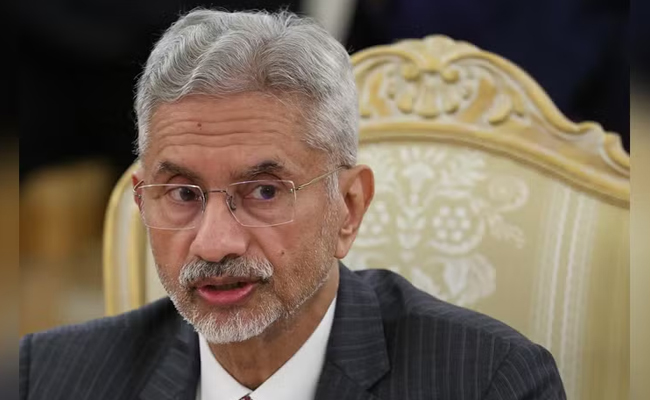
New Delhi (PTI): External Affairs Minister S Jaishankar spoke to his Iranian counterpart Seyed Abbas Araghchi – their fourth such conversation since the West Asia crisis erupted – as New Delhi intensifies efforts to secure safe passage for over two dozen Indian-flagged merchant vessels currently stationed on either side of the Strait of Hormuz.
The two foreign ministers held the phone conversation on Thursday night.
Jaishankar and Araghchi spoke on February 28, soon after the US and Israel launched the attack on Iran that killed Ayatollah Ali Khamenei. They also spoke on March 5 and March 10.
"Had another conversation with Iranian FM @araghchi yesterday night. Discussed bilateral matters as also BRICS related issues," the external affairs minister said on social media.
The latest phone conversation came as India ramped up efforts to secure safe passage to the Indian-flagged merchant vessels through the strategic shipping route of Strait of Hormuz that has been partially blocked by Tehran following an escalation in its conflict with the US and Israel.
Global oil and gas prices have surged after Iran virtually blocked the Strait of Hormuz, a narrow shipping lane between the Persian Gulf and the Gulf of Oman that handles roughly 20 per cent of global oil and LNG (Liquefied Natural Gas).
An Iranian readout said Araghchi briefed his Indian counterpart on the latest situation "resulting from the aggressions and crimes" committed by the US and Israel against Iran and its consequences on the stability and security of the region and the world.
It said the Iranian foreign minister emphasised to Jaishankar Tehran's firm will to exercise the "legitimate right to self-defence".
"Araghchi emphasised the need for international and regional forums and organisations to condemn military aggression against Iran," the readout said.
"Referring to the importance of the role and position of BRICS as a forum for developing multilateral cooperation, he considered it essential for this institution to play a constructive role at the current juncture to support stability and security in the region and the world," it added.
It said Araghchi emphasised the importance of finding a way to strengthen stability and a sustainable security environment in the region and called it a "collective need".
At an inter-ministerial media briefing, External Affairs Ministry spokesperson Randhir Jaiswal said India has conveyed to all sides to adopt the path of diplomacy and dialogue to resolve the conflict as soon as possible.
We are also talking to BRICS member states so that a consensus evolves on this issue, he said.