63 cases of use of unfair means, but no paper leak; NEET-UG sanctity not compromised: NTA officials

New Delhi, Jun 12: Sixty-three cases of students using unfair means were reported in NEET-UG out of whom 23 have been debarred for varying periods, NTA officials said Wednesday, but reiterated the sanctity of the medical entrance exam hasn't been compromised and there has been no paper leak.
The result of the remaining 40 candidates who were found using unfair means have been withheld, NTA DG Subodh Kumar Singh told PTI.
"A committee was constituted consisting of three eminent experts in field of examination and academics to put forward different types of cases reported such as impersonation, cheating and tampering with OMR sheet," NTA DG Subodh Kumar Singh told PTI.
"On recommendations of the panel, 12 candidates were debarred from taking the exam for three years, nine candidates debarred for two years and two candidate for one year each. The result of remaining candidates has been withheld. The panel had given recommendations for each case," Singh added.
The total number of cases of usage of unfair means was 63, he said.
The agency is under criticism amid allegations of irregularities and inflation of marks in the crucial medical entrance exam.
The matter has also reached the top court which said on Tuesday the sanctity of the National Eligibility-cum-Entrance Test-Undergraduate (NEET-UG), 2024 has been affected and sought responses from the Centre and the National Testing Agency (NTA) on another plea seeking holding of the examination afresh on grounds of alleged question paper leak and other malpractices.
Amid fire from protesting students and opposition parties, the Education Ministry had last week set up a four-member panel to review the grace marks awarded to 1,563 students to compensate them for loss of time due to delay in starting examination at certain centres.
"The panel is yet to submit its report. Depending upon the panel's recommendations, either a retest will be conducted for nearly 1,600 students or an alternate mechanism may be devised to ensure no candidate faces any disadvantage," he said.
Asked about allegations of marks inflation due to which 67 candidates have bagged top rank, Singh said, out of 67 candidates who got 720 out of 720 marks, 44 candidates received marks on account of revision of answer key of physics and 6 on account of loss of time.
"Only two candidates who got grace marks have received 718 and 719 marks," he clarified.
Let the Truth be known. If you read VB and like VB, please be a VB Supporter and Help us deliver the Truth to one and all.
Mamata visits Bhabanipur EVM strong room, warns against counting irregularities
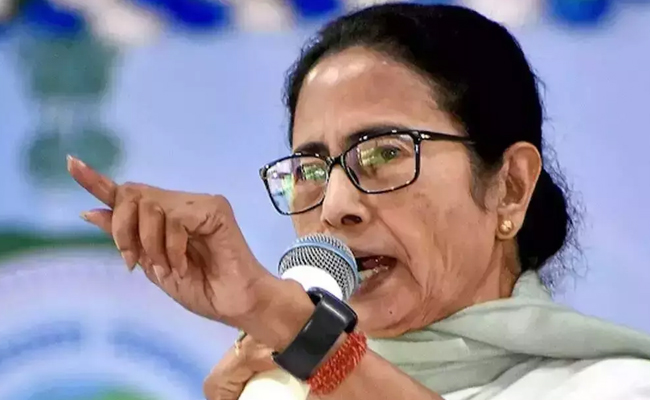
Kolkata (PTI): West Bengal Chief Minister and TMC supremo Mamata Banerjee early Friday warned against any attempt to tamper with the counting process, hours after she visited an EVM strong room in Bhabanipur, alleging possible malpractice.
Banerjee, who emerged around 12:07 am after spending nearly four hours at the counting centre for her Bhabanipur constituency housed in Sakhawat Memorial School in south Kolkata, said only one person would be allowed inside the designated counting area.
"Either the candidate or one agent can stay upstairs. I have also suggested installation of a CCTV camera for the media," she told reporters.
Stressing the need for transparency, she said, "It is essential to maintain transparency. People’s votes must be protected. I rushed here after receiving complaints. The central forces initially did not allow me to enter."
Sounding a stern note ahead of the May 4 counting, she added, "If there is any plan to tamper with the counting process, it will not be tolerated."
On Thursday evening, Banerjee had reached the Bhabanipur Assembly segment counting centre, which houses the strong room for EVMs used in the April 29 polling, citing suspicion of tampering with the machines.
She entered the premises along with her election agent and remained inside for hours, even as Kolkata Mayor and TMC candidate from the Kolkata Port segment Firhad Hakim reached the spot but could not meet her.
"I reached here upon learning that the chief minister has arrived. But I couldn’t meet her since she was already inside the premises, exercising her right as a candidate to visit strong rooms. I wasn’t allowed there. I will not be able to confirm what exactly is transpiring inside," Hakim said.
The development coincided with protests by TMC candidates Kunal Ghosh and Shashi Panja outside the Khudiram Anushilan Kendra in north Kolkata, where they staged a sit-in alleging irregularities and possible tampering of EVMs stored in strong rooms, leading to face-offs between TMC and BJP supporters.
Earlier in a video message, Banerjee had urged party leaders, workers and polling agents to maintain a 24-hour vigil on EVM strong rooms, alleging that the BJP could attempt to tamper with the machines before counting begins.
Her remarks come amid heightened political tension in the state following a fiercely contested Assembly election, with parties closely monitoring arrangements and raising concerns over transparency.