73 women elected to Lok Sabha, lower than 2019
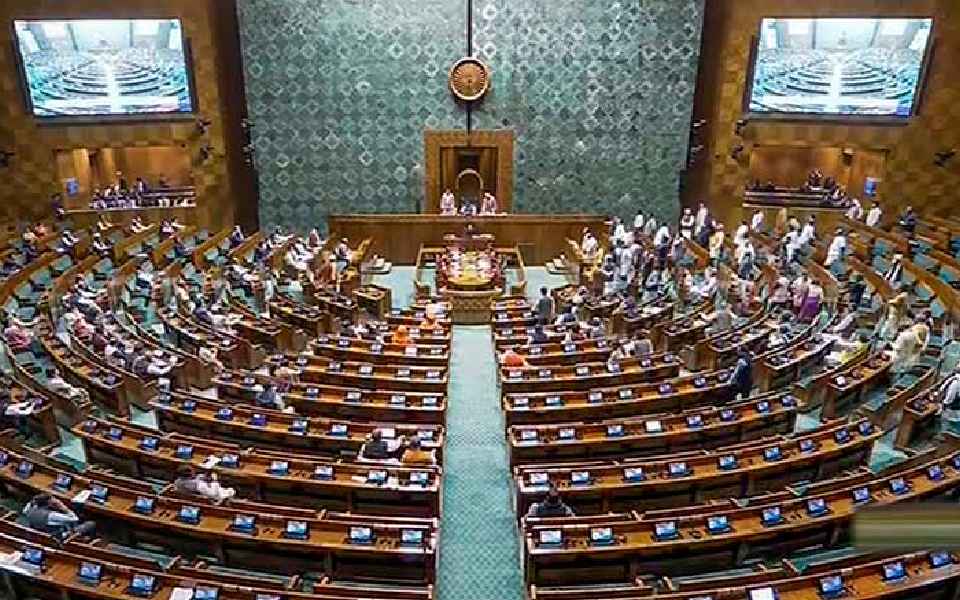
New Delhi, Jun 5: A total of 73 women have won the Lok Sabha elections, a slight dip from 78 elected in 2019.
Of the total women MPs elected to the Lower House from across the country, West Bengal is leading with 11 female MPs.
A total of 797 women candidates had contested the elections with the BJP fielding the maximum at 69 followed by the Congress at 41.
This is the first election since the passage of the women’s reservation bill in the Parliament to reserve one-third of seats in the Lok Sabha and state assemblies for women. The law is yet to come into effect.
According to an analysis of the Election Commission data, BJP's 30 women candidates won the polls this time, Congress' 14, TMC's 11, four of the Samajwadi Party's, three of the DMK, and two each of the JDU and LJP(R).
With over 13.44 per cent female MPs, the 18th Lok Sabha will have one of the highest number of women members since 1952.
The 17th Lok Sabha had the highest number of women parliamentarians at 78, constituting over 14 per cent of the total strength.
In the 16th Lok Sabha, 64 women were its members, while 52 women were elected to the 15th Lok Sabha.
BJP's Hema Malini, TMC's Mahua Moitra, NCP's Supriya Sule, and SP's Dimple Yadav retained their seats in the Lok Sabha polls, but candidates like Kangna Ranaut and Misha Bharati stole the show with their victories.
Samajwadi Party's 25-year-old candidate for Machhlishahr, Priya Saroj, and 29-year-old Iqra Choudhary of Kairana seat, were among the youngest nominees to secure a victory.
Notably, the parties like Naam Tamilar Katchi has achieved equal gender representation with 50 per cent women candidates.
Other parties with significant female representation included Lok Janshakti Party (Ram Vilas) and Nationalist Congress Party, each with 40 per cent women candidates.
The Jharkhand Mukti Morcha (JMM) and Biju Janata Dal (BJD) both had 33 per cent female representation, while the Rashtriya Janata Dal (RJD) had 29 per cent. The Samajwadi Party had 20 per cent, and the Trinamool Congress (TMC) 25 per cent.
A total of 8,360 candidates were in the fray in the parliamentary polls.
Three transgender candidates contested the elections independently. But all of them lost in the polls.
There were 24 women MPs each in the first and the second Lok Sabha.
Let the Truth be known. If you read VB and like VB, please be a VB Supporter and Help us deliver the Truth to one and all.
AIITA welcomes Karnataka’s ban on obscene songs in school events
Bhatkal: The Karnataka unit of the All India Ideal Teachers Association (AIITA) has welcomed the Karnataka government’s decision to strictly ban school children from dancing to obscene songs during educational and cultural programmes in government, aided, and private schools across the state.
AIITA Karnataka State President M. R. Manvi congratulated the government for taking what he termed an important step to preserve the sanctity of education.
“Such decisions to safeguard the dignity of school children and uphold the values of education are the need of the hour. This rule should not be limited to government schools alone but must be strictly implemented in all private educational institutions as well,” he said.
He further urged the government to address other concerns within school programmes.
“The government should not only prohibit obscene dances in the name of school anniversaries, but also ensure that plays and dialogues that incite religious hatred are avoided. Schools should be centres of harmony, not platforms for spreading hatred,” he added.
According to a recent circular issued by the Department of School Education and Literacy, obscene dances are adversely affecting the mental health and moral values of students.
In this regard, schools have been advised to use songs that promote nationalism, positive thinking, the greatness of Kannada culture, and value-based traditions instead of inappropriate content during programmes.
The circular also emphasises that students should be dressed in decent attire.
AIITA also backed the department’s warning that disciplinary action would be taken against head teachers if such guidelines are violated. The association has further demanded that district Deputy Directors of Public Instruction strictly monitor the implementation of these rules.