8 cheetahs from Africa to arrive at MP's Kuno National Park on Saturday
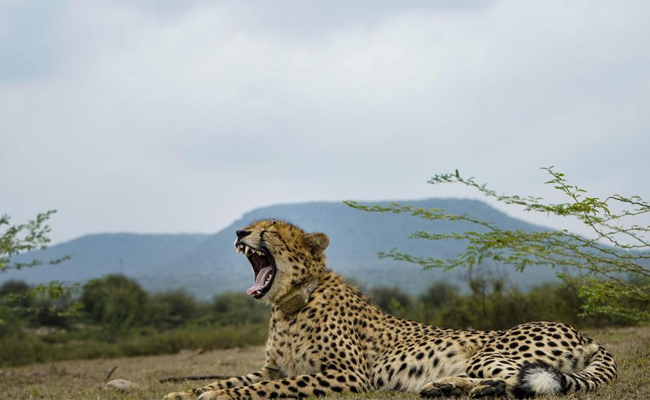
Sheopur (MP) (PTI): Eight more cheetahs will be airlifted from Africa and brought to Kuno National Park (KNP) in Madhya Pradesh on Saturday morning, an official said on Friday.
Madhya Pradesh Chief Minister Mohan Yadav and Union Environment, Forest and Climate Change Minister Bhupender Yadav will release the big cats into enclosures readied at the park under the ongoing cheetah revival programme in India via intercontinental translocations, he added.
The batch from Botswana, comprising six females and two males, will fly to Gwalior between 9 pm and 10 pm on an Indian Air Force aircraft, Cheetah Project Director Uttam Sharma told PTI.
ALSO READ: Physiotherapist from Assam found dead near his rented house in Odisha’s Cuttack district
From Gwalior, two IAF helicopters will transport the cheetahs to Kuno National Park, where they are expected to arrive between 9 am and 10 am on Saturday. The flight duration from Botswana to Gwalior will be around nine to 10 hours, he said.
This will be the third batch of cheetahs arriving from Africa, following earlier introductions from Namibia and South Africa, he added.
With this, the number of cheetahs in India will rise to 46.
Sharma said enclosures have been prepared at the park, where the cheetahs will remain in quarantine for about a month.
The park has five helipads to facilitate their safe landing, he added.
Like the last time, the IAF will assist the cheetah revival programme by bringing them from Africa, just as it did when transporting the cursorial animal from SA in February 2023, Sharma said.
Earlier, eight cheetahs were brought from Namibia to Gwalior on a private jet in September 2022, after which IAF helicopters transported them to the park, he said.
"The arrival of more cheetahs will strengthen India's cheetah revival programme. With the support of the central government, we aim to increase the population to 50 as soon as possible," Sharma said.
Three big cats were later relocated to Gandhi Sagar Wildlife Sanctuary, while 35 remain at Kuno National Park, he said.
According to officials, endangered animals are not kept in a single habitat due to the risk of disease outbreaks that can wipe out their entire population at one go.
The cheetah, the world's fastest land animal, became extinct in India nearly seven decades ago.
Last year, India saw the birth of 12 cubs, though six, including three cubs, did not survive. This year, between February 7 and February 18, eight cubs were born in two litters.
In all, 39 cubs have been born at KNP since 2023, of which 27 have survived.
Namibia-born Jwala and Aasha, South Africa-born Gamini, Veera and Nirva, and India-born Mukhi have all produced litters at KNP, officials said.
Three cheetahs have been moved to Gandhi Sagar Wildlife Sanctuary in Mandsaur district, while 35 remain at KNP, they added.
Let the Truth be known. If you read VB and like VB, please be a VB Supporter and Help us deliver the Truth to one and all.
Six foreign nationals held for alleged prostitution in Bengaluru

Bengaluru (PTI): Six foreign women were arrested after they were found to be allegedly engaged in illegal activities by soliciting men in a public place for prostitution, police said on Tuesday.
The arrests were made by the Women Protection Wing of the Central Crime Branch (CCB) on April 24, they said.
Police, however, have not disclosed the nationalities of the women in the statement.
According to police, the operation was carried out following a tip off that some foreign women were standing near the footpath of the bus stop close to Madiwala Check Post, within the jurisdiction of Koramangala Police Station here and were soliciting men passing by on the road for prostitution.
Based on this information, the officers and staff of the CCB Women Protection Wing immediately visited the spot and conducted a verification, they said.
During the operation, it was found that six foreign women were engaging in illegal activities by soliciting men in a public place for prostitution, a statement issued by the office of the police commissioner stated.
Acting swiftly, the officers and staff conducted a raid and secured all six foreign women. Upon inquiry regarding their passports and visas, they failed to provide valid and satisfactory information, it said.
"Subsequently, all six foreign women were produced before the Koramangala Police Station along with a report for further legal action. In this regard, a case has been registered at Koramangala Police Station, and further investigation is in progress," the police statement added.