8-year-old Dalit boy beaten, hung upside down for touching water pot in Rajasthan
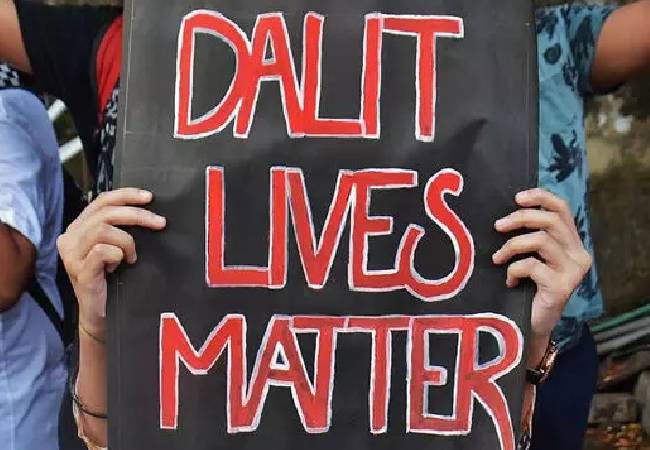
Barmer: In a horrifying incident of caste-based violence, an eight-year-old Dalit boy was brutally assaulted and hung upside down from a tree in Bhakharpura village of Rajasthan’s Barmer district, allegedly for touching a water pot. His mother and grandmother were also attacked when they tried to intervene.
According to the victim’s mother, Puri Devi, the incident occurred on Friday when her son, who was playing nearby, was asked by two men, identified as Narnaram Prajapat and Demaram Prajapat, to clean a bathroom and collect garbage. After finishing the work, the boy reportedly requested water and touched a pot, which allegedly triggered the violent assault.
The two accused allegedly dragged the boy to Narnaram’s house, hung him upside down from a tree, and continued beating him. The assault was reportedly stopped only after a relative of the boy began filming the incident on a mobile phone. Shortly afterward, the accused allegedly stormed into the boy’s house and attacked his mother and grandmother.
“Prima facie investigation and medical examination confirm the boy was brutally beaten and hung upside down. However, the allegation that the violence was triggered by touching a water pot is still under investigation,” Circle Officer Sukhram Bishnoi told Hindustan Times.
An FIR was filed on August 30 against three individuals, Narnaram, Demaram, and Ruparam Prajapat, under the Bharatiya Nyaya Sanhita (BNS) Sections 115(2) (voluntarily causing hurt), 127(2) (wrongful confinement), and 137(2) (kidnapping). The accused have also been booked under relevant provisions of the Scheduled Caste and Scheduled Tribe (Prevention of Atrocities) Act, 1989.
Police have arrested one of the accused, while two others are currently in detention.
Let the Truth be known. If you read VB and like VB, please be a VB Supporter and Help us deliver the Truth to one and all.
Karnataka School Edu Dept prohibits children from being made to dance to obscene songs
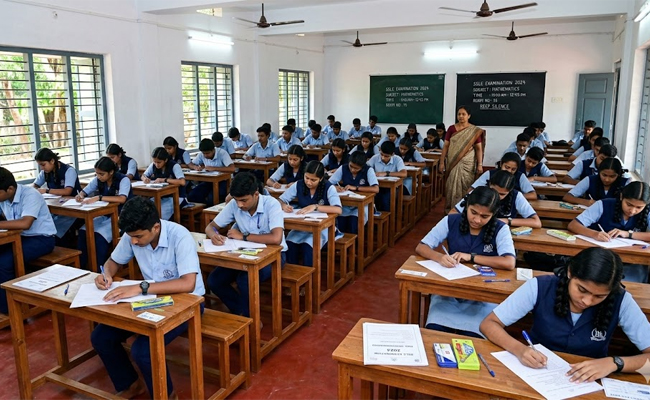
Bengaluru (PTI): The Karnataka School Education Department has issued a circular strictly prohibiting children from being made to dance to obscene songs in educational and cultural programmes.
It stated that such dances would negatively impact students' mental health and moral values. It will create indiscipline and harm the sanctity of education.
"All the Deputy Directors (Administration) of the state's School Education Department have been asked to take strict measures to prevent children or students from dancing to obscene songs in all government, aided and unaided schools in the state," the office of the commissioner of the School Education Department said in a recent circular.
"If it is found that children are being made to dance to obscene songs, appropriate action will be taken against the headmaster or management of such school," it added.
The department also listed certain measures in this regard, which include: strictly prohibiting children from being made to dance to obscene songs during educational and cultural programmes; selecting songs that are inspiring, positive, instilling national pride in children and reflecting the greatness, dignity, values, culture, and morality of the state.
Stating that the school headmaster and management are responsible for selecting songs and dances for cultural programmes, it said, they should also ensure that students wear decent clothes in dance or cultural programmes.