800 Govt shools in state to be upgraded as Karnataka Public Schools: Minister Madhu Bangarappa
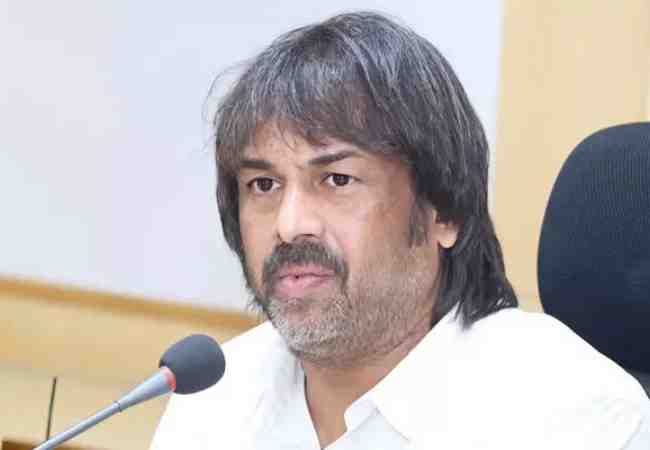
Bengaluru: The state government has drawn up a plan to upgrade 800 government schools into Karnataka Public Schools (KPS), each equipped with modern infrastructure at an estimated cost of Rs 4 crore per school, Primary and Secondary Education Minister of Karnataka Madhu Bangarappa announced on Wednesday.
Speaking at a press conference in Bengaluru, the minister said the KPS model will provide continuous education from pre-primary to II PUC under one roof. In the first phase, 500 schools will be developed as KPS institutions with the support of the Asian Development Bank (ADB) and the state government.
Additionally, 200 schools will be upgraded through the Kalyana Karnataka Region Development Board, while 100 more will be taken up in 10 mining-affected taluks under the Karnataka Mining Environment Restoration Corporation (KMERC). A Detailed Project Report (DPR) will be prepared for each set of projects.
“Each Assembly constituency will have two to three KPS schools, while taluks in the Kalyana Karnataka region will get four to five,” the minister said.
To ensure coordination, a Taluk Education Reform Committee will be formed under the chairmanship of the local MLA. “The goal is to enhance the basic infrastructure of government schools and ensure quality education for all,” he added.
The minister also said value education would be introduced for students from Classes 1 to 10, focusing on 10 core moral values. The Department of State Educational Research and Training (DSERT) has prepared activity-based student workbooks for this purpose.
Training for 1,984 resource persons will be conducted at the District Institute of Education and Training (DIET) level by the end of this month.
On November 1, marking Kannada Rajyotsava, Chief Minister Siddaramaiah will release the digital version of the student activity books, while printed copies will be supplied to all schools so that each student receives one activity book, the minister said.
Let the Truth be known. If you read VB and like VB, please be a VB Supporter and Help us deliver the Truth to one and all.
Case registered over social media posts 'threatening' Kerala CM’s security officer
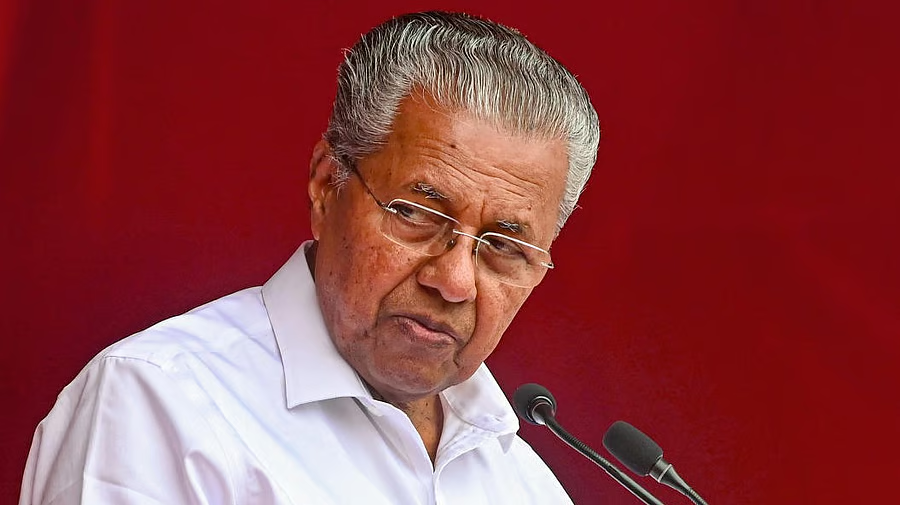
Thiruvananthapuram (PTI): A case has been registered and a probe launched into social media posts allegedly threatening a member of Chief Minister Pinarayi Vijayan’s security team with consequences once the UDF comes to power, officials said on Sunday.
The Thiruvananthapuram City Cyber Police registered the case based on a complaint filed by Chief Minister’s security staff member Sandeep Sasidharan.
The Congress had earlier alleged that Sandeep and another officer, Anil Kumar, brutally assaulted two Youth Congress-KSU activists including using flower pot when they protested against the Chief Minister during the Navakerala Sadas programme in Alappuzha in 2023.
A subsequent probe was conducted against both officers, and the Crime Branch later gave them a clean chit.
Recently, following the conclusion of the state assembly election on April 9, several social media posts allegedly made by Congress, Youth Congress and KSU activists claimed that revenge would be taken once the LDF government is removed and the UDF comes to power.
Police said cases have been registered against Facebook accounts named Arun Rajendran, Tom Kuriakose, Yaser KP, Sony Panamthanam, Sarath Pillai, KSU Kanjiramkulam, Rahul John C and Youth Congress Battle.
According to the FIR, the complainant’s photograph and name were used in several social media posts threatening him with consequences and containing abusive language.
Police said the social media account holders have been identified and will soon be summoned as part of the investigation.
The case has been registered under Sections 296(b) (uttering obscene words causing public annoyance), 351(2) (criminal intimidation), and 3(5) (acts done by several persons) of the Bharatiya Nyaya Sanhita.