9 Killed in Saudi-led coalition strikes in Yemen
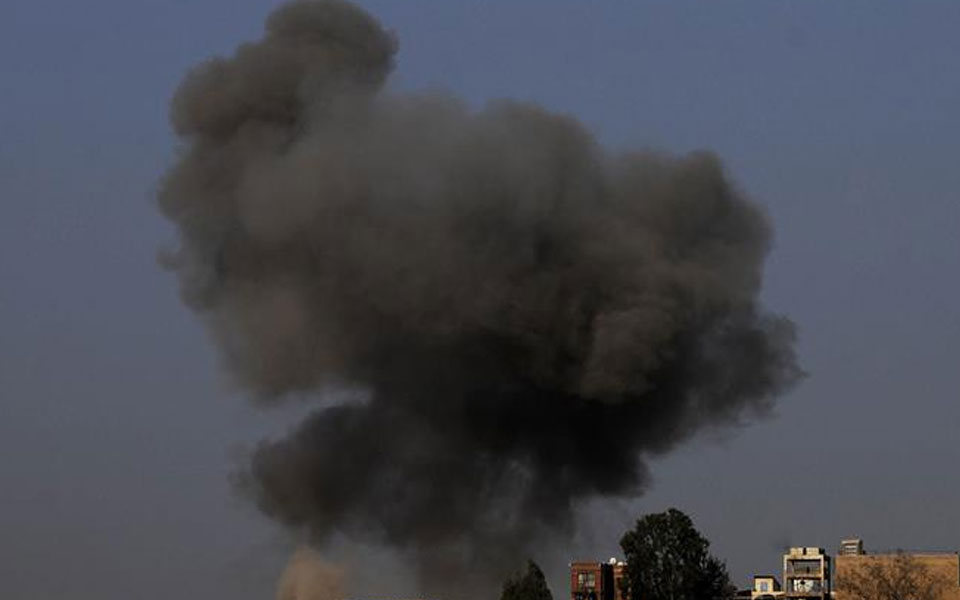
Sanaa, June 27 : At least nine people were killed and 11 others wounded on Tuesday in an airstrike by the Saudi Arabia-led Arab coalition in the city of Hudaydah, eyewitnesses said.
The occupants of the bus that was hit in the attack were inhabitants of Hudaydah, who were attempting to leave the Houthi-controlled city before the Arab coalition begins an all-out offensive to take the city, Efe reported.
In the past weeks, fighting has taken place as Yemeni government forces, backed by Saudi Arabia and the UAE, have advanced toward the port city from the south, seizing its international airport.
Hudaydah's seaport is a critical lifeline for food aid to reach millions of Yemenis living in areas controlled by the Houthis, including the capital Sanaa.
The UN has been trying to prevent an assault that would lead to even greater food insecurity.
At least 26,000 people have been displaced by violence and fears of an impending assault by government troops on Hudaydah, according to UN data.
These forces have been pushing toward Hudaydah as part of the ongoing Saudi-led war against the Houthi rebels in Yemen, which began in March 2015.
Yemen has been locked in a political and military crisis since the popular regional uprisings of 2011, with the Houthis taking control of the capital Sanaa in September 2014, expelling President Abd Rabbu Mansour Hadi, who is supported by Saudi Arabia.
The bombing campaign by the Saudi-Emirati-United States coalition has destroyed much of Yemen's infrastructure and led to a humanitarian catastrophe, pushing millions to the brink of starvation.
Over 22 million people in Yemen are in need of humanitarian aid, according to the UN.
Let the Truth be known. If you read VB and like VB, please be a VB Supporter and Help us deliver the Truth to one and all.
AIITA welcomes Karnataka’s ban on obscene songs in school events
Bhatkal: The Karnataka unit of the All India Ideal Teachers Association (AIITA) has welcomed the Karnataka government’s decision to strictly ban school children from dancing to obscene songs during educational and cultural programmes in government, aided, and private schools across the state.
AIITA Karnataka State President M. R. Manvi congratulated the government for taking what he termed an important step to preserve the sanctity of education.
“Such decisions to safeguard the dignity of school children and uphold the values of education are the need of the hour. This rule should not be limited to government schools alone but must be strictly implemented in all private educational institutions as well,” he said.
He further urged the government to address other concerns within school programmes.
“The government should not only prohibit obscene dances in the name of school anniversaries, but also ensure that plays and dialogues that incite religious hatred are avoided. Schools should be centres of harmony, not platforms for spreading hatred,” he added.
According to a recent circular issued by the Department of School Education and Literacy, obscene dances are adversely affecting the mental health and moral values of students.
In this regard, schools have been advised to use songs that promote nationalism, positive thinking, the greatness of Kannada culture, and value-based traditions instead of inappropriate content during programmes.
The circular also emphasises that students should be dressed in decent attire.
AIITA also backed the department’s warning that disciplinary action would be taken against head teachers if such guidelines are violated. The association has further demanded that district Deputy Directors of Public Instruction strictly monitor the implementation of these rules.