90 percent of India, entire Delhi in 'danger zone' of heatwave impacts: Study
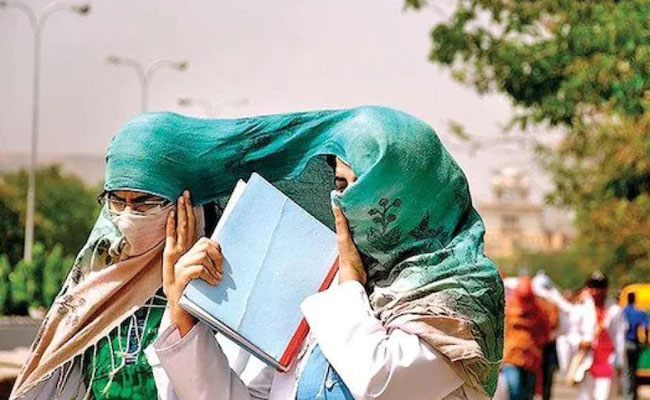
New Delhi (PTI): Heatwaves in India are becoming more frequent and severe due to climate change, with over 90 percent of the country in the "extremely cautious" or "danger zone" of their impacts, according to a new study.
The study, conducted by Ramit Debnath and colleagues at the University of Cambridge, also revealed that Delhi is particularly vulnerable to severe heatwave impacts, though its recent state action plan for climate change does not reflect this.
It suggested that heatwaves have impeded India's progress towards achieving the United Nations' Sustainable Development Goals (SDGs) more significantly than previously thought, and that the current assessment metrics may not fully capture the impacts of heatwaves linked to climate change on the country.
Heatwaves claimed more than 17,000 lives in 50 years in India, according to a paper authored by M Rajeevan, former secretary of Ministry of Earth Sciences, along with scientists Kamaljit Ray, S S Ray, R K Giri and A P Dimri.
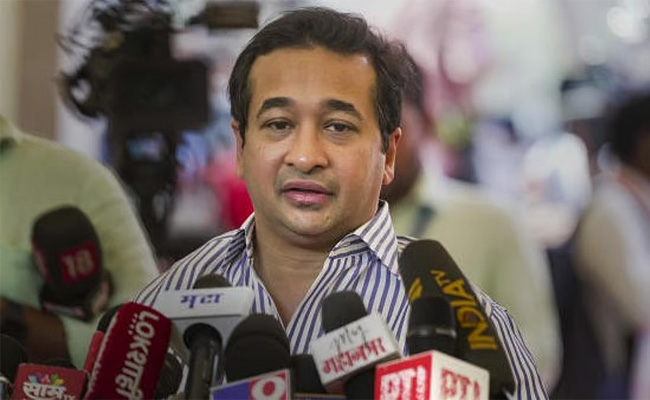
The paper published in 2021 said there were 706 heatwave incidents in the country from 1971-2019.Thirteen people died from heatstroke at a Maharashtra government award function in Navi Mumbai on Sunday, making it one of the highest death tolls from a single heatwave-related event in the country's history.
To assess India's climate vulnerability and the potential impact of climate change on SDG progress, researchers at the University of Cambridge conducted an analytical evaluation of the country's heat index with its climate vulnerability index.
The heat index (HI) is a measure of how hot it feels to the human body, taking into account both temperature and humidity. The climate vulnerability index (CVI) is a composite index that uses various indicators to account for socioeconomic, livelihood, and biophysical factors to study the impact of heatwave.
The researchers accessed a publicly available dataset on state-level climate vulnerability indicators from the government's National Data and Analytics Platform to classify severity categories.
They then compared India's progress in SDGs over 20 years (2001-2021) with extreme weather-related mortality from 2001-2021.
The study showed that more than 90 percent of India is in the "extremely cautious" or "danger" range of heatwave impacts through HI, otherwise considered "low" or "moderate" vulnerability through CVI.
States that were categorized as "low" in CVI rankings were found to be in "danger" HI categories, indicating that heatwaves put more people at extreme climate risk across India than estimated by CVI.
The authors concluded that the use of CVI may underestimate the actual burden of climate change concerning heat, and suggested that India should consider reassessing its climate vulnerabilities to meet the SDGs.
They warned that if India fails to address the impact of heatwaves immediately, it could slow progress towards achieving sustainable development goals.
The study also highlighted that the current heat-action plans designed and implemented according to the Delhi government's vulnerability assessment do not include HI estimations, which is concerning since even the "low" climate-vulnerable areas in Delhi are at high heatwave risks.
The high intensity of development in Central, East, West, and North-East districts can further elevate the HI risks through heat island formation, it said.
The authors said some of the critical variables in Delhi that will aggravate heat-related vulnerabilities include concentration of slum population and overcrowding in high HI areas, lack of access to basic amenities like electricity, water and sanitation, non-availability of immediate healthcare and health insurance, poor condition of housing and dirty cooking fuel (biomass, kerosene and coal).
The threshold for a heatwave is met when the maximum temperature of a station reaches at least 40 degrees Celsius in the plains, at least 37 degrees Celsius in coastal areas, and at least 30 degrees Celsius in hilly regions, and the departure from normal is at least 4.5 degrees Celsius.
Earlier this month, the India Meteorological Department predicted above-normal maximum temperatures for most parts of the country from April to June, except parts of the northwest and the peninsular regions.
Above-normal heatwave days are expected in most parts of central, east, and northwest India during this period.
In 2023, India experienced its hottest February since record-keeping began in 1901. However, above-normal rainfall in March kept temperatures in check.
March 2022 was the warmest ever and the third driest in 121 years. The year also saw the country's third-warmest April since 1901.
In India, about 75 percent of workers (around 380 million people) experience heat-related stress.
A report by the McKinsey Global Institute warns that if this continues, by 2030, the country could lose between 2.5 percent to 4.5 percent of its Gross Domestic Product (GDP) per year.
Let the Truth be known. If you read VB and like VB, please be a VB Supporter and Help us deliver the Truth to one and all.
Putin meets Iran's FM Araghchi, says Russia ready to do its best to help bring peace to West Asia
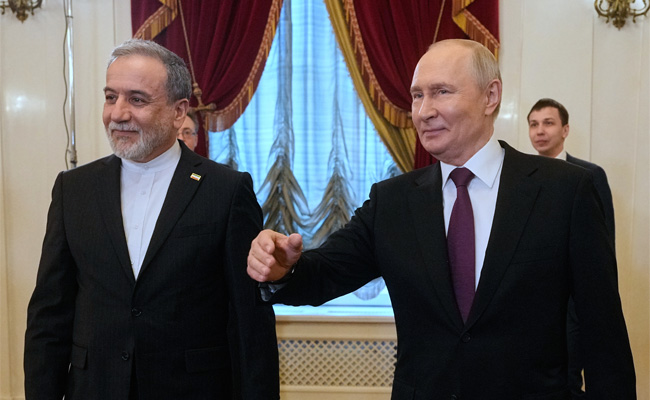
Moscow (PTI): Iran's Foreign Minister Abbas Araghchi on Monday met Russian President Vladimir Putin, who hailed the Iranian people for fighting bravely and heroically for their sovereignty and said Moscow is ready to do its best to help bring peace to West Asia as soon as possible.
Araghchi, who held talks with Omani and Pakistani leadership before arriving in Russia, met Putin in St. Petersburg and thanked him for supporting Iran, state-owned TASS news agency reported.
"Russia is ready to do everything in its power to ensure that peace in the Middle East is achieved as soon as possible," Putin said during his meeting with Araghchi, which was also attended by Russian Foreign Minister Sergey Lavrov.
Revealing that he received a message from Iranian Supreme Leader Mojtaba Khamenei last week, Putin asked Araghchi to convey his "gratitude for this message and best wishes for his health and well-being."
He praised the Iranian people for fighting "bravely and heroically" for their sovereignty, Iran's state-run PRESS TV reported.
"We really hope that, based on the courage and desire for independence, the Iranian people, under the guidance of the new leader, will weather this difficult period of trials and peace will come,” Putin said.
He also stressed that Russia “intends to maintain” its strategic relations with Iran.
Araghchi said that the world witnessed Iran’s strength in countering the US during the recent war, and that the Islamic Republic is a "stable and powerful establishment."
"With their courage, the Iranian people succeeded in resisting the US aggression and will be able to endure it,” he said.
He said that it became clear that Iran has “great friends and allies” like Russia, and conveyed “warmest greetings” from Supreme Leader Mojtaba Khamenei and President Masoud Pezeshkian to the Russian leader.
Araghchi said relations between Moscow and Tehran represent a “strategic partnership at the highest level” and will continue to develop "regardless of circumstances."
"We are grateful to you for the solid and strong positions in support of the Islamic Republic of Iran," he said.
Foreign Minister Lavrov said that the talks between President Putin and the Iranian Foreign Minister were "useful and constructive."
Kremlin Spokesman Dmitry Peskov later said that Russia is "ready to provide any good offices, any mediation services that are acceptable to the parties."
"We will be ready to do everything so that ultimately peace ensues, guaranteed peace, and that there is no return to hostilities," Peskov was quoted as saying by TASS.
He was asked how Moscow can assist in future negotiations on the Iranian settlement.
Araghchi arrived in Russia after his whirlwind trip to Islamabad, which, according to him, was “very productive” and involved “good consultations" with Pakistan's Army Chief Field Marshal Asim Munir, amid uncertainty over the second round of peace talks to resolve the war in West Asia.
"We held good consultations with our friends in Pakistan. The trip was successful. We assessed the outcome of our recent (meetings) and discussed in what direction and under what conditions talks can move on,” Araghchi said in a video posted on his Telegram channel upon his arrival in St Petersburg.
Referring to the second round of talks between the US and Iran to resolve the conflict in West Asia, Araghchi said: "Developments have taken place in the negotiations."
"Despite some progress in earlier rounds, the talks failed to reach their objectives due to the Americans' approach, the excessive demands they made, and the wrong approaches they adopted. Therefore, it was necessary to consult with our friends in Pakistan to review the latest situation,” Iran's official news agency IRNA quoted him as saying.
He said that the trip to Pakistan was a good opportunity to review developments related to the US-Israeli war against Iran, expressing confidence that “these consultations and coordination between the two countries will be highly significant.”
Araghchi arrived at St. Petersburg's Pulkovo Airport early Monday, where he was welcomed by Russian officials and Iran’s ambassador to Russia, Kazem Jalali, the report said.
The first round of peace talks between Iran and the US, held on April 11 and 12, failed to bring the desired result for the parties to the conflict.
The Iranian minister arrived in Islamabad for the second time on Sunday after a short visit to Oman, where he held talks with Sultan Haitham bin Tariq al-Said on security in the Strait of Hormuz and diplomatic efforts to end the Iran-US conflict.
After Araghchi left Pakistan for Oman on Saturday, President Donald Trump announced that US negotiators Steve Witkoff and Jared Kushner would no longer be going to Islamabad for talks with Iran, contending that Washington held all the cards on the matter.
Trump on Sunday reiterated that the US and Iranian officials can talk by phone for a peace solution to the conflict.
On Tuesday, Trump extended the two-week ceasefire with Iran indefinitely to give Tehran more time to prepare a unified proposal to end the war, just hours before the truce was set to expire.
The war began when the US and Israel jointly attacked Iran on February 28, killing Iranian Supreme Leader Ayatollah Ali Khamenei and several top commanders. The retaliation by the Islamic Republic extended the war to the entire Gulf region.