90-year-old Padma Shri Awardee Guru Mayadhar Raut evicted from govt accommodation
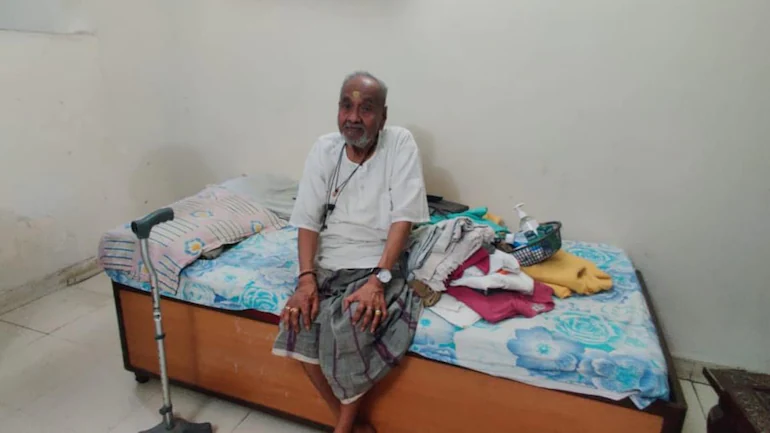
The eviction proceedings against 90-year-old Padma Shri awardee Odissi dancer Guru Mayadhar Raut from government accommodation began on Tuesday, reported The Hindu.
The accommodation provided by the centre for prominent artists decades ago including Guru Mayadhar Raut was cancelled earlier in 2014 while a notice was issued in this regard in 2020 after which late Birju Maharaj had moved court, the report said.
Artist and daughter of Guru Raut, Madhumita Raut said the artists had lost their case against the eviction on February 25 and had time till April 25 to vacate the houses at the Asian Games Village here. She said the hearing of artists’ appeal in the Delhi High Court was scheduled on Wednesday morning.
“The Directorate of Estates knew our appeal was to be heard on Wednesday so they came with their staff and police to forcibly throw out our belongings on Tuesday. They came at 1 p.m. and I was serving lunch to my father. I appealed to them to allow my father to eat but they did not allow it,” she said.
According to the report, Raut was in the process of vacating the house on Wednesday and moving to a student’s house as a temporary measure until the hearing. She said that the house was allotted to her father about 25 years ago.
“I don’t mind if they evict, but the way in which it was done was inhumane. The houses were allotted to artists who work with the guru-shishya tradition and don’t care for commercial interests. Isn’t it the government’s responsibility to take care of Padma awardees?” she claimed.
The report said that among the artists who were allotted accommodation in the Asian Games Village, Guru Raut was the first one to be evicted so far. It also said that Vanashree Rao, wife of Kuchipudi dancer Guru Jayarama Rao, who was allotted government accommodation in Asian Games Village in 1987, said the artists were awaiting the court’s decision on their appeal.
The Cabinet Committee on Accommodation in November 2020 had decided to waive damage charges accumulated by 27 artists, a total of ₹32.09 crore, for overstaying at the allotted houses beyond 2014. They had been given time till the end of the year to vacate.
The report noted that up to 40 artists can be allotted accommodation under a special quota in the General Pool Residential Accommodation on the recommendation of the Culture Ministry if they earned under ₹20,000 a month.
A comment from the Directorate of Estates in this regard is anticipated, the report said.


PC: India Today
Let the Truth be known. If you read VB and like VB, please be a VB Supporter and Help us deliver the Truth to one and all.
Congress using hijab issue to pacify minority anger, alleges Karnataka LoP R Ashoka
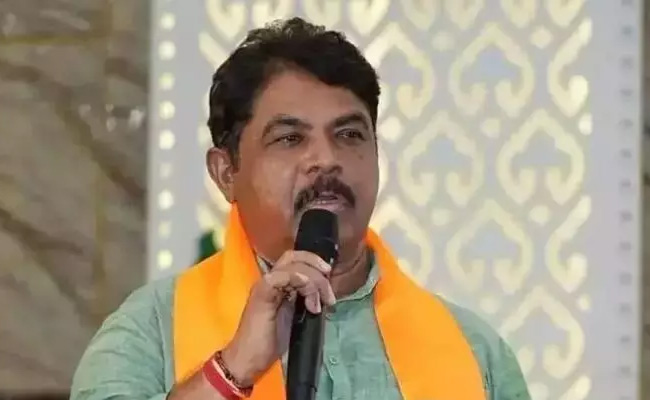
Bengaluru: Leader of Opposition in the Assembly R. Ashoka has accused the Congress government of using the hijab issue to placate what he described as discontent among minority voters after the Davanagere by-election.
In a post on X on Wednesday, Ashoka alleged that the state government, instead of addressing issues such as price rise, corruption, farmers’ distress and law and order, was attempting to retain its minority vote base by reviving the hijab issue.
Referring to the 2022 dress code introduced by the BJP government, which prohibited hijab in schools and colleges, Ashoka said the Karnataka High Court had upheld the policy and emphasised the importance of discipline in educational institutions.
He questioned the Congress government’s move to revisit the issue and asked whether setting aside the court-backed policy to benefit one community could be described as secularism.
Ashoka further alleged that while the government was willing to permit hijab, it continued to prohibit saffron shawls.
He accused the government of dividing students on religious lines rather than treating schools and colleges as spaces of equality.
Drawing a comparison with Mamata Banerjee’s government in West Bengal, Ashoka claimed that excessive appeasement politics had harmed the state and warned that the Congress in Karnataka could face a similar political response.
He said voters in Karnataka would teach the Congress a lesson for what he termed “vote-bank politics” and for compromising constitutional and judicial principles.