9.27 lakh severely acute malnourished children identified till November last year: RTI
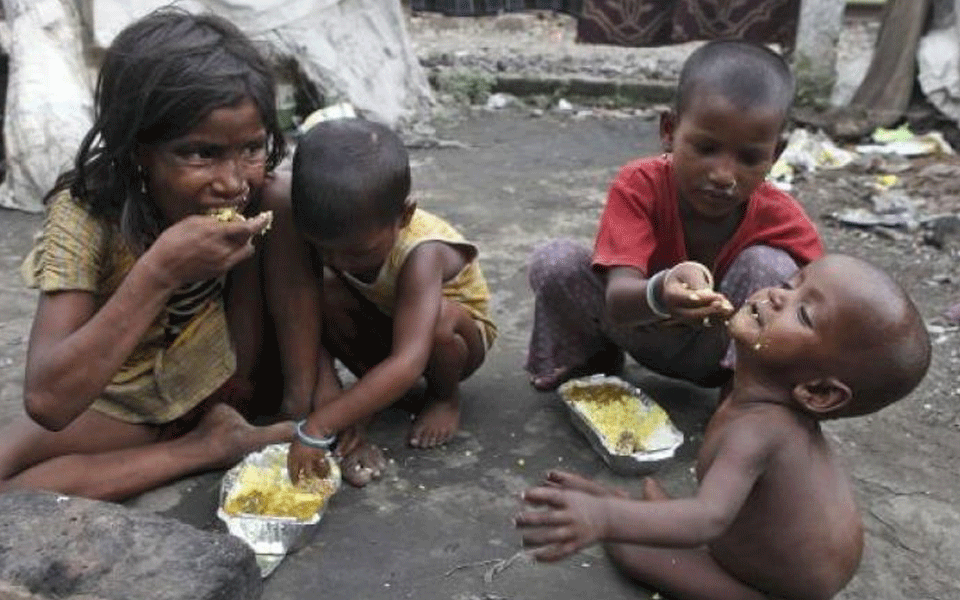
New Delhi: More than 9.2 lakh children in India are severely acute malnourished', with the most in Uttar Pradesh followed by Bihar, according to government data, underscoring concerns that the Covid pandemic could exacerbate the health and nutrition crisis among the poorest of the poor.
An estimated 9,27,606 severely acute malnourished' children from six months to six years were identified across the country till November last year, the Women and Child Development Ministry said in response to an RTI query from PTI.
Of these, Uttar Pradesh counted for 3,98,359 and Bihar 2,79,427, according to the figures shared by the ministry. Ladakh, Lakshadweep, Nagaland, Manipur and Madhya Pradesh reported no severely malnourished children.
Except for Ladakh, none of the anganwadi centres in the other four, including Madhya Pradesh, one of India's largest states, reported any data on the matter, according to the RTI reply.
The World Health Organisation (WHO) defines severe acute malnutrition' (SAM) by very low weight-for-height or a mid-upper arm circumference less than 115 mm, or by the presence of nutritional oedema. Children suffering from SAM have very low weight for their height, and are nine times more likely to die in case of diseases due to their weakened immune system.
The Women and Child Development Ministry had last year asked all states and union territories to identify SAM children for their early referral to hospitals. The figure of 9,27,606 came following that exercise.
The worry is that the numbers could not just be an underestimation but also rise in view of the ongoing pandemic with fears that the third wave could impact children more than others.
"There is rise in unemployment, there is rise in an economic crisis which is bound to have repercussions on hunger and when there is hunger there will be malnutrition. The government has a clear cut protocol and they need to ramp that up," Enakshi Ganguly, co-founder of the HAQ Center for Child Rights, told PTI.
While Uttar Pradesh and Bihar top the list for SAM children, they are also home to the highest number of children in the country. According to 2011 census data, Uttar Pradesh has 2,97,28,235 (2.97 crore/29.72 million) children aged 0-6 years while Bihar has 1,85,82,229 (1.85 crore/18.5 million).
According to the RTI response, Maharashtra reported 70,665 SAM children followed by Gujarat at 45,749, Chhattisgarh at 37,249, Odisha at 15,595, Tamil Nadu at 12,489, Jharkhand at 12,059, Andhra Pradesh at 11,201, Telangana at 9,045, Assam at 7,218, Karnataka at 6,899, Kerala at 6,188 and Rajasthan at 5,732.
The identification of SAM children was done by over 10 lakh Anganwadi centres from across the country.
Ganguly stressed on the role of anganwadi centres in helping improve the nutrition status of the children.
"The anganwadis have to become much more functional and if the possibility of children reaching anganwadis is going to become hard because of lockdowns, then the anganwadis need to reach the children. So what are the plans for that? she asked.
Malnutrition will be a huge comorbidity if what they are saying that children will be affected more in the next wave holds true, then malnutrition will be a huge comorbidity and how are they going to address that?"
Dola Mohapatra, executive director, Rise Against Hunger India, agreed that COVID-19 could further exacerbate the situation with shrinking food diversity and low intake combined with episodes of missing food at times.
He said solutions have to be both home-based care and facility-based care.
"Since SAM has direct connection with food availability, utilisation and awareness the immediate task is to appropriately build linkages with the government systems to ensure families receive not just ration/food, but required education and support," he said.
COVID-19 has been a big impediment in organising community based interventions, so new ways/methods to disseminate info to the mothers and caregivers have to be found out," he said.
Mohapatra also stressed on the need to strengthen Nutrition Rehabilitation Centres (NRCs) which are meant to treat SAM cases
"There are studies that suggest that NRCs have not been very effective. In many cases, we have seen that SAM cases have been discharged early because either the centre could not continue to keep the same case for a continued period, or the caregivers could not stay for a longer duration at the facility, or there was simply not enough supervision by the higher ups."
He also stressed on the need for designing customised menus in consultation with experts for SAM cases and formulating guidelines.
For administrative and operational convenience, as well as for better accountability, SAM cases could be segregated into smaller units and responsibility to manage/coordinate and monitor smaller units could be handed over to independent entities such as medical colleges, local NGOs, women's collectives under the overall guidance of the District/Block health staff," Mohapatra said.
While data is not updated year on year, the last available figure of SAM children is from NFHS-4 (National Family Health Survey) in 2015-16 according to which prevalence of severe acute malnutrition among children was reported at 7.4 per cent.
NFHS-4 gathered information from 601,509 households, 699,686 women, and 112,122 men. Information on 265,653 children below age 5 has been collected in the survey
NFHS-5, released in December last year, which gave figures for 22 states and UTs also presented a grim scenario. It said malnutrition increased among children in 2019-20 from 2015-16 in 22 states and UTs.
Around 13 states and UTs out of the 22 surveyed recorded a rise in percentage of children under five years who are stunted in comparison to 2015-16; 12 states and UTs recorded a rise in percentage of children under five years who are wasted; 16 states and UTs recorded a rise in the percentage of children under five years who are severely wasted and underweight in 2019-20. The NFHS-5 was conducted on 6.1 lakh sample households.
Wasting is low weight for their height among children, reflecting acute undernutrition. Wasting is a strong predictor of mortality among children under five years of age.
To tackle high persistence of malnutrition in the country, the Centre launched the Poshan Abhiyan programme in 2018 to reduce low birth weight, stunting and undernutrition and anaemia among children, adolescent girls and women.
Let the Truth be known. If you read VB and like VB, please be a VB Supporter and Help us deliver the Truth to one and all.
Allahabad HC orders probe into 'reinstatement' of teacher in UP's Barabanki
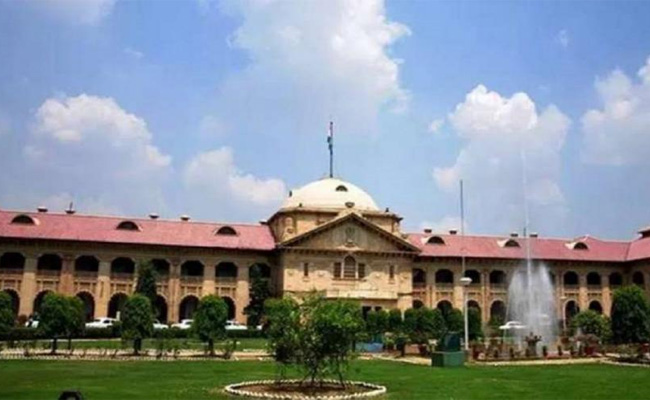
Lucknow (PTI): The Lucknow Bench of the Allahabad High Court on Friday ordered a probe by the special task force (STF) into alleged irregularities in the rejoining of a teacher at City Intermediate College in Barabanki, observing that the reinstatement appeared to be prima facie illegal.
The court also directed the recovery of the salary paid to the teacher during the disputed period.
A bench of Justice Rajeev Singh passed the order on a petition filed by the college management committee. The court expressed doubts over the roles of the District Inspector of Schools (DIOS), Barabanki, the college principal and the teacher concerned and hence, directed a detailed inquiry into the matter.
Taking note of alleged manipulation of records and misleading submissions, the court ordered the immediate transfer of the Barabanki DIOS to ensure a fair probe. It also directed the initiation of disciplinary proceedings against the then joint director of education of the Ayodhya division.
In its order, the court found that the teacher, Abhay Kumar, was initially appointed as an assistant teacher in 2018 but joined an Eklavya Model Residential School in Chhattisgarh as a lecturer in June 2024 without obtaining permission from the management. His subsequent request to retain the lien was rejected.
Despite this, he was allowed to rejoin the Barabanki College in September 2025 on the directions of the joint director of education and the DIOS, and was even paid the salary for October 2025. The court termed the rejoining "wholly illegal" and lacking any legal basis.
The bench also expressed concern over lapses in communication within the education department and directed the Uttar Pradesh chief secretary to ensure that official orders are communicated through email and WhatsApp as well, to prevent disputes.
The matter is next listed for hearing on May 28 when a compliance report is sought.