95% organisations get zero return from using AI tools, MIT study reveals
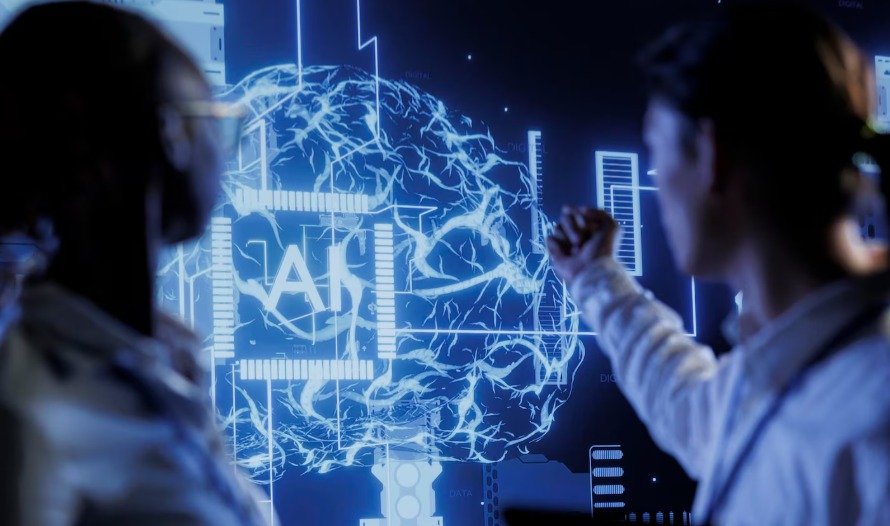
Cambridge: Despite global companies rushing to integrate artificial intelligence (AI) systems to cut costs and drive profits, a recent study from the Massachusetts Institute of Technology (MIT) has revealed that most of these initiatives have failed to deliver measurable results.
The report, titled The GenAI Divide: State of AI in Business 2025 , cited by NDTV on Monday, found that 95% of organisations that implemented AI systems have seen no return on their investments. Despite an estimated $30-40 billion in enterprise investment into generative AI (GenAI), the study uncovered that the vast majority of AI projects have had little to no impact on profit and loss (P&L) performance.
The research surveyed 300 AI deployments and gathered insights from approximately 350 employees. Among the most commonly adopted AI tools were ChatGPT and Copilot, but only 5% of AI pilots have managed to extract substantial value, while most others have stagnated without any measurable financial impact.
"Over 80 percent of organisations have explored or piloted them, and nearly 40 percent report deployment. But these tools primarily enhance individual productivity, not P&L performance. Meanwhile, enterprise-grade systems, custom or vendor-sold, are being quietly rejected," the report stated.
The study also pointed out that the failures were not necessarily due to AI models not functioning efficiently. Rather, the challenges arose from difficulties in integrating these systems with existing company workflows. Furthermore, many companies face a "learning gap" within their workforce, complicating the adoption of new AI tools. Company executives, however, have reportedly blamed AI models' performance as the root cause of the lack of returns.
In a related example, Dane Mathews, Chief Digital and Technology Officer at Taco Bell, explained that the fast-food chain has slowed down its AI rollout at drive-through restaurants. Despite expectations, AI technology proved counterintuitive, with Mathews acknowledging that human workers were often better suited to take orders, particularly during busy periods.
This echoes findings from a June study by Apple, which cast doubt on the capabilities of current AI models. In its report titled The Illusion of Thinking: Understanding the Strengths and Limitations of Reasoning Models via the Lens of Problem Complexity , Apple argued that AI systems like Claude, DeepSeek-R1, and o3-mini do not actually reason as humans do. According to Apple, these models excel at pattern recognition but struggle when confronted with complex or altered questions, often falling apart when patterns become too complicated.
Let the Truth be known. If you read VB and like VB, please be a VB Supporter and Help us deliver the Truth to one and all.
Karnataka School Edu Dept prohibits children from being made to dance to obscene songs
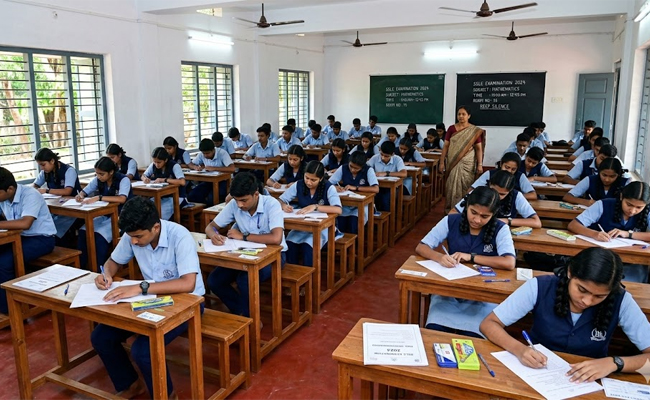
Bengaluru (PTI): The Karnataka School Education Department has issued a circular strictly prohibiting children from being made to dance to obscene songs in educational and cultural programmes.
It stated that such dances would negatively impact students' mental health and moral values. It will create indiscipline and harm the sanctity of education.
"All the Deputy Directors (Administration) of the state's School Education Department have been asked to take strict measures to prevent children or students from dancing to obscene songs in all government, aided and unaided schools in the state," the office of the commissioner of the School Education Department said in a recent circular.
"If it is found that children are being made to dance to obscene songs, appropriate action will be taken against the headmaster or management of such school," it added.
The department also listed certain measures in this regard, which include: strictly prohibiting children from being made to dance to obscene songs during educational and cultural programmes; selecting songs that are inspiring, positive, instilling national pride in children and reflecting the greatness, dignity, values, culture, and morality of the state.
Stating that the school headmaster and management are responsible for selecting songs and dances for cultural programmes, it said, they should also ensure that students wear decent clothes in dance or cultural programmes.