A third of Bihar families survive on Rs 200 or less a day, caste survey reveals
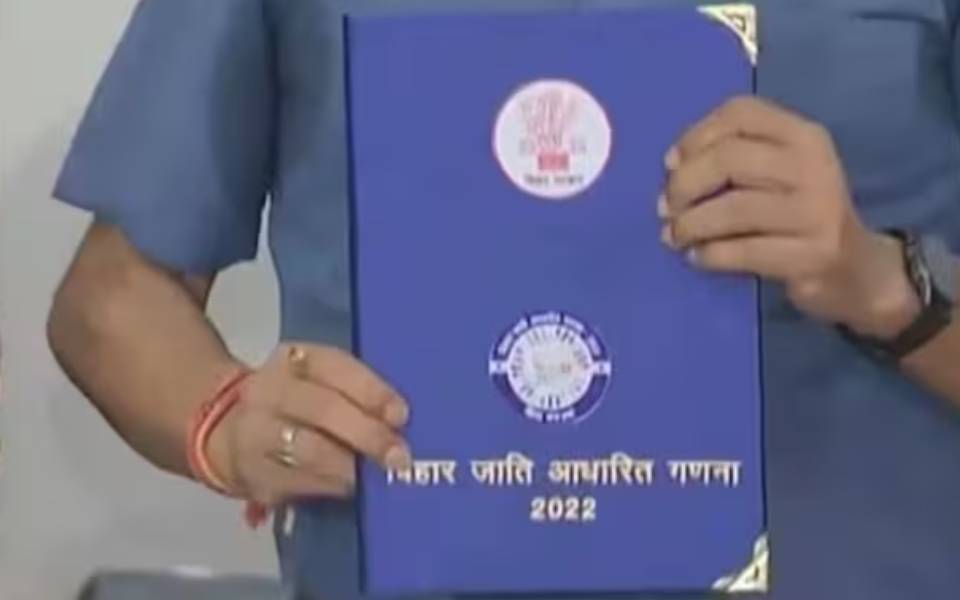
Patna, Nov 7: More than a third of families in Bihar are making do with an income of Rs 200 or less a day or a maximum monthly earnings of Rs 6,000, while the percentage of SC-ST families living on similar income is nearly 43, according to the Caste Survey report tabled in the state assembly on Tuesday.
According to the report, the state is home to about 2.97 crore families out of which more than 94 lakh (34.13 per cent) live on an income of Rs 6,000 or less a month.
Parliamentary Affairs Minister Vijay Kumar Chaudhary who tabled the report said the literacy rate has risen from 69.8 per cent as per the 2011 census to 79.8 per cent.
The percentage of households who live on less than Rs 6000 a month or less than Rs 200 a day among the Scheduled tribe households (42.91 per cent) was almost the same as among scheduled caste households (42.78 per cent).
Chaudhary tabled the detailed report, preliminary findings of which were made public on October 2, in presence of Chief Minister Nitish Kumar and Deputy CM Tejashwi Yadav, among others.
Chaudhary termed the exercise as "historic" and vouched for the figures being "authentic", denying allegations levelled by the opposition BJP that numbers had been "manipulated" to politically suit the ruling Mahagathbandhan coalition.
"We must remember that a rise in the population percentage of a caste does not amount to an achievement. Similarly, a fall in the percentage does not mean a loss," said the minister, who also voiced displeasure over litigations trying to challenge the survey on various grounds, even though the Supreme Court had found the exercise to be "perfectly valid".
He also took the occasion to recall that the exercise followed the Centre's reluctance to undertake a caste survey, notwithstanding two unanimous resolutions passed by the legislature to press the demand and an in-person request made to Prime Minister Narendra Modi, by an all-party delegation led by the chief minister.
The state has also improved its sex ratio from 918 to 953 women per 1,000 men, said the minister.
The report has also come out with several other important findings like more than 50 lakh people of Bihar are living outside the state in search of livelihood or better education opportunities.
Those earning a living in other states numbered around 46 lakh, while another 2.17 lakh have found greener pastures abroad. Those pursuing studies in other states numbered about 5.52 lakh while about 27,000 were doing the same in foreign countries.
He also said that findings of the survey indicated many positives, like an improved literacy rate, which rose from 69.8 per cent as per the 2011 census to 79.8 per cent, with "a relatively bigger jump among females".
The preliminary findings had established that OBCs and EBCs constituted more than 60 per cent of the state's total population while the upper castes accounted for about 10 per cent.
The report showed that more than 25 per cent of the upper castes earn Rs 6000 or less a month.
The most well-off Hindu upper caste were the numerically minuscule Kayasthas as only 13.83 per cent of families from the largely urbanised community live on such an income.
The same ratio is surprisingly high for the Bhumihars (27.58), believed to be the biggest land-owning caste of Bihar, who dominated the state's politics until the Mandal wave of the 1990s threw up a new power structure.
The preliminary findings had said that Yadavs, who have been the most dominant OBC group, accounted for 14 per cent of the total population, retaining their status as the single most populous community since the 1931 census when a headcount of different social segments was last held.
This had led to allegations from Union Home Minister Amit Shah that the figure was "inflated", made under pressure from Yadav's father Lalu Prasad, a former chief minister of the state who heads the RJD, the largest constituent of the ruling alliance in the state.
The report revealed that despite their political ascendance, more than 35 per cent of Yadavs have a monthly income ceiling of Rs 6000.
Among the Kurmis, the caste to which Chief Minister Nitish Kumar belongs, nearly 30 per cent of people earn a similar amount.
The survey also took into account the caste divisions among Muslims, who together accounted for more than 17 per cent of the state's population. It said that 17.61 per cent of the Sayyads, who claim descent from the family of the Prophet, earn Rs 6000 per month or less.
Let the Truth be known. If you read VB and like VB, please be a VB Supporter and Help us deliver the Truth to one and all.
Rickelton's ton in vain as SRH beat MI by 6 wickets

Mumbai (PTI): Ryan Rickelton's whirlwind unbeaten ton was overshadowed by Heinrich Klaasen's unbeaten 65 as Sunrisers Hyderabad defeated Mumbai Indians by six wickets in an IPL match here on Wednesday.
Chasing an imposing 244-run target, Travis Head (76 off 30) and Abhishek Sharma (45 off 24) shared 129 runs for the opening wicket to set the platform for SRH.
Klaasen (65 not out off 30 balls) then displayed his all-round hitting abilities to guide SRH home with the help of Nitish Kumar Reddy (21) and Salil Arora (30 not out off 10) in 18.4 overs.
Earlier, Rickelton's knock powered MI to 243 for five.
MI rode on a 93-run stand between Rickelton (123 not out off 55 balls) and Will Jacks (46 off 22) in 7.1 overs for the opening stand to power the side.
MI skipper Hardik Pandya scored a valuable 31 off 15 balls before being dismissed.
Praful Hinge (2/54), Eshan Malinga (1/29), Sakib Hasan (1/39) and Nitish Kumar Reddy (1/31) were the wicket-takers for SRH.
Brief Scores:
Mumbai Indian: 243 for 5 in 20 overs (Ryan Rickelton 123 not out; Praful Hinge 2/54).
Sunrisers Hyderabad: 249 for 4 in 18.4 overs (Travis Head 76, Heinrich Klaasen 65 not out; AM Ghazanfar 2/51).