AAP still open to alliance with Congress in Delhi, Haryana and Chandigarh: Sisodia
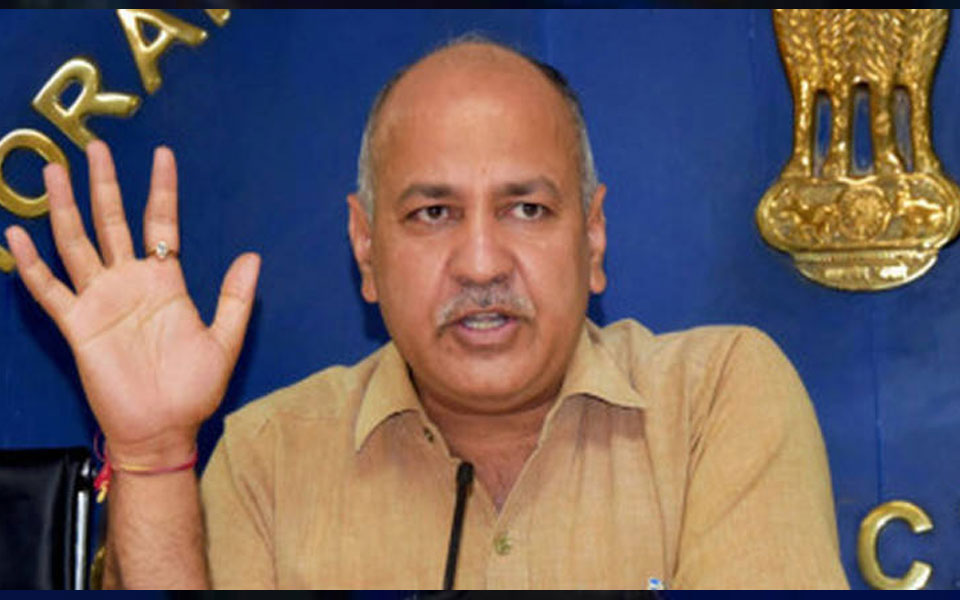
New Delhi: AAP leader and Deputy Chief Minister Manish Sisodia Saturday said his party is still ready to form an alliance with the Congress in Delhi, Haryana and Chandigarh but it would not agree for a tie-up just in the national capital.
He said the priority of the Aam Aadmi Party is to stop the Narendra Modi-Amit Shah duo which, he said, is proving to become very "dangerous" for the country.
"We wanted to form a united opposition against the BJP and were ready to ignore our differences because right now the priority is to stop the dangerous Modi-Shah duo," he said.
"In last one week, meetings were held between the AAP and the Congress and we proposed alliance on 33 seats in Delhi, Goa, Chandigarh, Haryana and Punjab seats, out of them 23 seats is with NDA.
He said a tie-up between the two parties could have caused a "damage" to the BJP-led National Democratic Alliance (NDA) on the 23 seats.
"But the Congress purposely wasted time to take a decision on alliance and now it says it can tie up with the AAP only in Delhi. Forming an alliance in Delhi alone would not solve the problem," he said.
"We still saying that an alliance can be formed (with Congress) in Haryana, Delhi and Chandigarh if they are ready then we are ready too but alliance cannot be done alone in Delhi," he added.
The uncertainty over alliance between the AAP and the Congress has been continuing for weeks now. The talks between the two sides derailed after they failed to reach an agreement over seat-sharing in Delhi and Haryana.
Congress' in-charge for Delhi P C Chacko on Friday said Congress will go alone in Delhi since the AAP has taken an "impractical stand".
He, however said,"We are still ready (for alliance) if AAP is willing to have an alliance in Delhi alone. We want to fight the BJP together."
"We are compelled to go on our own as the AAP is going back on its stand," Chacko told reporters.
AAP's Rajya Sabha leader Sanjay Singh, who was holding alliance talks with the Congress, said, "Our sincerity to stop the BJP in Haryana is reflected by the fact that we became a junior partner to a four-month-old party (JJP) and agreed to contest only less than half of the seats in the state."
Singh said the AAP was eager for an alliance with the Congress in Haryana so that the BJP could be defeated on all the 10 seats.
"That's why we were prepared to give Congress three seats in Delhi. But they refused an alliance," he said.
Singh exuded confidence that the AAP will win all seven Lok Sabha seats in Delhi on its own.
However, sources said the AAP in a last-ditch attempt may offer a 5-2 seat sharing formula to the Congress in Delhi.
Earlier, the AAP was ready to give three seats to the Congress in Delhi but now it might consider giving it just two seats, the sources added.
Let the Truth be known. If you read VB and like VB, please be a VB Supporter and Help us deliver the Truth to one and all.
CM Siddaramaiah alleges ‘criminal conspiracy’ in Sringeri recount, vows legal action
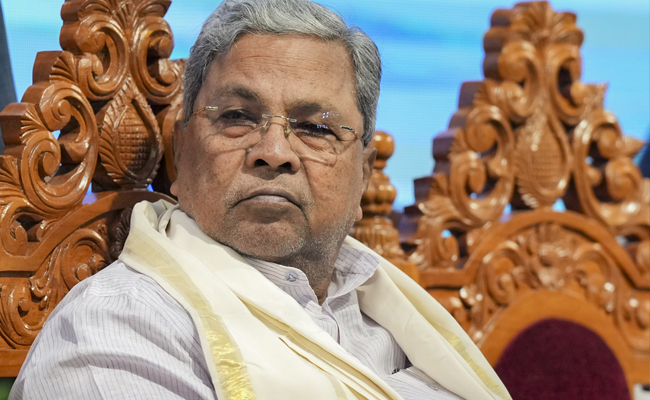
Bengaluru (PTI): Alleging a “criminal conspiracy” by BJP candidate D N Jeevaraj in the Sringeri Assembly poll recounting, Karnataka CM Siddaramaiah on Tuesday said the outcome was manipulated after valid postal ballot votes in favour of Congress leader T D Raje Gowda were tampered with during the recounting process.
Following a Karnataka High Court order on an election petition filed by Jeevaraj, challenging Raje Gowda’s election, the reverification and recounting were conducted on Saturday.
After the reverification and recount of postal ballots for the Sringeri Assembly constituency, votes polled in favour of Raje Gowda were reduced by 255, the returning officer said.
A report on the matter has been submitted to the Election Commission of India for further action, the officer added.
Congress leader Raje Gowda had won the 2023 Assembly polls from Sringeri by 201 votes, defeating his nearest rival Jeevaraj.
Addressing a press conference in Bengaluru, Siddaramaiah said the High Court had directed the recounting of postal ballots and that irregularities were noticed during the exercise conducted on May 2.
“This is a clear case of criminal conspiracy,” Siddaramaiah said, alleging that valid votes cast in favour of Raje Gowda were altered after being accepted by counting agents of all parties, including Congress, BJP, and JD(S).
He claimed that during the recounting of postal ballots, 255 votes were initially accepted as valid by all agents but were later tampered with by subordinate officials.
“There is a second mark on the votes polled in favour of Raje Gowda. They had accepted these as valid votes. Subsequently, another mark was made by officials. This is a clear case of criminal conspiracy,” he said.
When asked who was behind the alleged conspiracy, the CM replied, “It was hatched by Jeevaraj and others. It is planned.”
Siddaramaiah further alleged that the returning officer acted improperly by declaring the result despite the presence of an Election Commission observer during the recounting.
“Immediately after the counting, the returning officer announced the result. He should not have done so; this is against the law,” he said.
He pointed out that Raje Gowda had originally won by 201 votes, but after the recounting, the BJP candidate was declared the winner by 52 votes.
“The BJP has committed a criminal act of conspiracy. This is not vote chori but vote dacoity,” he alleged.
The CM said a police complaint had already been filed by Raje Gowda’s election agent, Sudhir Kumar, and emphasised the need for electoral integrity.
“We want transparency and free and fair elections. That is what our Constitution mandates,” he added.
Stating that the government would pursue legal remedies, Siddaramaiah said, “We are preparing an appeal challenging the returning officer’s announcement in a court of law.”
Responding to a separate query on elections in other states, the CM said there appeared to be an anti-incumbency factor in West Bengal, while results in Tamil Nadu were “surprising,” adding that Vijay’s party was emerging as the largest there.
Following the victory of party candidates in Bagalkote and Davanagere South, Siddaramaiah expressed confidence about future electoral prospects in Karnataka.
“Even in 2028, we will win the Assembly elections. We will come back,” the CM said.
Siddaramaiah added that he would order a forensic examination into the alleged tampering of postal ballots.