Abu Salem will flee if granted parole: Maharashtra govt tells HC
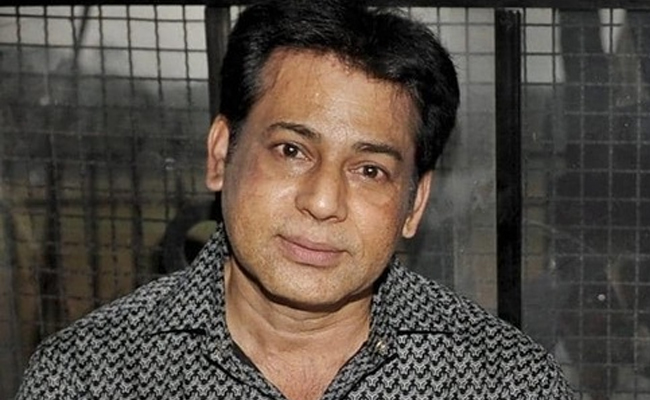
Mumbai (PTI): Gangster Abu Salem will abscond if granted parole and this could cause serious issues between India and Portugal, the country from where he was extradited, the Maharashtra government told the Bombay High Court on Tuesday.
The government, in an affidavit filed before the court, opposed Salem's petition seeking 14 days of parole, citing his elder brother's death, and said that at the most, he can be granted two days' emergency parole.
When the plea came up for hearing before a bench of Justices A S Gadkari and Shyam Chandak, the Central Bureau of Investigation (CBI) said it was the prosecuting agency and hence, it should be impleaded as a respondent in the petition.
If Salem is granted bail, then it would lead to law and order problems, the CBI said.
The bench said it would hear the plea on January 28.
The affidavit, filed by Inspector General of Prisons Suhas Warke, said Salem was an international gangster who had been indulging in criminal activities for decades.
Salem was extradited from Portugal on an extradition treaty, along with other conditions agreed upon by both countries, it added.
"If the petitioner (Salem) is granted parole, then he will abscond again, as even in 1993 he fled the country," the affidavit pointed out.
It further said the Government of India is under an obligation to stick to the conditions and assurances given by it to the Government of Portugal at the time of Salem's extradition.
"If the petitioner absconds now, then there will be serious issues between the two countries (India and Portugal) as well as a threat to society," the affidavit said.
In Portugal, Salem had been convicted of travelling on a fake passport. He was arrested in Lisbon, Portugal, and extradited to India in November 2005.
As per the affidavit, after Salem sought parole from the jail authorities, a report was sought from the Uttar Pradesh police, where he intends to travel.
The UP police submitted an adverse report and said the place Saraymir in Azamgarh, where Salem wants to go, was a communally sensitive area. Hence, Salem's request for 14 days' parole was rejected, the affidavit said.
Salem can be granted two days' parole, and the travel time will be counted towards his sentence, it said.
In 1993, Salem fled India to evade arrest, the affidavit claimed.
He has been sentenced to life imprisonment in three cases, including the 1993 Mumbai serial blasts case, and sentenced to 25 years in jail in several other cases.
Salem, in his plea filed last month, sought parole as his elder brother, Abu Hakim Ansari, passed away in November 2025. He had said his plea got delayed due to the court's Christmas vacation.
According to Salem's plea, he had applied for an emergency 14-day parole from the jail authorities to attend the last rites and related rituals of his late brother on November 15 itself.
However, his plea was rejected by the jail authorities through an order on November 20, 2025.
Salem further pointed out that since his arrest in November 2005, he has been in jail and was only granted parole leaves of a few days after the death of his mother and also after the demise of his stepmother.
Let the Truth be known. If you read VB and like VB, please be a VB Supporter and Help us deliver the Truth to one and all.
Man arrested with Rs 2.54-crore heroin in Mumbai

Mumbai (PTI): Police have arrested a man and seized over 500 grams of heroin worth Rs 2.54 crore in the illicit market from him in Mumbai, officials said on Friday.
The police's Anti-Narcotics Cell (ANC) made the drug seizure in Santacruz in the western suburbs. The operation was conducted by the Kandivali unit of the ANC on Thursday as part of a special crackdown against drug trafficking in the area, they said.
Acting on specific inputs, an ANC team conducted a raid in Santacruz (East) and intercepted a man. During a search, the team recovered 508 grams of high-grade heroin from his possession, an official said.
The seized contraband, a highly addictive, opioid drug derived from morphine, is estimated to be worth Rs 2.54 crore in the international market, he informed.
Following the seizure, a case was registered against the man under relevant sections of the Narcotic Drugs and Psychotropic Substances (NDPS) Act, 1985, and he was formally placed under arrest in the early hours of Friday.
The police are currently investigating the source of the drug and trying to identify the intended recipients of the consignment, he said.