ABVP, Left-backed groups clash at JNU; vice-chancellor warns of strict action

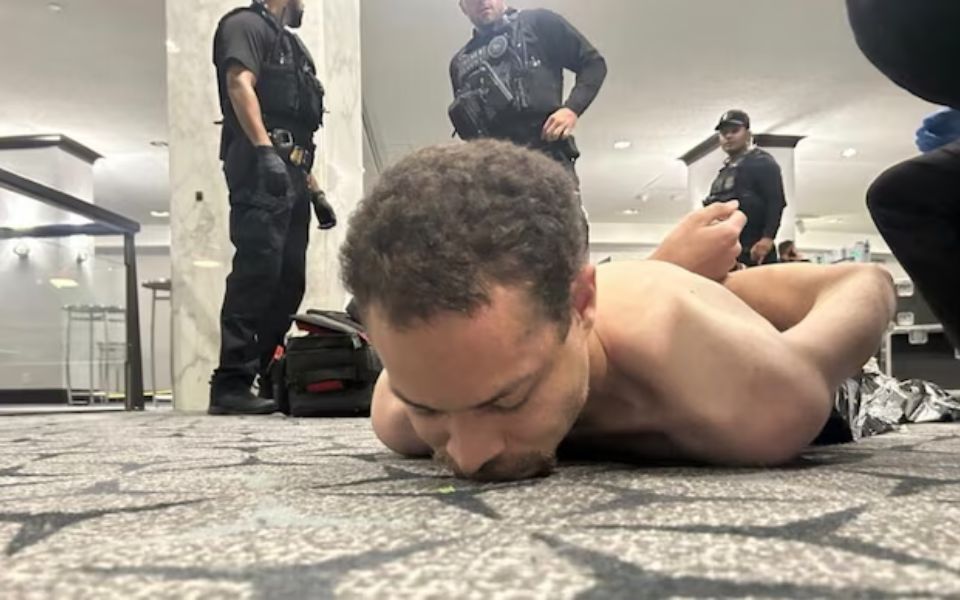
New Delhi (PTI): Some students of Jawaharlal Nehru University were injured in a clash between two groups over the selection of election committee members, following which Vice-Chancellor Santishree D Pandit on Friday said strict action will be taken against those involved irrespective of their political affiliation.
The violence occurred in the university's School of Languages building late on Thursday night. Students from both Akhil Bharatiya Vidyarthi Parishad (ABVP) and Left-backed groups have filed police complaints against each other.
The complaints were registered at Vasant Kunj North police station. A university official said some students have been admitted to Safdarjung Hospital.
"We received information about the clashes on the campus at 1.15 am. At least four students were injured. Multiple complaints have been received from both sides. Further inquiry is on," a police officer told PTI.
University Vice-Chancellor Santishree D Pandit said the administration will look into the matter and take strict action.
"The JNU (students' union) elections are conducted by students. It is their responsibility to ensure that it is a peaceful democratic process. The Inter-hostel Administration (IHA) oversees the conduct of the polls. Any complaints by the students' body will be looked into by the IHA. Very strict action will be taken against those found guilty irrespective of their political affiliation," she told PTI.
The vice-chancellor also said once the medicolegal cases of students severely injured in the violence are done, the authority concerned will prepare a report and take appropriate action.
Pandit warned the students that any act of violence on campus may lead to deferring the Jawaharlal Nehru University Students' Union (JNUSU) polls further.
A video clip of the incident showed a man thrashing students with a stick while in another, a person is seen throwing a bicycle at students. Other videos also purportedly showed individuals being mobbed and beaten up by a group while security personnel of the university tried to rescue them.
The ABVP told PTI that two students seen in one of the videos beating others with a stick and throwing a bicycle were members of its JNU unit and claimed that they were trying to defend themselves.
On the other hand, Left-backed groups alleged that ABVP members, disgruntled by the selection of the election committee members, attacked JNUSU office bearers and other students.
JNUSU Joint Secretary Mohammad Danish, who was presiding the School General Body Meeting along with JNUSU president Aishe Ghosh, claimed that he received threats to his life from ABVP members because of his religious identity.
He also alleged that he was held hostage during the meeting.
"On the last day of the General Body Meeting at the School of Languages, ABVP resorted to another round of violence at the end of the meeting. Initially attempting to disrupt the selection process for the election committee, the ABVP resorted to violence against students when thwarted by JNU students," the Left-backed All India Students Association (AISA) claimed in a statement.
"Accompanied by Kanhaiya Kumar, a student of Japanese MA and the ring-leader of the SL (School of Languages) unit, the ABVP goons were seen wielding rods and targeting and beating common students indiscriminately. They singled out Muslim students and objected to the names of Muslim students being proposed for the election committee," it alleged.
The Left students' group claimed their members Shaurya and Madhurima Kundu, both pursuing PhD, and Priyam and Anwesha, students of MA Linguistics, were chased and beaten up by ABVP members. It also accused the JNU administration of shielding the RSS-affiliated student group.
The ABVP, in turn, accused the Left group of foul play in electing the candidates of the election committee and alleged that the politburo chief in the General Body Meeting tried to provide undue advantage to SFI candidates.
"In General Body Meeting at the School of Languages, the chief of Politburo unilaterally declared that first election committee candidates who have secured more than two-third of the seats will be automatically declared winners. In the counting process if 100 hands are being raised to support a candidate, then the Politburo chief counts it as 300.
"The open rigging in the counting of votes and imposition of self-made rules is a manifestation of autocracy akin to the system of Politburo," the ABVP said in a statement while claiming that its members were injured in the attack by the Left groups.
VIDEO | A clash broke out between ABVP and Left-backed groups at Jawaharlal Nehru University (JNU), Delhi, on Thursday night. The ruckus was over the selection of election committee members at the School of Languages.
— Press Trust of India (@PTI_News) March 1, 2024
(Source: Third Party) pic.twitter.com/vQV991KaIe
Let the Truth be known. If you read VB and like VB, please be a VB Supporter and Help us deliver the Truth to one and all.
Mumbai nurse loses Rs 1 lakh trying to buy Rs 299 dress online

Mumbai (PTI): A nurse working at a private hospital in Mumbai was allegedly cheated of Rs 1 lakh after she tried to purchase a dress online for Rs 299, police said.
As per preliminary investigation, the fraud was orchestrated using a Facebook advertisement, a WhatsApp number and a fake delivery agent, an official from Deonar police station said on Saturday.
The nurse, who lives in a hostel here, in her complaint said she came across an advertisement on Facebook offering dresses at just Rs 299. She then tried to buy one piece.
The person at the other end initially sought payment for the dress, but later “continued to extract money under various pretexts such as shipping charges, GPS charges, tracking fees, verification codes and address confirmation,” the official said.
The nurse told the police that she paid Rs 1 lakh over five days between April 16 and 20, and was repeatedly assured that most of the money would be refunded and the order would be delivered.
When nothing happened, she realised that she had been scammed. She then contacted the Cyber Crime Helpline 1930 and lodged a complaint. The Deonar police have registered a case and launched a probe into it, the official said.