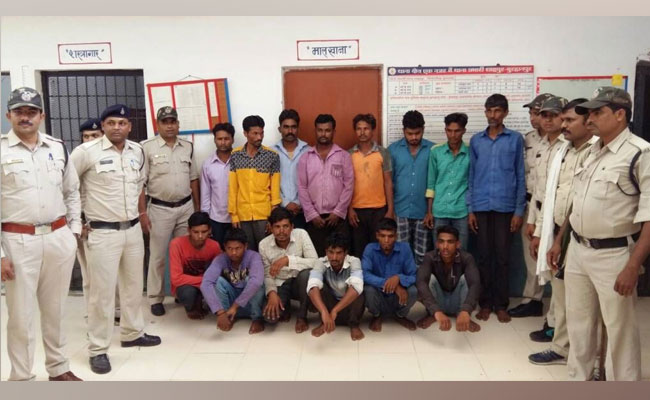
Accused of celebrating Pakistani cricket victory, MP Courts acquits 17 Muslim men after six years
Court found police case to be false against Muslim men
The original report was published on Website 'Article 14' and was authored by Kashif Kakvi & Rishav Raj Singh. Click Here to read the original report on Article 14 website.
New Delhi: Residents of Mohad village in Madhya Pradesh, located just 30 kilometers south of the state capital Bhopal, have ceased watching cricket matches between India and Pakistan due to lingering trauma stemming from the arrest and subsequent trial of 17 Muslim men and two minors. The accusations were centered around allegations of cheering for Pakistan following India's loss in the Champion Trophy final at the Oval Stadium in London on June 18, 2017.
Reports surfaced claiming that villagers had raised slogans in support of Pakistan, distributed sweets, and ignited celebratory crackers. Subsequently, the accused were charged with sedition and criminal conspiracy under the Indian Penal Code of 1860. However, the case took a turn when it became apparent that the police struggled to substantiate the sedition charges. Consequently, the charges were dropped, but promoting enmity between different groups was added. Despite the Hindu complainant publicly disavowing the allegations against the Muslim men, the case persisted.
The backdrop of the Bharatiya Janata Party's (BJP) three-year reign in the central government in (2017), coupled with the rise of Hindu nationalism and the prevalent use of the term "anti-national" against critics, especially Muslims, set a charged atmosphere. Mainstream media outlets were accused of reinforcing the government narrative and propagating Islamophobia.
In this particular case, news channels branded the accused men as "traitors," further amplifying the tensions surrounding the incident.
“The impact of that incident is so deep that neither the villagers play cricket nor watch it on TV when India and Pakistan are playing,” said Rafiq Tadvi, the village headman.
More than six years following their arrest, imprisonment, and alleged mistreatment, 16 Muslim men (one of whom passed away in 2019) have been acquitted by first-class magistrate Devander Sharma. The acquittal comes after the Hindu complainant and government witnesses confessed to being forced into making false allegations against them by local police.
Magistrate Sharma's verdict, delivered on October 9, 2023, cited a lack of evidence to support the accusations that the accused had raised slogans and ignited firecrackers. Additionally, the police failed to furnish evidence to prosecute them under section 153-A of the Indian Penal Code, which deals with promoting enmity between different groups. Consequently, the court acquitted all the accused, a report published in Article 14, stated.
Despite the extensive media coverage surrounding the incident in June 2017, the judgment in October 2023 that acquitted the accused went largely unreported.
“We just presented our side before the court,” Shoeb Ahmad, the defence lawyer, told Article 14. “The complainant and eyewitness testimony did the rest. Although they were pressured to testify against them, they stood with the truth.”
In addition to the 17 Muslim men, two minors, Mubarik Tadvi and Zubair Tadvi, who were both 16 at the time of their arrest, were acquitted by the juvenile justice court in June 2022. Sadly, neither of them returned to school following their ordeal. Zubair, who works as a shrine caretaker in Indore, expressed his shattered dreams, stating, "I used to dream of being a police inspector, but now I have quit my education."
Tragically, two lives were lost before the October 2023 acquittal. Rubab Nawab, aged 40, took his own life in February 2019, unable to bear the stigma of being labeled a "traitor." Villagers attributed Mukaddar Tadvi's death in November 2021 to the shock and grief over his son Sikander Tadvi's arrest.
Despite the acquittal, the judgment did not hold the Madhya Pradesh police accountable for registering and prosecuting a false case, leaving lingering questions about accountability and justice.
‘It’s An Open Secret That We Were Tortured’
Mohad village, situated on the Madhya Pradesh-Maharashtra border, is home to approximately 4,000 residents, primarily marginalized communities including Dalits, Bhil tribals, and Tadvi Bhil Muslims, a subcaste of the Bhils who converted to Islam. The villagers, largely comprised of small farmers and daily wage workers, heavily rely on monthly government rations for sustenance.
During a visit by Article 14 to the village in February 2024, nine men aged between 25 and 60 recounted harrowing experiences of being subjected to physical and verbal abuse by town inspector Sanjay Pathak and other police personnel at the Shahpur police station for two days in June 2017. They alleged being kicked, beaten, and verbally assaulted, with claims of police pulling their beards and threatening to set them on fire if they resisted. Moreover, they asserted being detained without food for the duration of their confinement.
Imam Tadvi, a 32-year-old daily wager, shared, "Even the man who came to the police station to serve tea used to kick us, calling us terrorists." Meanwhile, Sarfaraz Tadvi, a 35-year-old daily wage worker, recounted his ordeal, stating, "When they started assaulting me, I requested them not to hit my right leg. It's already broken. Still, they hit 12 canes on that spot. I was unable to walk for almost a year, and the treatment drained all my savings."
Pathak, the town inspector, refuted the allegations of physical violence, stating that nothing was reported in the mandatory medical examination conducted before the accused were transferred to jail. He further claimed that no complaints were lodged when the accused were presented before the magistrate, and their lawyer did not raise any allegations in court.
However, Imam contradicted these claims, asserting that they were never taken for a medical examination. "It's an open secret that we were tortured. The whole village saw when we were beaten before they took us to the police station," he stated. He added that they were too shattered to speak before the magistrate.
Ahmad, the lawyer representing the accused, acknowledged briefly mentioning the violence before the magistrate but explained that he did not pursue the matter further due to his clients' impoverished circumstances and their sole desire for acquittal.
During their incarceration at Khandwa central jail, located 90 kilometers from Mohad village, the men alleged enduring further humiliation. They claimed they were called "terrorists" and were forced to clean toilets and mop floors daily. "We were made to sleep in such a way that one could not even change his side," remarked Irfan, one of the detainees. He added, "We spent Eid on an empty stomach while our families outside ate dry bread," highlighting the deplorable conditions they endured while imprisoned.
During their court hearings at the Burhanpur district courts, the men reported facing verbal abuse from lawyers shouting slogans like "Desh ke gaddaron ko, goli maro salon ko" (Shoot the traitors) and "Atankwadiyon ko phansi do" (Hang the terrorists). This verbal harassment persisted even at the police station, where they were routinely referred to as "traitors" or "terrorists" when they went to mark their weekly attendance after being granted bail, lasting until their eventual acquittal.
When questioned about these allegations of verbal abuse over the years, Pathak abruptly ended the call with Article 14.
Article 14 added, to address these issues they have sent an email to the director general of police, the additional director general of police (law and order), the public relations officer, and the superintendent of police in Burhanpur and are awaiting response.
Masood Ahmed Khan, the secretary of the Coordination Committee for Indian Muslims in Madhya Pradesh, criticized the police's longstanding "unconstitutional" treatment of Muslims and tribals in the state, noting the lack of significant intervention from the courts to rectify this behavior. He emphasized that in the case of Mohad village, the court should have taken decisive action against the police, stressing the need for accountability not only for law enforcement but also for lawyers and media personnel involved in such misconduct.
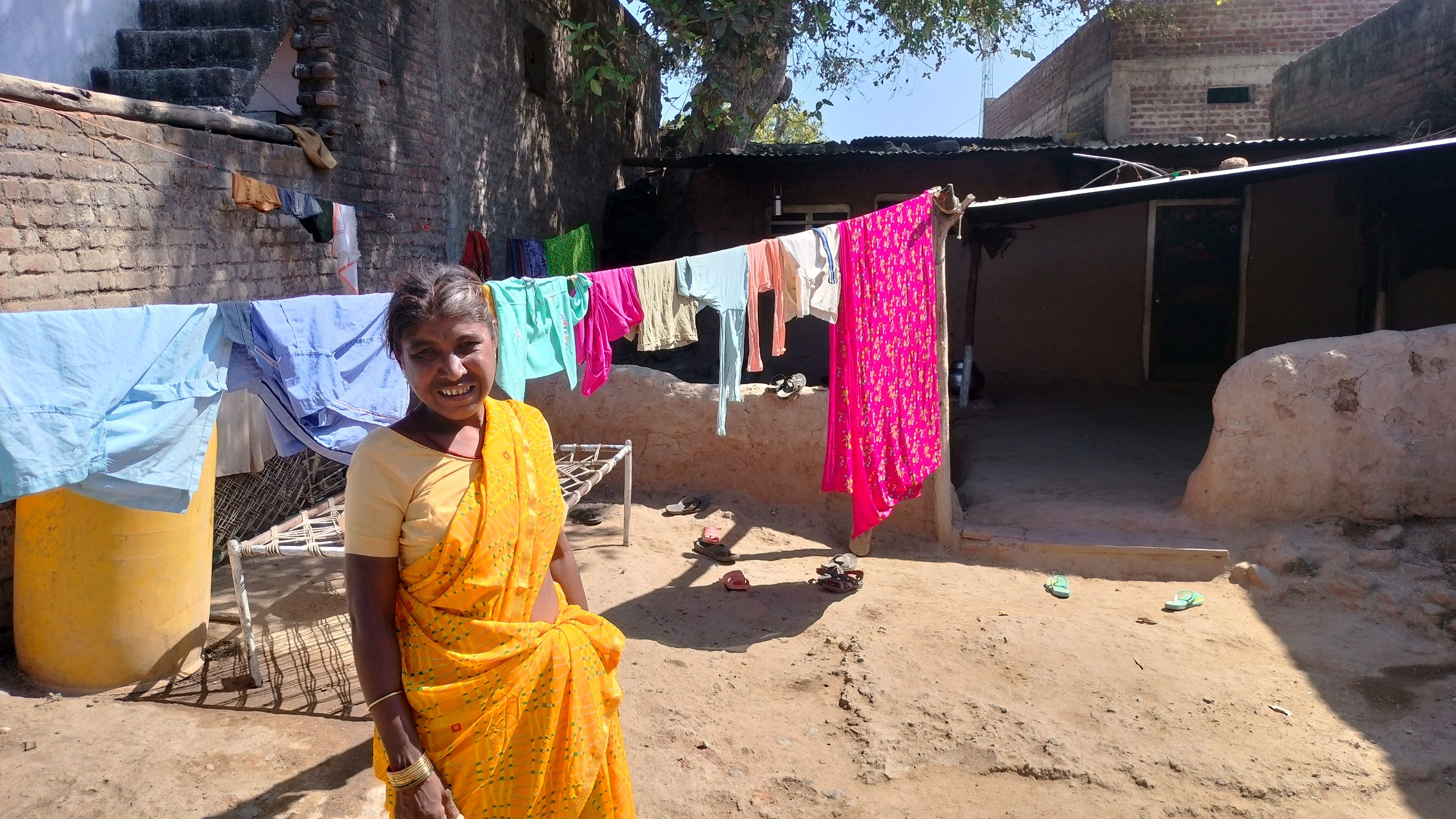
(Savita Koli, the sister of complainant Subash Koli, who died from cancer last year/ RISHAV RAJ SINGH)
The court's decision to acquit the accused was influenced by revelations made by the complainant, Subhash Koli, who publicly stated that he had not lodged any complaint against the accused. Koli clarified that he had visited the Shahpur police station on the night of June 18, 2017, after witnessing the detention of his Muslim neighbor, Anees Mansuri, who was pursuing higher education and preparing for competitive exams while working as a tailor. Despite remaining silent during Mansuri's arrest, Koli went to the police station later to secure his release. However, he faced physical assault from the police, who questioned his association with a Muslim.
Koli recounted seeing the investigating officer, RA Yadav, fabricating the FIR based on fictitious events during his visit to the police station on June 19. Tragically, Koli, an electrician by profession, passed away from cancer three months before the verdict. His mother and sister now rely on government rations for sustenance. Koli was remembered by villagers as a champion of Hindu-Muslim unity in the village.
Furthermore, twelve government witnesses contradicted the police's narrative, further weakening the case against the accused.
“I knew the accused because we live in the same village. But as far as my testimony to the case is concerned, I didn’t know anything. I’m on the witness list although I was never consulted," Pintu Jadhav, 30, told the magistrate on 15 March 2023.
Another witness, Sunil, 28, testified before the court on 24 January 2023 and said, “I didn’t identify the accused. I saw them for the first time at the police station.”
“I was in the village, but it’s wrong to allege that crackers were burnt at the bus stand, sweets were distributed in the village, and slogans were raised in support of Pakistan,” said Sunil. “It’s wrong to say they were hatching a conspiracy against India.”
A Question Of Justice
Nikita Sonavane, a criminal lawyer and member of the Article 14 editorial board, highlighted the disturbing trend of police coercion in making ordinary individuals file complaints. She noted that while the accused are eventually acquitted after enduring time in jail and years of suffering for themselves and their families, justice remains elusive.
Sonavane, who founded the Criminal Justice and Police Accountability Project in Bhopal, pointed out that despite rulings by the Supreme Court in 2022 and the Madhya Pradesh High Court in 2018 mandating compensation for those falsely implicated by the police, such cases remain rare. She emphasized the challenges faced by victims in fighting for justice, especially when they lack the resources to pursue legal action.
Sonavane argued that acquittal alone does not constitute justice if the allegations remain unproven. She stressed the need for provisions ensuring compensation for individuals wrongly accused, given the mental stress and financial losses they endure. Real justice, according to her, can only be achieved through such measures.
Contrastingly, Ahmad, the lawyer representing the accused, revealed that his clients opted not to pursue litigation for compensation or hold the police accountable due to their impoverished circumstances. He explained that their primary desire was to put the case behind them and return to a semblance of normalcy in their lives.
Ahmad, the lawyer representing the accused, provided insight into the political motivations behind the case, asserting that the BJP-led government strategically used isolated incidents and contentious issues to polarize voters along religious lines before every state election. The Muslims of Mohad village, he explained, became targets ahead of the 2018 state assembly election.
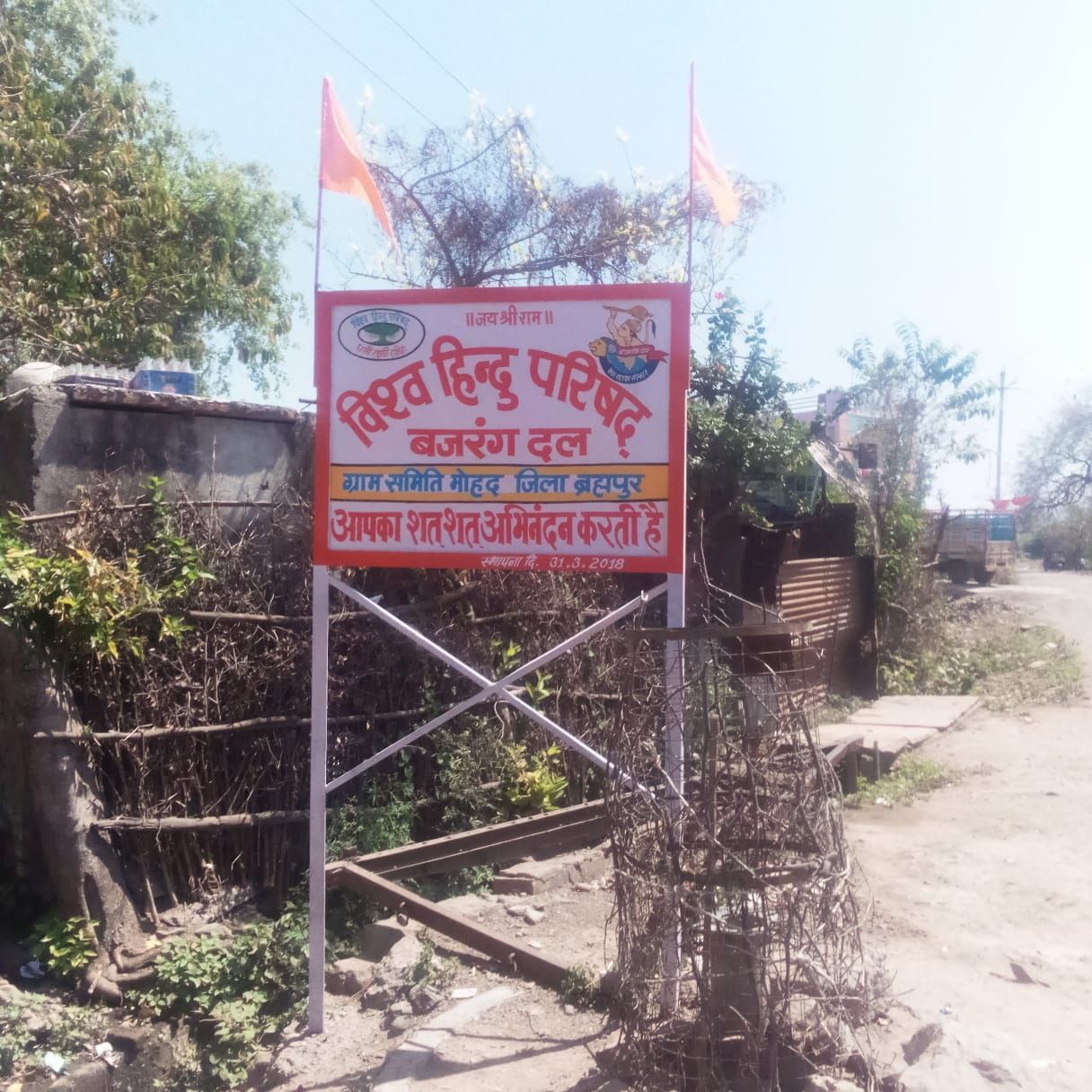
(A year before the incident in June 2017, the Bajrang Dal opened an office in the village/ SPECIAL ARRANGEMENT)
Highlighting a broader pattern, Ahmad pointed out that a year before the 2023 Assembly elections, a communal riot erupted in the neighboring district of Khargone during the Hindu festival of Ram Navami on April 10, 2022. Tragically, one Muslim man lost his life, and over 40 individuals, both Hindus and Muslims, sustained injuries in the violence.
In response, the BJP government issued directives for the demolition of properties belonging to "rioters" or "stone-pelters." Subsequently, nearly 50 properties owned by Muslims were bulldozed over the following days. While authorities cited reasons such as encroachment on government lands or unauthorized construction, the demolitions affected even those like Mohd Shaikh, whose shop was demolished despite his physical disability—he lacked hands and couldn't have been involved in stone-pelting incidents.
According to the 2011 census data, Muslims make up 6.7% of the total population of 72 million people in Madhya Pradesh. Burhanpur district, where the Muslim men were accused of raising pro-Pakistan slogans, stands out with its significant Muslim population, constituting 51% of its demographic makeup. The district boasts a rich historical legacy dating back to the Mughal era. Despite this demographic composition, the BJP, known for not actively seeking Muslim votes or fielding Muslim candidates, secured victory in both state assembly seats—Burhanpur and Nepanagar—from 2008 to 2018. However, the party faced defeat in the 2023 election.
Similar incidents where Muslims were accused of endorsing Pakistan surfaced in other regions of Madhya Pradesh, including Ujjain, Shajapur, Katni, Chhatarpur, and Mandsaur. Alarmingly, at least three cases registered against them appeared to lack substantial basis.
Rafiq Tadvi, the headman of Mohad village, lamented that despite being acquitted, the men received no compensation from the government, despite the police fabricating a case against them.
Additionally, villagers noted the establishment of a local unit of the Bajrang Dal—the youth wing of the Vishwa Hindu Parishad—in the village a year before the incident. Since then, there have been reported attempts to disrupt the harmony between Hindus and Muslims in the area, further exacerbating communal tensions.
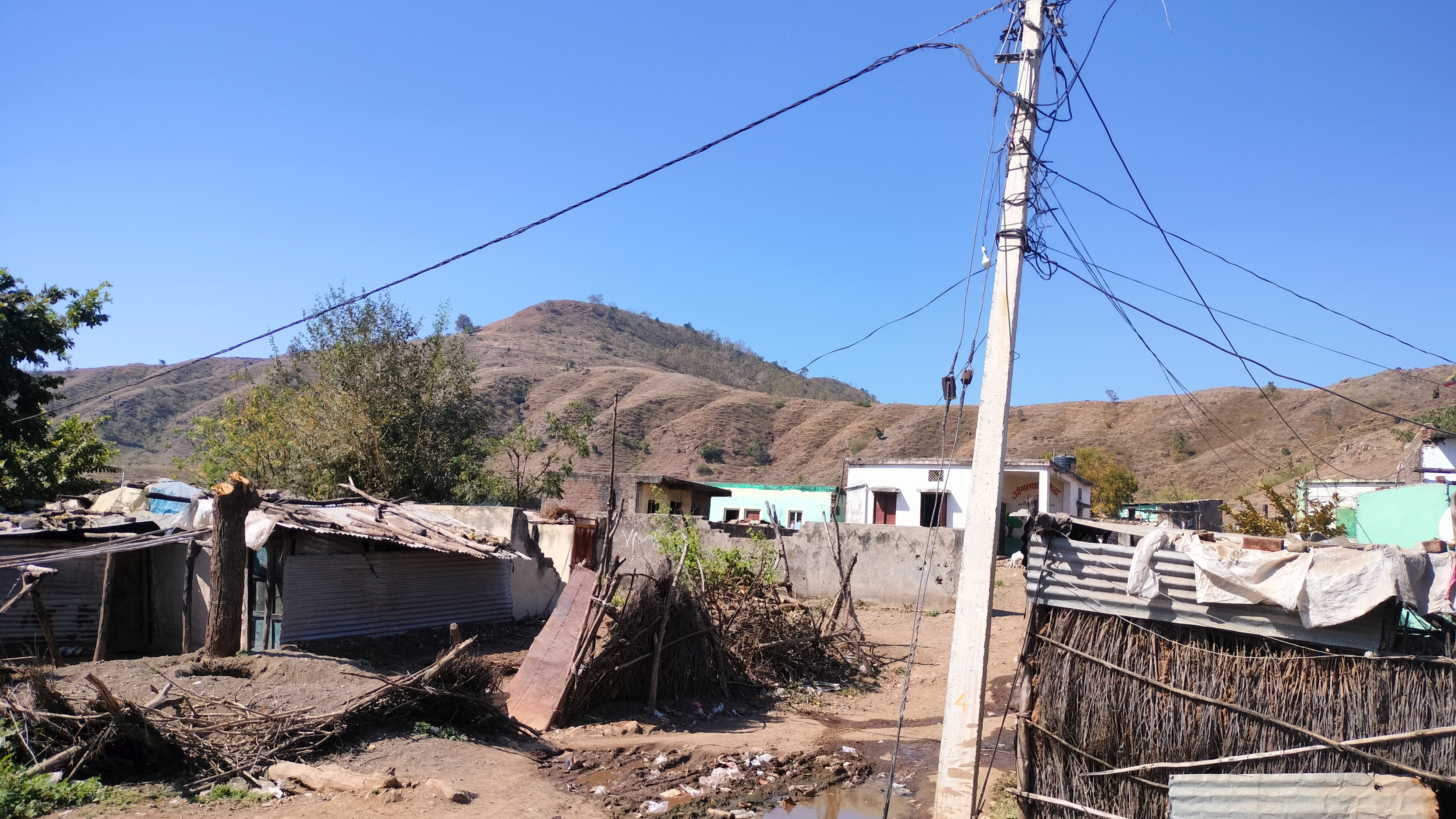
(The hillock where residents of Mohad village took shelter for a week to evade arrest/ RISHAV RAJ SINGH)
Raided & Arrested
Karan Singh, a 36-year-old witness who eventually turned hostile, recounted the chaotic events following the rumor on June 18. He described how the police descended upon the village, arbitrarily picking up individuals and transporting them to the police station. Singh noted that for three days, anyone with a television in their homes was detained by the police, with Muslims being designated as accused and Hindus as eyewitnesses. The scene resembled something out of retro movies, he remarked, with people fleeing to their homes upon the approach of police vehicles. Many Muslims resorted to hiding on the hillock for over a week to evade arrest.
Imam Tadvi, a 32-year-old daily wage worker, vividly recalled the moment when he was seized by the police. Having just returned home from a grueling day of labor, playing with his infant daughter, Zaiban, when the police apprehended him. Despite lacking a smartphone or television in his modest tin-roofed home, Imam found himself targeted by the authorities. He recounted how the police aggressively confronted him, causing injury to his daughter in the process.
"We don't have money for food. Who can afford to burst crackers and distribute sweets after watching a match on TV?" Imam questioned, highlighting the absurdity of the allegations against him.
Imam's ordeal resulted in a staggering debt of over two lakh rupees incurred to fight the case, a burden he expects will take two to three years to repay. Similarly, Sarfaraz Tadvi, aged 35, shared how he had taken out a Rs 2 lakh loan, intending to repay it over five years. He recounted how police raids often targeted Muslim households, with women being subjected to harassment. Sarfaraz remembered a particularly distressing incident when he objected to such mistreatment, only to find himself arrested and falsely implicated in the FIR the next day.
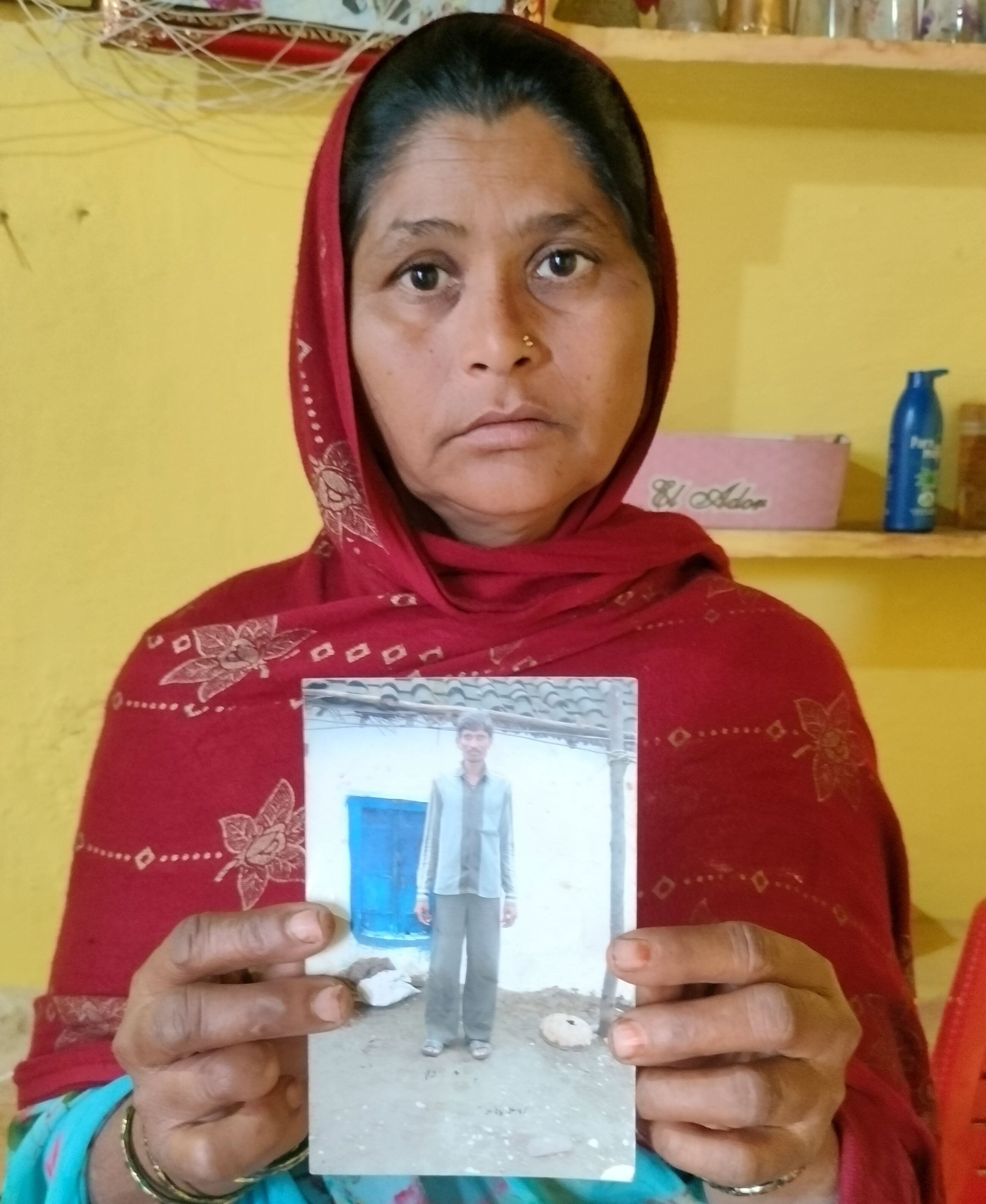
(Zubaida Bai shows a photo of her husband, Rubab Nawab, who committed suicide in February 2019/ RISHAV RAJ SINGH)
Deaths
The tragic aftermath of false accusations continued to haunt the families of those implicated. Rubab Nawab, aged 40, took his own life by consuming pesticide in February 2019, leaving behind a widow, Zubaida Bai, two children, and a crippling debt of two lakh rupees. The distressing incident took a further toll when his father passed away just a week later.
His eldest son, now 18 years old, was forced to abandon his education and seek employment as a daily wage laborer to support the family. Zubaida Bai painfully recalled the day Rubab was arrested, recounting how police officers barged into their home and assaulted him upon hearing his name. The traumatic ordeal continued as the officers verbally abused both children, threatening them with violence if they did not remain silent.
Rubab's widow, Zubaida Bai, reflected on his profound despair, revealing how he was crushed by the relentless humiliation and the stigma of being labeled a traitor. She described how he would often return home from the police station and court in tears, unable to bear the weight of the false accusations.
Similarly, Sikander Tadvi, whose 60-year-old father Mukaddar tragically took his own life in 2021, expressed anguish over his father's inability to witness his acquittal. Sikander revealed that his father could not bear the shame of being branded a terrorist and traitor, lamenting that he did not have the opportunity to find solace before his passing. These heartbreaking accounts underscore the devastating impact of false allegations on innocent lives and their families.
“He didn’t want to live with that tag of terrorist and traitor,” he said. “At least he would have died in peace.”
The original report was published on Website 'Article 14' and was authored by Kashif Kakvi & Rishav Raj Singh. Click Here to read the original report on Article 14 website.
Support Article 14 and their work by getting their annual subscription. Click Here to subscribe.
Let the Truth be known. If you read VB and like VB, please be a VB Supporter and Help us deliver the Truth to one and all.
Kolkata Port: Decline in number of voters during SIR brings in uncertainty in TMC bastion
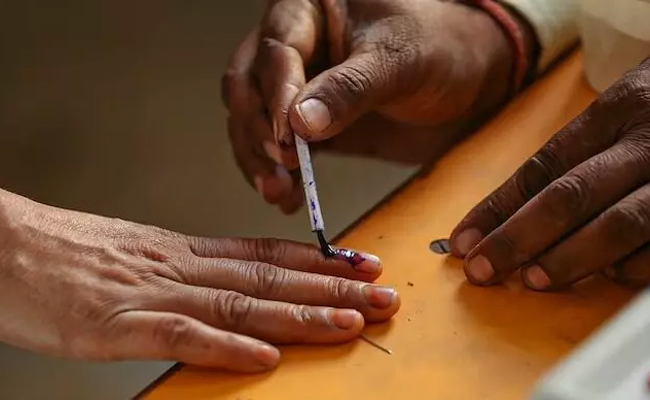
Kolkata (PTI): A sharp decline in the number of voters following the Special Intensive Revision (SIR) of electoral rolls has injected an element of uncertainty into the Kolkata Port Assembly constituency, considered a safe seat for the ruling Trinamool Congress (TMC).
The electorate in the south Kolkata constituency has dropped from 2.36 lakh in the 2021 Assembly polls to around 1.75 lakh, a fall of nearly 26 per cent, prompting political parties to closely assess its potential impact on the April 29 polling.
The TMC re-nominated senior minister and Kolkata Mayor Firhad Hakim, who has held the seat for two consecutive terms, while the BJP fielded Rakesh Singh. The Congress nominated Aquib Gulzar, and the CPI(M) put up Faiyaz Ahmad Khan, making it a four-cornered contest.
Kolkata Port, part of the Kolkata Dakshin parliamentary constituency, comprises dock areas, old business districts and densely populated neighbourhoods. Muslim voters form a significant segment of the electorate, alongside traders, transport workers and working-class Hindu families.
The reduction in voter numbers has prompted party workers across formations to scrutinise the revised rolls booth-wise to identify deletions and assess whether specific localities have been affected.
Singh’s candidature has added a twist to the contest. He had earlier contested against Hakim as a Congress candidate but is now in the fray on a BJP ticket.
Hakim won the seat in 2016 by 26,548 votes, defeating Singh, and increased his margin significantly to 68,554 votes in 2021, polling over one lakh votes.
While the TMC has expressed confidence in retaining the seat, opposition parties have raised concerns over the voter list revision, alleging that names of genuine voters have been removed.
“People here know who has stood by them. Elections are decided by trust,” Hakim told PTI during a campaign event.
Singh claimed several residents had complained about missing names in the rolls, stressing the need for transparency. The CPI(M) nominee also said voters in several areas had raised similar concerns.
The constituency has remained a difficult terrain for the opposition in recent elections.
Civic issues such as sanitation, traffic congestion and declining business activity in traditional markets also feature in the campaign in the constituency, though the revised voter list has emerged as a key talking point.
Polling in the constituency will be held in the second phase on April 29, with counting scheduled for May 4.