Action on 'war footing' for conserving Taj Mahal: Government
New Delhi, July 16: After being rapped by the Supreme Court over the condition of the Taj Mahal, the government on Monday said that it will take action on "war footing" to deal with air and water pollution in and around the world-famous 17th-century Mughal monument.
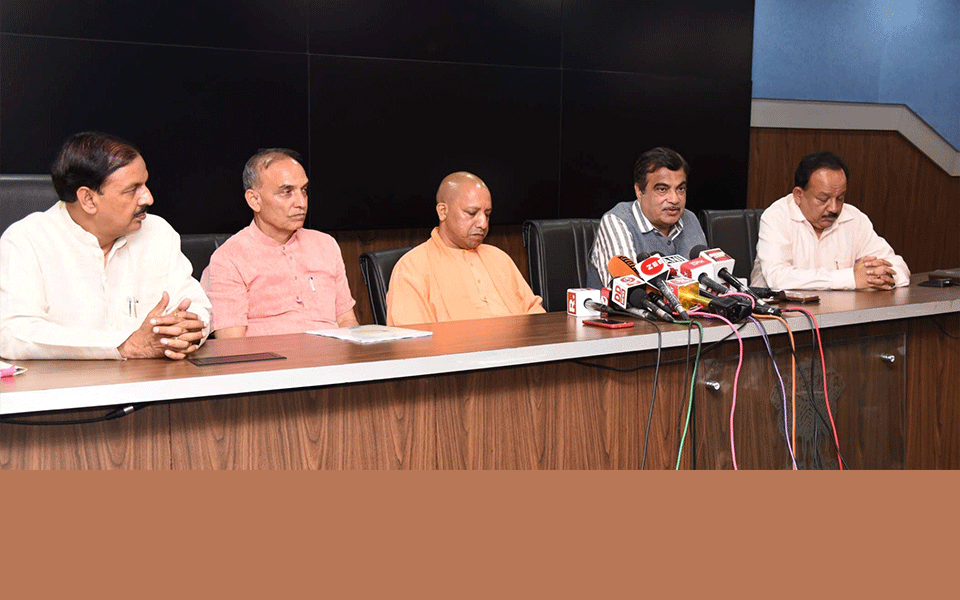
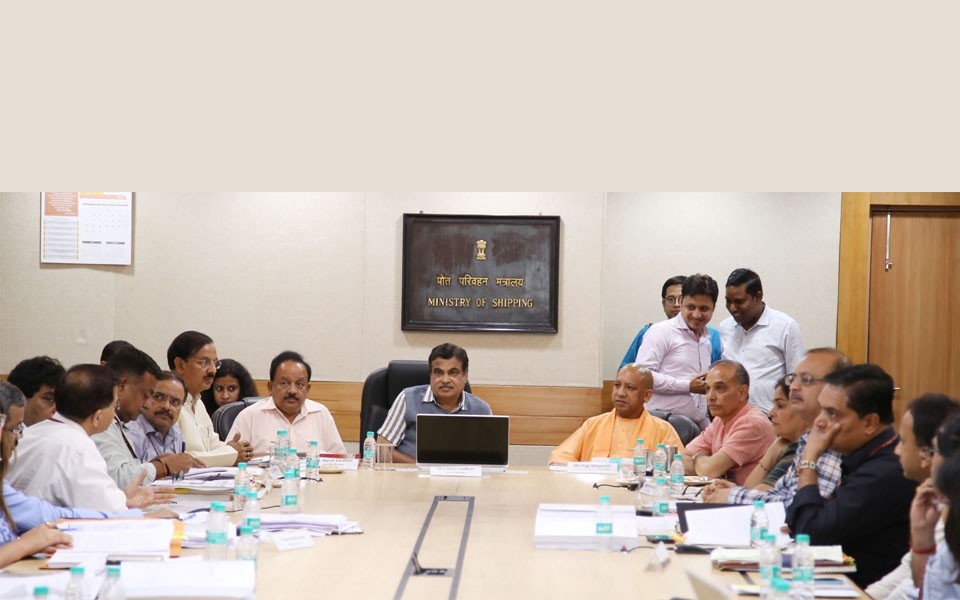
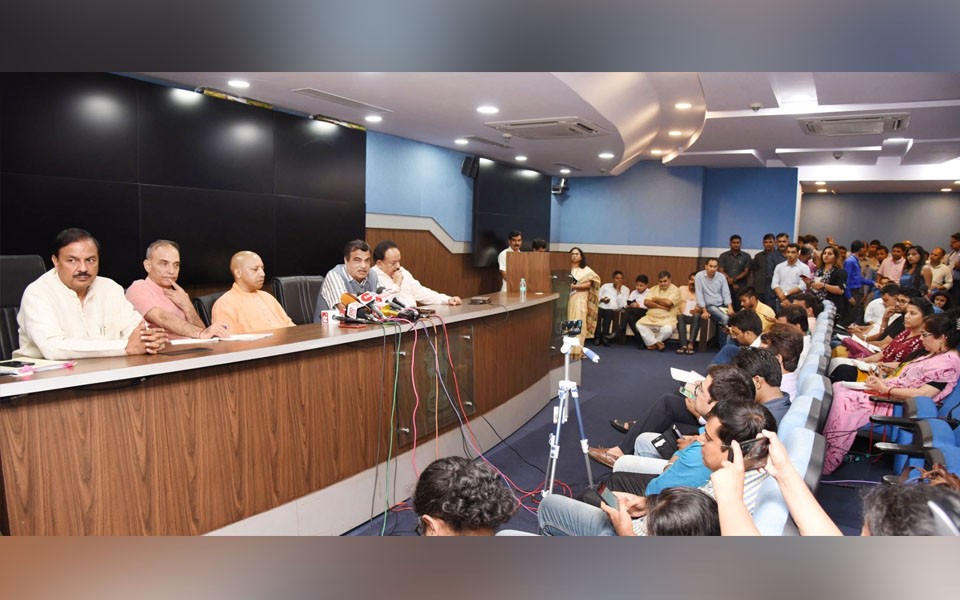
The assurance came after a a high-level inter-ministerial meeting here, chaired by Union Transport Minister Nitin Gadkari and attended by Uttar Pradesh Chief Minister Yogi Adityanath, Union Environment Minister Harsh Vardhan and Culture Minister Mahesh Sharma and state Minister Satyapal Singh, where the steps to tackle yellowing of the Taj Mahal and controlling Yamuna pollution were discussed.
Addressing a press conference, Gadkari announced that the Centre has decided to adopt several measures for preserving the heritage such as introduction of green fuels, e-buses, opening more ethanol industries and cleaning of river Yamuna.
"To deal with air pollution the use of bio fuel, green fuel and electric vehicles will be popularised in Agra," he said.
"An ethanol policy will be introduced for Agra which will include conversion of bio mass to ethanol during the crop burning season and use of ethanol in auto rickshaws combined with introduction of mass rapid transport system as a part of policy of zero tolerance to pollution," he added.
A committee to be headed by headed by Union Environment Secretary C. K. Mishra will be formed to look into the issue of industrial pollution which will also include experts from NEERI, IITs and other environment oriented organizations
"The committee will study on case to case basis and take a tough stand on hazardous industries in the vicinity of the Taj Mahal," the minister said.
To deal with the water pollution in the Yamuna, Gadkari said the cleaning of the Yamuna falls under the Namami Ganga project and several projects are already been taken up to make the river pollution free.
"(A total of) 36 projects of Rs 4,000 crore on the river Yamuna have been identified and it is hoped that the DPRs (detailed project reports) will be completed in next few months. Already 11 projects have started in Delhi on the river Yamuna and the tender for the 12th project will be finalised soon," he added.
Let the Truth be known. If you read VB and like VB, please be a VB Supporter and Help us deliver the Truth to one and all.
26-year-old youth from Andhra dies by suicide in US

Kurnool (Andhra Pradesh) (PTI): A 26-year-old youth from this district has died allegedly by suicide in Chicago, US, recently, due to distress over debt, sources said on Saturday.
The family members of the deceased have requested that the identity of their relative be withheld, noting that his parents are senior citizens suffering from medical conditions.
Reacting to the incident, Andhra Pradesh IT Minister Nara Lokesh expressed condolences and assured assistance for the repatriation of the mortal remains of the deceased.
"My heartfelt condolences to the bereaved family. I request Union Aviation Minister K Ram Mohan Naidu to ensure smooth and hassle-free transport of the mortal remains," Lokesh said in a post on X.
An NRI community member from the US posted on social media that one of their members from Kurnool on Optional Practical Training (OPT) passed away in Chicago a few days ago.
He said Telugu Association of North America (TANA) had completed all necessary documentation and formalities to send the mortal remains to India for final rites.
He further requested assistance in expediting the cargo pickup, currently scheduled for Sunday, seeking an earlier arrangement considering the urgency.
(Assistance for overcoming suicidal thoughts is available on the state’s health helpline 104, Tele-MANAS 14416.)