Activists fear amended law could push transgenders back into begging, sex work, secrecy
New Delhi (PTI): The amended transgender law has triggered fears of "regular surveillance" among members of the community, with many worrying that they could be repeatedly subjected to scrutiny, harassment, and even stripping in the name of verification.
For many transgender persons, activists say, the anxiety is not limited to appearing before a medical board for certification. They fear that with self-identification now abolished under the amended law, they could be forced to repeatedly "prove" their gender identity before police, employers, hospitals and other authorities.
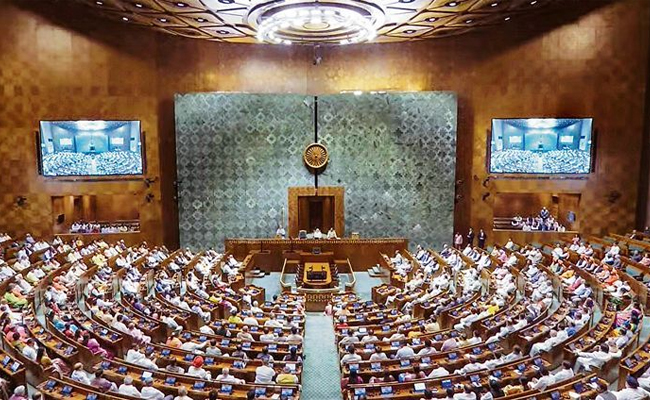
The Transgender Persons (Protection of Rights) Amendment Bill, 2026, was passed by Parliament on March 25 and received President Droupadi Murmu's assent on March 30.
Ritu, a non-binary transfeminine person, said the law could subject transgender persons to scrutiny and harassment at every stage of life. "Not just the medical panel, but also the way it criminalises trans folks -- they could be stripped or harassed by police," she said.
"Any day, someone can challenge your identity at work, in a hospital or elsewhere. This is not a one-time process; it is a regular surveillance that the community has faced for centuries," she told PTI.
A top government functionary, however, defended the new certification process, arguing that self-identification could be misused and that some form of verification is necessary. "Imagine someone having raped a woman and telling the police that he is a self-declared transgender and therefore he can't rape," the government functionary said.
Speaking to PTI, Laxmi Narayan Tripathi, the first transgender person from the Asia-Pacific region to address the United Nations General Assembly, said a petition has been filed in the Supreme Court to fight for the community's rights, aiming to ensure that the NALSA (National Legal Services Authority) judgment is implemented.
The 2014 NALSA judgment, a landmark Supreme Court decision recognising transgender people as the "third gender" in India, had upheld the right to self-identify as male, female, or third gender without medical testing, affirming fundamental rights to equality and dignity under Articles 14, 15, 19, and 21 of the Constitution.
NCP(SP) leader Anish Gawande criticised the requirement of certification by medical boards and district authorities.
Speaking to PTI, Gawande, who is the first gay national spokesperson of a political party in the country, said, "We have thousands of other crises to deal with, but you want a district magistrate and a district medical officer to sit around and certify who is a transgender and who is not. Why is the government obsessed with what is between somebody's legs?"
Gawande said he had been receiving calls from transgender persons fearful about their future. "The number of phone calls I've received over the last week from people who are scared -- ki mera kya hoga, mujhe police arrest kar degi kya, main agar transgender hoon toh mujhe surgery karwane hi padegi kya? (What will happen to me? Will the police arrest me? If I am transgender, do I necessarily have to do surgery?) These are real concerns that people have shared," he said, adding, "This is creating a mental health crisis and also driving people to suicide."
Citing the story of Kabir Mann, a Dalit Transman who has obtained all necessary certifications to become a teacher but failed to land a job, Gawande said the amended law could block thousands of transgender persons from accessing education and employment.
"When documents don't match a person's gender identity, opportunities vanish, and people are forced back into secrecy. For many, this could push them into begging or sex work, the only spaces where identification is not questioned," he said.
Meera Parida, transgender activist and a BJD politician, told PTI that the community was deeply disturbed by the sudden passage of the Bill, noting that it contradicted international guidelines on gender equality and the principles of "leaving no one behind", as well as fundamental rights enshrined in the Constitution.
She expressed hope that Prime Minister Narendra Modi would hear the community's concerns and take corrective action.
Parida said concerns over misuse of the certification process were overstated, noting that every community has good and bad people, and anyone committing fraud or a crime should face existing legal consequences.
"The possibility of misuse cannot justify targeting the entire transgender community," she said.
The UN Human Rights Council has expressed concern over the passage of the Bill, saying it may undermine the hard-won rights of transgender people. "We regret the fast passage of the Bill, without adequate stakeholder consultation. The amendments risk setting back hard-won rights of transgender people, replacing self-identification with mandatory medical verification processes."
The amendment to the law has stirred a hornet's nest, leaving the community in turmoil. Many feel that all the progress achieved after the repeal of Article 377 -- which effectively decriminalised consensual homosexual acts -- has been undone, with some regretting coming out. Trans persons from lower socio-economic backgrounds face little choice but to return to sex work or begging.
Rights activist Yogita Bhayana told PTI that the amended law violates the Supreme Court's NALSA judgment, forcing the community to restart their struggle. She warned that the law could push some transgender persons back into begging or sex work, undoing efforts to integrate the community into the mainstream and forcing the battle for inclusion to begin anew.
Bhayana also questioned the need for the medical certification process, calling it a "futile exercise."
"Internally, what you feel for your own gender is what is important. Medical examinations might not say anything. It should be a self-declared column in any document; it should be the individual's choice, not something that requires medical backing," she told PTI.
Talking to PTI, CPI(M) General Secretary M A Baby strongly criticised the amended law, calling it "highly objectionable" and "inhuman". He said, "It is unfortunate that the government has rushed through this Bill without listening to demands by the opposition."
He also feared that the amended law could force transgender persons back into secrecy, and in some cases, into begging or sex work. "There are possibilities of such highly unfortunate situations developing," Baby said.
Meanwhile, Social Justice and Empowerment Minister Virendra Kumar had said the amended Bill focuses on protecting those facing discrimination due to biological factors and ensures continued legal recognition for transgender persons.
Several MPs, including Amar Pal Maurya (BJP), Renuka Chowdhury (Congress), Fauziya Khan (NCP-SP), Manoj Kumar Jha (RJD), Saket Gokhale (TMC) and Tiruchi Siva (DMK), opposed the Bill.
Jaya Bachchan (SP), Abdul Wahab (IUML), Fauzia Khan (NCP-SCP), Priyanka Chaturvedi (Shiv Sena-UBT) and Tiruchi Siva (DMK) had urged the government to refer the Bill to a select committee for stakeholder inputs.
Let the Truth be known. If you read VB and like VB, please be a VB Supporter and Help us deliver the Truth to one and all.
Air India suspends flights to Israel till May 31
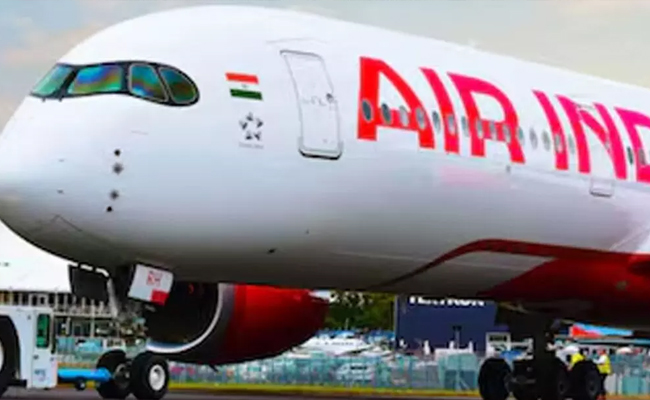
Jerusalem (PTI): Amid the ongoing war in West Asia, Air India has suspended its flights to Israel till May 31.
An Air India executive confirmed to PTI that the airline has suspended flights on the New Delhi-Tel Aviv route till May 31.
Most of the leading airlines have suspended their operations on the Tel Aviv route with only Israeli carriers like El Al, IsraAir, Arkia and Air Haifa operating under severe restrictions.
The suspension of flights has caused major worries among more than 40,000 Indians living in Israel who wish to travel to India for personal or professional reasons, or even to escape the escalating tensions in the region.
Indians looking to leave Israel have to go through Jordan or Egypt by entering the two countries through the land crossings.
The Indian mission in Tel Aviv has been assisting those looking to travel through various means.
The embassy has also maintained regular contact with the community during the period, opening a 24x7 emergency line and also launching a massive registration drive.
Ambassador J P Singh and the embassy team on Saturday held virtual discussion with Indian workers and students across Israel to listen to their concerns, assuring them of “constant support during the ongoing crisis, and beyond”, the mission said on its social media handle.
The direct flight service between New Delhi and Tel Aviv was re-launched on January 1 with four weekly flights, utilising the advanced Boeing 787 Dreamliner aircraft.
However, flights have been disrupted ever since the US and Israel jointly attacked Iran on February 28.
The retaliation by the Islamic Republic extended the war to the entire Gulf region. The conflict has taken a major toll on energy supply chains, especially across the Strait of Hormuz.