Activists write open letter to Odisha govt flagging anti-Christian violence
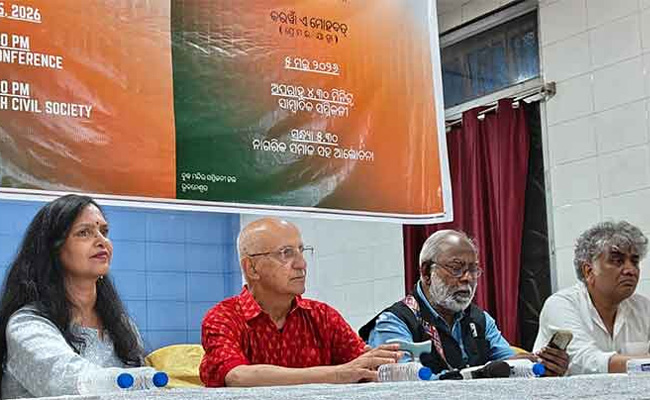
New Delhi: Activists and rights campaigners John Dayal, Aakar Patel, Vidya Dinker and Harsh Mander have expressed serious concern over the alleged rise in violence and intimidation against Christians in several districts, accusing both Hindutva organisations and sections of the police of targeting the minority community.
In a strongly worded communication addressed to the state administration, the signatories said they had received disturbing testimonies from affected people regarding social boycott, denial of burial rights, physical assaults and police intimidation.
According to the activists, Christians in some areas were allegedly boycotted by villagers, while people who traded with them, employed them or provided them shelter were also targeted.
The letter also highlighted what it described as “gruesome” incidents involving the prevention of burials of Christians within village burial grounds and even on privately owned lands belonging to Christian families. The activists said there were cases where bodies remained unburied for days due to opposition from local groups, while in some instances burials were allegedly forced to take place in forest areas outside village limits. Funeral prayers were also reportedly disrupted.
The signatories further alleged that in certain districts the violence escalated into physical assaults on Christians. They claimed that some victims were tied to trees and beaten, while others were allegedly placed inside sacks and assaulted. The letter also mentioned a few reported instances of sexual violence and attempts to burn people alive, which, according to them, were stopped at the last moment.
Expressing particular concern, the activists said many victims had testified that police personnel joined hands with Hindutva organisations to force Christians into signing “compromise” agreements. These agreements allegedly required them to give up their faith and stop collective worship.
The letter also accused the police of registering serious criminal cases against victims of attacks instead of taking action against the attackers. According to the signatories, many of those attacked were detained in police stations and jails, while in some cases the police themselves allegedly played a direct role in intimidation and violence against Christians.
Stating that there appeared to be a “complete breakdown in the constitutional machinery of the state” in relation to Christian minorities, the activists urged the administration to uphold and protect the constitutional and religious rights of all citizens without discrimination based on religion, caste or creed.
The letter was signed by John Dayal, Aakar Patel, Vidya Dinker and Harsh Mander.
Let the Truth be known. If you read VB and like VB, please be a VB Supporter and Help us deliver the Truth to one and all.
Karnataka to approach SC seeking permission to continue MGNREGA
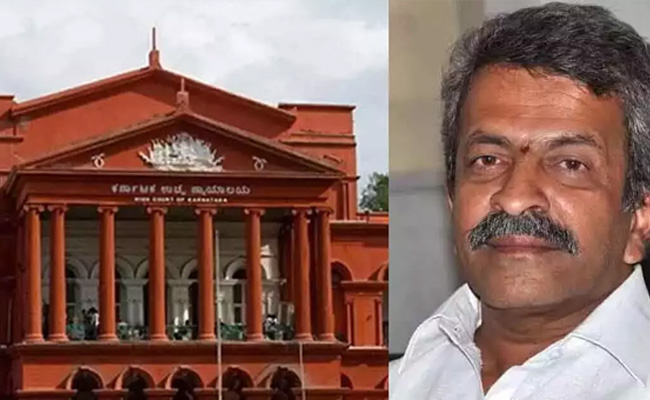
Bengaluru (PTI): The Karnataka Cabinet on Thursday decided to approach the Supreme Court seeking permission to continue implementation of MGNREGA in the state, contending that the Centre had repealed the rural employment guarantee law without consultation and failed to put in place any alternative mechanism under the VB-G RAM G Act.
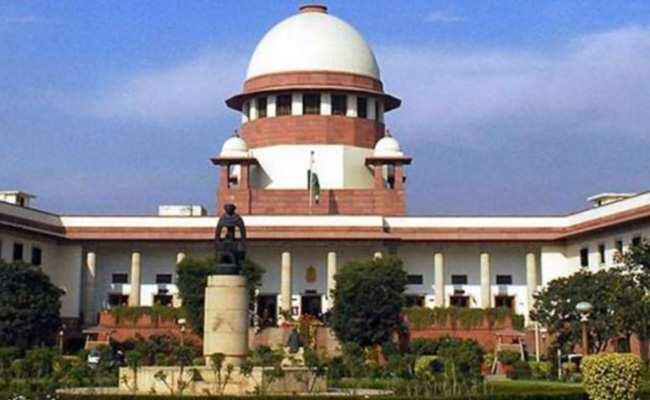
Briefing reporters after the Cabinet meeting, Karnataka Law and Parliamentary Affairs Minister H K Patil said the state would immediately move the apex court seeking permission to prepare and implement the annual action plan for rural employment works, while also challenging what it described as an infringement on the constitutional rights of states.
The parliament passed VB-G RAM G in December that replaces MGNREGA.
Patil explained that the Cabinet decided to approach the court seeking permission for the State Government to prepare an action plan in this regard. Since the Centre’s stand interferes with the constitutional rights of state governments, the Cabinet has also decided to challenge this issue before the appropriate court
“There are two points here. One is that they have come in the way of our constitutional right of providing the right to work. That has been halted, and, therefore, the State Government has decided to approach the Supreme Court. The second point is that the Government of India has not provided any alternative,” the Minister said.
The Central Government has not yet issued a notification to implement the VB-G RAM G Act, nor has it made any alternative arrangements and hence continuing Mahatma Gandhi National Rural Employment Guarantee Act (MGNREGA) is unavoidable in the public interest, the Minister said.
“Therefore, in the interest of the public, farmers and agricultural labourers, we must continue MGNREGA. For that purpose, the Cabinet has decided to approach the court seeking permission for the State Government to prepare the action plan for this year,” he added.
The Minister also said the Centre had only permitted continuation of pending and spillover MGNREGA works without releasing grants or announcing a fresh action plan.
“The Centre itself has said that pending, spillover and half-done MGNREGA works can continue. That means MGNREGA is actually still functioning in practice. But there is no new action plan,” he said.
Patil said the state had already passed a resolution on the issue, while Chief Minister Siddaramaiah had written to the Prime Minister and the Rural Development Minister had held discussions with Union Ministers.
Replying to questions, the minister said the state would move court “as immediately as possible.”
He clarified that the state was seeking permission to formulate and implement this year’s action plan under the existing framework.
“What we are asking the Supreme Court is to allow us to have the action plan for this year and implement it,” he said.
The Cabinet also held detailed discussions on the final report submitted by the State Education Policy Commission headed by former UGC chairman Professor Sukhadeo Thorat.
Patil said a Cabinet sub-committee would be constituted to examine the report and recommend measures for implementation.
“No decision has been taken yet. The Cabinet sub-committee will recommend what should be accepted and what should be modified,” he said.
He said the report comprised around eight volumes and covered issues relating to financial implications, human resources, curriculum reforms, deemed universities, unitary universities and newly established universities. The Chief Minister has been authorised to constitute the sub-committee.
The Cabinet also approved the Karnataka Motor Transport and Other Related Workers’ Social Security and Welfare Amendment Bill, 2026, transferring welfare administration of transport-related workers from the Labour Department to the Transport Department.
The Cabinet further approved establishment of three new industrial estates in Kalaburagi, Yadgir and Surpur under the Karnataka State Small Industries Development Corporation and Kalyana Karnataka Region Development Board schemes at an estimated cost of Rs 200 crore.
The Cabinet also approved amendments to Karnataka Civil Services (General Recruitment) Rules, 2026, providing two per cent reservation in state civil services appointments for sportspersons.