Actor Gaurav Bakshi arrested by Goa police for `blocking' minister's car
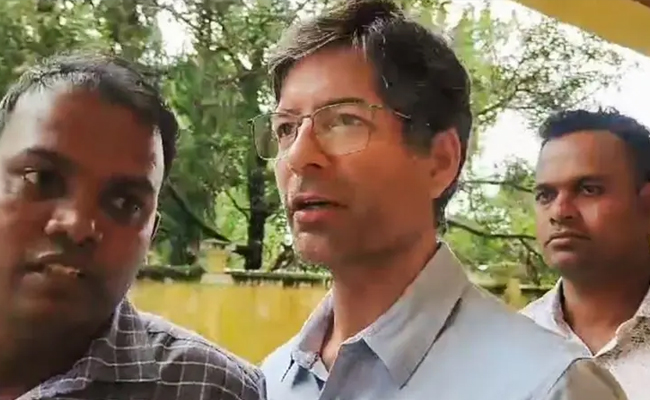
Panaji (PTI): Goa police on Thursday arrested actor Gaurav Bakshi for allegedly restraining the movement of state Animal Husbandry Minister Nilkant Halarnkar by blocking his car, an official said.
Bakshi, who has acted in web series and a few films, claimed in his counter-complaint that it was the minister's car that had blocked his way.
The actor was arrested after Halarnkar's personal security officer (PSO) filed a complaint at Colvale police station in North Goa district, a senior police official said.
He was booked under Bharatiya Nyaya Sanhita sections related to "obstructing public servant" and "wilful restraint", the official added.
The minister told reporters that the incident took place when he was leaving in his car after attending a function at Revora panchayat hall in North Goa district on Wednesday.
The accused's car blocked his path, and Bakshi threatened his PSO when asked to move his vehicle, the minister alleged.
Bakshi, for his part, released a video stating that he had filed a complaint against the minister at the local police station over the incident at the panchayat office.
Advocate Nigel Da Costa, lawyer representing Bakshi, in a media statement released here has said that bail application was moved before Judicial Magistrate First Class, Mapusa on Thursday at 9 pm.
“But the investigating officer turned up at 9.15 pm and sought time. The learned magistrate had to adjourn the matter to 10 am tomorrow (Friday),”he said.
In a statement released here on Thursday, Colvale police said Rohan Parab, PSO of the minister, filed a complaint that Bakshi, at around 4:05pm on July 10, wrongfully restrained the minister by parking his vehicle in front of minister’s government vehicle.
The minister was in Revora Panchayat in his official capacity to attend a sapling distribution function, the statement said.
The accused did not move his vehicle despite repeated requests and deterred the complainant from performing his official duty, police said.
The 47-year-old actor was arrested under section 126 (7) (obstruction of a way), 221 (confinement of public servant) and 132 (restraining public servant) of Bharatiya Nyay Sanhita (BNS).
Da Costa, meanwhile, said Bakshi's arrest was abuse of power by the police.
"Bakshi had surrendered to the police but we were later informed that section 132 of BNS, which pertains to a non bailable offence, was added," Da Costa claimed.
Chief Minister Pramod Sawant had said earlier in the day that the government had taken cognisance of the incident. "He (Bakshi) would be arrested," Sawant said.
Bakshi, who has acted in the web series "Bombay Begums" and "Naxalbari" among others, runs a start-up in Goa.
Let the Truth be known. If you read VB and like VB, please be a VB Supporter and Help us deliver the Truth to one and all.
4 workers die after being buried under coal slurry in Jharkhand's Dhanbad
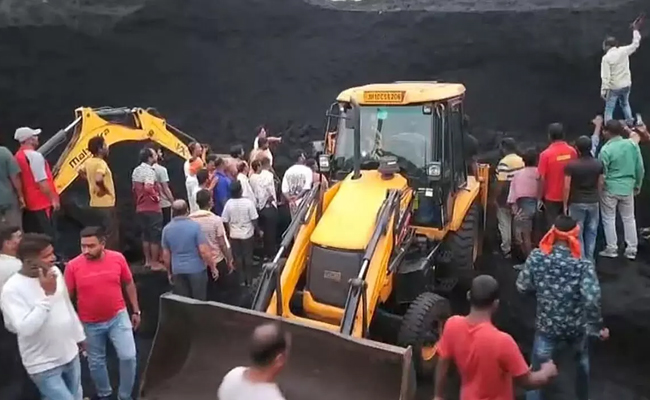
Dhanbad (Jharkhand) (PTI): At least four workers died after being buried under coal slurry in Jharkhand's Dhanbad district on Saturday, a police official said.
The incident took place at Moonidih coal washery in the command area of Bharat Coking Coal Limited (BCCL).
"Bodies of all four workers were dug out of debris during a rescue operation," Putki police station in-charge Waqar Hussain told PTI.
The incident took place when coal slurry was being loaded into trucks by workers, during which a large chunk of slurry fell and trapped several workers underneath, officials said.
The deceased have been identified as Manik Bauri, Dinesh Bauri, Deepak Bauri, and Hemlal Gope.
Meanwhile, the family members of the deceased and local villagers placed the bodies in front of the washery gate and began a protest.
They demanded compensation, jobs for dependents and action against those responsible for the incident.
Police and administration officials are trying to pacify the protesters, an official said.