Adani group firms make Rs 493 crore-open offer to buy additional 26 pc stake in NDTV
New Delhi, Aug 23: Adani group firms on Tuesday made an open offer worth Rs 493 crore for buying an additional 26 per cent stake in NDTV Ltd, following the acquisition of nearly 30 per cent shareholding in the company by way of conversion of warrants.
If the open offer is successful, the Adani group will become the majority shareholder in the broadcaster with over 55 per cent stake.
Vishvapradhan Commercial Pvt Ltd (VCPL), a wholly-owned subsidiary of AMG Media Networks Ltd, has exercised its warrants in RRPR Holding Pvt Ltd (RRPR) following which it has a 29.18 per cent stake in the broadcaster.
RRPR is a promoter group company of NDTV.
"VCPL has exercised warrants to acquire a 99.5 per cent stake in RRPR. Such acquisition will result in VCPL acquiring control of RRPR," the Adani group said in a statement on Tuesday.
Subsequent to the exercise of the warrants, three Adani group firms have made the open offer for buying an additional 26 per cent stake in NDTV for about Rs 493 crore.
VCPL along with Adani Media Networks Ltd and Adani Enterprises Ltd has made the open offer at a price of Rs 294 each for the acquisition of up to 1,67,62,530 fully paid-up equity shares of NDTV.
NDTV's share price, which has risen more than 300 per cent so far this year, closed at Rs 366.20 apiece on BSE on Tuesday. The open offer price is 19.71 per cent lower than the closing price on Tuesday.
Sanjay Pugalia, the CEO of AMG Media Networks Ltd (AMNL), said this acquisition is a significant milestone in the journey of the company's goal to pave the path of new-age media across platforms.
"AMNL seeks to empower Indian citizens, consumers and those interested in India, with information and knowledge. With its leading position in news and its strong and diverse reach across genres and geographies, NDTV is the most-suitable broadcast and digital platform to deliver on our vision.
"We look forward to strengthening NDTV's leadership in news delivery," he said.
NDTV founder Prannoy Roy and Radhika Roy together hold 32.26 per cent shareholding in the company.
NDTV has three national news channels -- NDTV 24x7, NDTV India and NDTV Profit.
Let the Truth be known. If you read VB and like VB, please be a VB Supporter and Help us deliver the Truth to one and all.
Karnataka: GBA city corporation polls likely between June 14 and 24
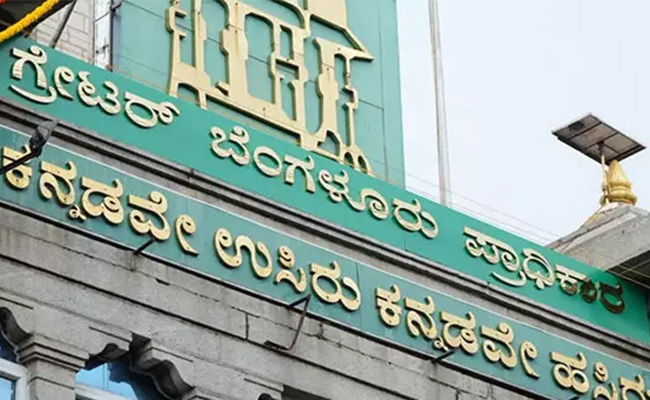
Bengaluru (PTI): Karnataka State Election Commissioner G S Sangreshi on Friday said elections to the five city corporations under the GBA will be held anytime between June 14 and June 24.
He said the exact date for the polls will be announced after a week, asserting that the power to postpone the elections, as requested by GBA authorities, lies with the Supreme Court.
The Supreme Court had directed the Karnataka government and the State Election Commission to conduct Bengaluru local body elections by June 30.
On Friday, the SEC held a consultation meeting with the GBA Chief Commissioner and commissioners of the five city corporations regarding the election schedule, as per the provisions of the GBA Act.
“During the meeting, I informed GBA officials that only the election date has to be fixed, as all other measures and formalities for conducting the polls have already been completed,” Sangreshi said.
“They requested the Commission to consider factors such as rains, exams, census work, SIR, and manpower shortages while fixing the date and sought additional time,” he added.
Speaking to reporters after the meeting, he said, “I told them this meeting was not for seeking time. Elections to the five corporations under the GBA must be held before June 30, as directed by the Supreme Court, and a compliance report must be submitted to the court. I do not have the power to postpone the elections as requested.”
The Supreme Court has already given a “final opportunity,” and both the SEC and the government must comply with its directions, the State Election Commissioner said.
He asked GBA officials to suggest suitable dates between June 14 and June 24.
“While stating that they are ready for elections, the officials highlighted operational challenges, including manpower shortages. However, I have informed them that the elections will have to be held between June 14 and June 24. After a week, I will announce the final date,” he said.
Reiterating that he does not have the power to postpone the elections, Sangreshi said the authority rests with the Supreme Court, and elections must be conducted as scheduled.
“We have consulted the GBA as per the rules. It is up to them to suggest a date within the given window. If they need more time, they must approach the court. Our responsibility is to fix the date and complete the polls before June 30,” he said.
The matter regarding manpower and other concerns raised by GBA officials is already before the Supreme Court, and the State Election Commission has also filed a petition in this regard. The case is yet to be heard.
“Since the matter has not come up for hearing, the earlier order remains binding. Therefore, preparations are underway,” he added.
The tenure of the previous elected body under the erstwhile Bruhat Bengaluru Mahanagara Palike (BBMP) ended on September 10, 2020, and since then, a government-appointed administrator has been managing its day-to-day affairs.
Bengaluru was divided into five municipal corporations—Central, East, West, North, and South—under the Greater Bengaluru Authority in September 2025, replacing the BBMP.
Sangreshi had earlier said that elections to the five corporations would be conducted using ballot papers instead of Electronic Voting Machines.
This follows the Congress government’s decision last September to recommend the use of ballot papers in all future panchayat and urban local body elections, citing concerns over declining public confidence in EVMs.
The state government subsequently enacted the Karnataka Gram Swaraj and Panchayat Raj (Amendment) Act, 2026, paving the way for the use of ballot papers in local body elections.