ADM responds in Hindi: U'khand HC asks if person who can't speak English control executive position
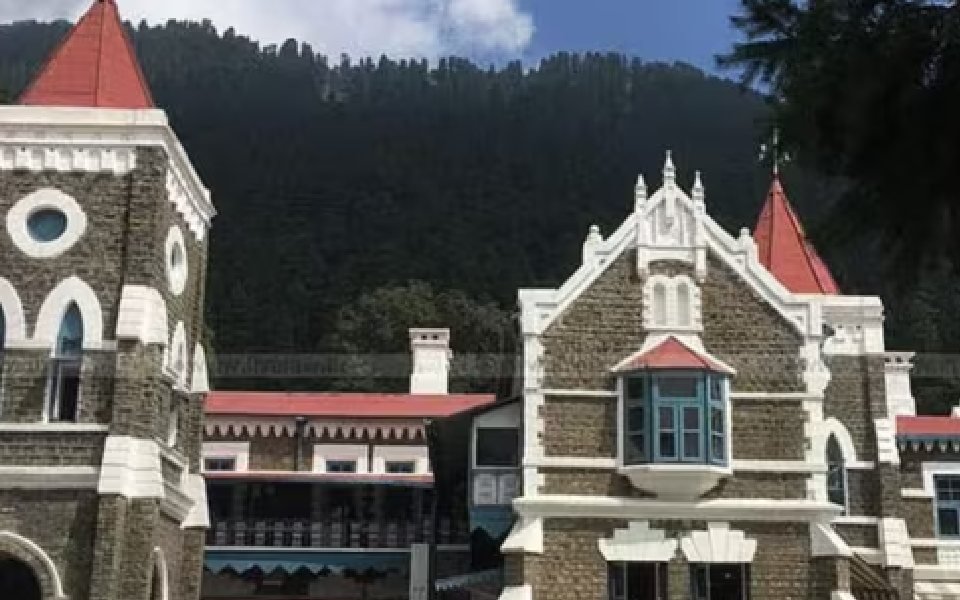
Nainital, Jul 26 (PTI): The Uttarakhand High Court has asked two top officials of the state to find out whether an officer who has no knowledge of English can effectively control an executive position after an additional district magistrate responded in Hindi during the hearing of a PIL.
When the division bench of Chief Justice Guhanathan Narendar and Justice Alok Mahra asked why he chose Hindi instead of English, the official said while he could understand the language he was unable to speak it fluently.
At this, the bench asked the State Election Commissioner and the Chief Secretary to find out whether an officer of ADM (Additional District Magistrate) level, who has no knowledge of English, can effectively control an executive position.
The ADM concerned is also the electoral registration officer of Nainital.
The high court asked the state election commissioner and the Chief Secretary to appear before it via video conferencing at the next hearing of the PIL on July 28 to respond to the query.
The situation arose during the hearing of the PIL questioning the inclusion of names of outsiders in the voter list for panchayat elections in Budhlakot gram sabha of Nainital district.
Taking a strict stance on the issue, the high court questioned the State Election Commission on the criteria used for the inclusion of such individuals in the voter list.
The court asked on what basis these individuals were identified as residents of the area.
The election officer, who appeared personally before the court, informed that the names were identified based on the family register.
However, the court observed that under the Panchayati Raj Act, birth and death certificates are considered more important documents than the family register.
So far, more than 25 petitions challenging various issues related to the panchayat elections have been filed. Notably, Akash Bora, a resident of Budhlakot, filed the PIL stating that 82 names in the village's voter list belonged to people from outside the area, most of whom are from the state of Odisha and other places.
When he complained to the SDM, a fact-finding committee was constituted, which found that 18 individuals listed were indeed outsiders.
However, even after the final voter list was released, the names of these 18 individuals were not removed.
After filing the PIL, the petitioner also submitted a list of 30 more such individuals to the court.
However, despite repeated complaints, no action has been taken, the PIL said.
The list includes names of outsiders from places such as Haldwani, Nainital, Odisha, Delhi and Haridwar.
Let the Truth be known. If you read VB and like VB, please be a VB Supporter and Help us deliver the Truth to one and all.
AIITA welcomes Karnataka’s ban on obscene songs in school events
Bhatkal: The Karnataka unit of the All India Ideal Teachers Association (AIITA) has welcomed the Karnataka government’s decision to strictly ban school children from dancing to obscene songs during educational and cultural programmes in government, aided, and private schools across the state.
AIITA Karnataka State President M. R. Manvi congratulated the government for taking what he termed an important step to preserve the sanctity of education.
“Such decisions to safeguard the dignity of school children and uphold the values of education are the need of the hour. This rule should not be limited to government schools alone but must be strictly implemented in all private educational institutions as well,” he said.
He further urged the government to address other concerns within school programmes.
“The government should not only prohibit obscene dances in the name of school anniversaries, but also ensure that plays and dialogues that incite religious hatred are avoided. Schools should be centres of harmony, not platforms for spreading hatred,” he added.
According to a recent circular issued by the Department of School Education and Literacy, obscene dances are adversely affecting the mental health and moral values of students.
In this regard, schools have been advised to use songs that promote nationalism, positive thinking, the greatness of Kannada culture, and value-based traditions instead of inappropriate content during programmes.
The circular also emphasises that students should be dressed in decent attire.
AIITA also backed the department’s warning that disciplinary action would be taken against head teachers if such guidelines are violated. The association has further demanded that district Deputy Directors of Public Instruction strictly monitor the implementation of these rules.