Advised by friends to keep quiet if I wanted President's post: Meghalaya Governor Satya Pal Malik
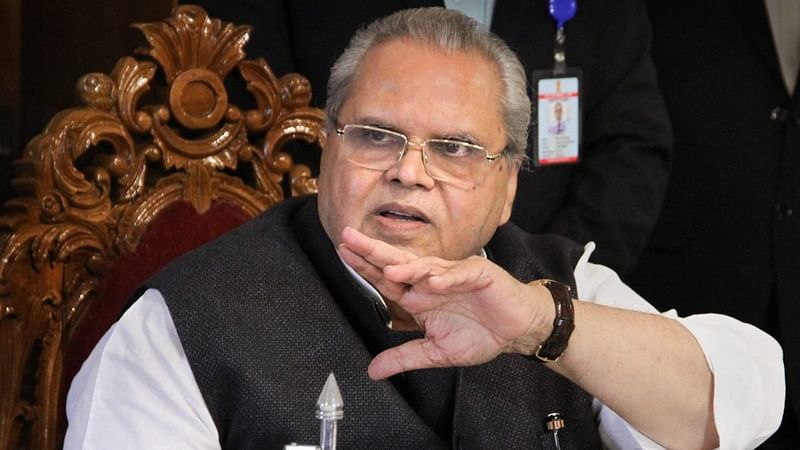
Jind, Mar 7: Meghalaya Governor Satya Pal Malik has said his friends advised him not to criticise the BJP government as he could be made the President or Vice President if he kept quiet, but asserted that he "doesn't care about these positions."
"Some of my friends had advised me that I could become the President or Vice President so I should keep quiet. But, I told them I don't care about these positions," Malik said.
He was addressing a Kisan Samman ceremony organised by Kandela Khap and Majra Khap at Kandela village here on Sunday and said the post of governor is not important for him.
Malik has been quite vocal against the NDA government at the Centre and Prime Minister Narendra Modi over a host of issues, including the now repealed three farm laws.
In January, he had claimed that when he went to meet the prime minister on the issue of farmers, the latter was arrogant and had a fight with him within five minutes.
Malik also called upon the farmers to unite to change the regime in New Delhi and form a government which is favourable to them so that they don't have to ask for anything from anyone.
Malik said once his tenure as governor ends, he will tour the country and unite the farmers.
He had also justified the hoisting of "Nishan Sahib" at the Red Fort last year by alleged farmer agitators, saying there was nothing wrong in it.
Talking about the scrapping of the farm laws, he said the government made a "half-hearted agreement" with the farmers following which the protest sites were vacated but no progress has been made in the matter since then.
The governor also said, "a friend of the prime minister is pursuing the dream of buying wheat at cheaper price and building a godown in an area of 50 acres in Panipat" to store it.
Malik said the prime minister's residence was only few kilometres away from the farmers' protest site at the Delhi border and a large number of farmers lost their lives during the agitation that lasted for more than a year.
"But no one came from the government's side to express condolence," Malik said.
He said he has never compromised his principles and always raised the voice of farmers. He claimed the farmers' movement was the biggest and longest such movement in history wherein there was no violence of any kind.
Malik said some leaders were put in jail after abrogation of Article 370 from Jammu and Kashmir, but the prime minister got them released and served them tea.
Malik was the Governor of Jammu and Kashmir in 2019 when the special status of Jammu and Kashmir was revoked and it was split into two Union Territories.
Let the Truth be known. If you read VB and like VB, please be a VB Supporter and Help us deliver the Truth to one and all.
Congress using hijab issue to pacify minority anger, alleges Karnataka LoP R Ashoka
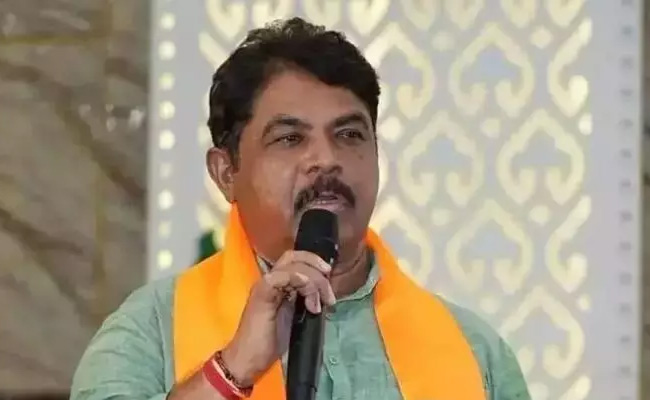
Bengaluru: Leader of Opposition in the Assembly R. Ashoka has accused the Congress government of using the hijab issue to placate what he described as discontent among minority voters after the Davanagere by-election.
In a post on X on Wednesday, Ashoka alleged that the state government, instead of addressing issues such as price rise, corruption, farmers’ distress and law and order, was attempting to retain its minority vote base by reviving the hijab issue.
Referring to the 2022 dress code introduced by the BJP government, which prohibited hijab in schools and colleges, Ashoka said the Karnataka High Court had upheld the policy and emphasised the importance of discipline in educational institutions.
He questioned the Congress government’s move to revisit the issue and asked whether setting aside the court-backed policy to benefit one community could be described as secularism.
Ashoka further alleged that while the government was willing to permit hijab, it continued to prohibit saffron shawls.
He accused the government of dividing students on religious lines rather than treating schools and colleges as spaces of equality.
Drawing a comparison with Mamata Banerjee’s government in West Bengal, Ashoka claimed that excessive appeasement politics had harmed the state and warned that the Congress in Karnataka could face a similar political response.
He said voters in Karnataka would teach the Congress a lesson for what he termed “vote-bank politics” and for compromising constitutional and judicial principles.