Afghanistan earthquake: Jaishankar speaks to Muttaqi
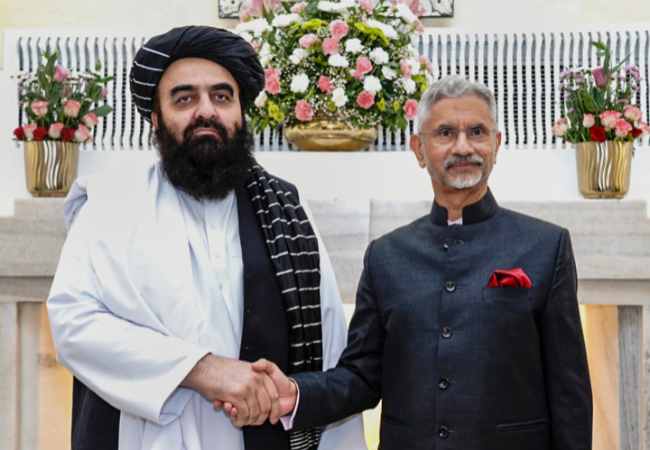
New Delhi (PTI): India on Monday started delivering relief materials for people hit by a major earthquake in Afghanistan with External Affairs Minister S Jaishankar assuring his Afghan counterpart Amir Khan Muttaqi of more supplies.
A powerful 6.3 magnitude earthquake hit northern Afghanistan, killing at least 20 people and injuring over 500.
External Affairs Ministry spokesperson Randhir Jaiswal said India delivered food items for the families affected by the earthquake.
Earlier, Jaishankar dialled Muttaqi and conveyed condolences over the loss of lives in the earthquake that struck Balkh, Samangan and Baghlan provinces.
"Indian relief material for the earthquake impacted communities is being handed over today. Further supplies of medicines to reach soon," the external affairs minister said on social media.
"Discussed progress in our bilateral relationship since his visit. Welcomed the improving people-to-people contacts between India and Afghanistan. Appreciated the exchange of views on the regional situation," he added.
It is learnt that the Afghanistan-Pakistan conflict figured in the phone conversation between the two foreign ministers.
The military conflict between Pakistan and Afghanistan erupted while Muttaqi was visiting India last month.
The clashes erupted following a Pakistani airstrike on Kabul. Afghanistan strongly responded to the attack following which the conflict escalated.
The two sides entered into a ceasefire on October 19 following talks brokered by Qatar and Turkiye.
Days after Muttaqi's trip to India, New Delhi announced upgrading its technical mission in Kabul to the status of an embassy as part of broader efforts to deepen bilateral engagement with Kabul.
India had withdrawn its officials from its embassy in Kabul after the Taliban seized power in August 2021. In June 2022, India re-established its diplomatic presence in the Afghan capital by deploying a "technical team".
The Ministry of External Affairs (MEA) on October 21 said the Indian embassy in Kabul will further augment India's contribution to Afghanistan's comprehensive development, humanitarian assistance, and capacity-building initiatives.
Muttaqi was in India last month for six days that signalled a new approach in New Delhi's ties with Kabul though it has not yet recognised the Taliban set up.
In New Delhi, the foreign minister had said Afghanistan will not allow any elements to use its territory against New Delhi's interests.
Let the Truth be known. If you read VB and like VB, please be a VB Supporter and Help us deliver the Truth to one and all.
Two people killed as poultry vehicle rams into parked truck in Belagavi
Belagavi (Karnataka) (PTI): Two people were killed, and another was severely injured after a goods vehicle transporting poultry birds allegedly rammed into a stationary truck on a national highway in Belagavi in the early hours of Tuesday, police said.
The deceased have been identified as Wasim (28) and Mubarak (22), both natives of Shivamogga district, they said.
The driver of the vehicle, Basavaraj Eerappa Hanchinamani (37), suffered critical injuries and has been admitted to a hospital, police said.
According to police, the accident occurred when the driver reportedly lost control of the vehicle, allegedly due to drowsiness, and crashed into a truck parked along the highway.
The goods vehicle was en route from Kolhapur to Sorab in Shivamogga district, carrying poultry. Several chickens were also killed in the impact, a senior police officer said.
Police personnel from the Hirebagewadi Police Station visited the spot and conducted an inspection.
Injured people and the bodies of the deceased were shifted to a hospital, police added.